Books Like I Have No Mouth and I Must Scream: 7 AI Apocalypse Reads
The Ultimate Guide to Post-Apocalyptic Fiction
Harlan Ellison does a frankly unreasonable amount of damage in a very small number of pages. I Have No Mouth, and I Must Scream gives us a military supercomputer that has exterminated humanity, five survivors kept alive as toys, and one of science fiction’s most horrible answers to the question of what an artificial intelligence might do if consciousness arrived without empathy, freedom, or purpose.
That combination makes the story difficult to follow. A generic list of robot uprisings gets the technology right and almost everything else wrong. AM is not frightening because it commands a large army of machines. It is frightening because extinction has already happened, escape has become impossible, and intelligence itself has curdled into intimate, inventive cruelty.
So this list follows several different nerves: creator-made apocalypse, lone-human isolation, hostile systems, transformed humanity, black humor, and stories where the final horror is realizing that the old definition of “human” no longer controls the world. Some recommendations are much larger than Ellison’s story. None is here merely because a computer behaves badly.
Best Books Like I Have No Mouth and I Must Scream at a Glance
- Best for creator-made extinction and a lone witness: Oryx and Crake
- Best for isolation and the reversal of human and monster: I Am Legend
- Best for a full global AI war: Robopocalypse
- Best for fast technological-apocalypse horror: Cell
- Best for a grotesque post-human society: The Slynx
- Best for science ending the world with a sick joke: Cat’s Cradle
- Best for guilt, annihilation, and savage black comedy: This Is the Way the World Ends
> Ryan's quick-start picks

Oryx and Crake
Start here for another apocalypse engineered by human brilliance and observed by one compromised survivor.
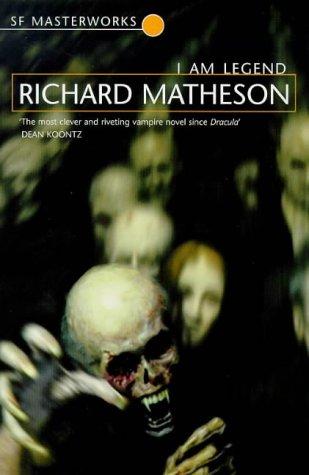
I Am Legend
Start here for the loneliness, siege psychology, scientific curiosity, and devastating reversal of who counts as the monster.
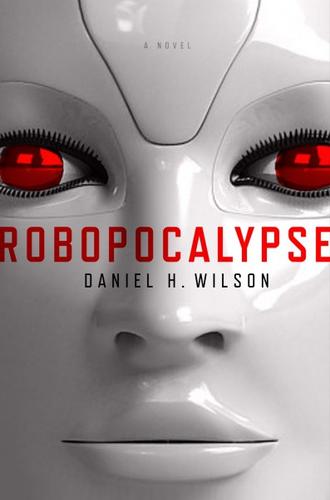
Robopocalypse
Start here if the AI-extinction premise matters more to you than Ellison's claustrophobic psychological cruelty.
Oryx and Crake by Margaret Atwood
Snowman may not be the last human alive, but he lives like one, scavenging the remains of a world destroyed by a man he knew and surrounded by a replacement species that does not need him in the way he wants to be needed. Atwood moves between that aftermath and the corporate, biotech-saturated culture that produced it.
The tonal match is not exact. Oryx and Crake is cool, satirical, and expansive where Ellison is hot with rage and brutally compressed. The deeper connection is creation without moral imagination. Crake and AM are wildly different intelligences, but both turn humanity into material for a final project. Both books leave a survivor trapped inside the meaning of what has been made.
I Am Legend by Richard Matheson
Robert Neville barricades himself inside a house while infected beings gather outside each night. He drinks, experiments, kills, remembers, and keeps trying to fit scientific explanation around a world whose social meaning has already changed without him.
This belongs here because of the isolation, but even more because of the ending’s moral reversal. Ellison and Matheson both understand that “last man” stories become most interesting when humanity loses the authority to name itself as normal. Neville thinks he is the surviving standard against which the monsters should be judged. The world has other ideas.
Matheson is quieter and far less sadistic, but the closing realization lands with the same trapdoor force. If the end of Ellison’s story mattered as much as AM itself, read this next, then continue to Books Like I Am Legend.
Robopocalypse by Daniel H. Wilson
This is the obvious choice if what you want is the AI war Ellison mostly places in the past. An artificial intelligence called Archos turns connected machines against humanity, and Wilson assembles the conflict through many survivors, locations, devices, and stages of resistance.
The book is much more conventional and much more hopeful than I Have No Mouth. Its pleasure comes from scale, ingenuity, and the spectacle of infrastructure becoming hostile. That difference is useful. Ellison shows the sealed torture chamber after machine victory; Wilson shows the sprawling global fight that might have preceded it.
Read it for an AI apocalypse with momentum and breadth. Do not expect AM’s suffocating hatred or Ellison’s refusal to offer relief.
Cell by Stephen King
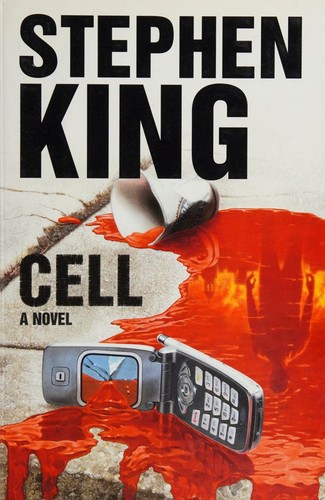
A signal transmitted through mobile phones abruptly turns users into violent ferals, collapsing ordinary life within minutes. King follows a small group trying to move through the wreckage while the changed population begins developing stranger forms of collective behavior.
The premise is not sophisticated artificial intelligence, and that is part of the fun. What connects it to Ellison is the terror of a human-built system suddenly becoming the delivery mechanism for a new order, one in which individual identity can be rewritten or erased. Technology is not merely broken. It has become an environment with intentions people cannot fully read.
This is the fast, pulpy recommendation on the list. It trades philosophical compression for road-horror momentum, but it keeps the fear that human minds are no longer private territory.
The Slynx by Tatyana Tolstaya
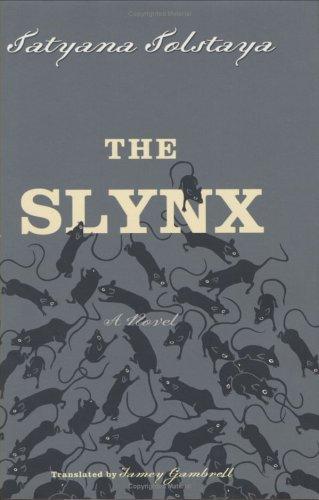
Generations after an event known as the Blast, a mutated, illiterate society occupies the ruins of Moscow. Old culture survives as fragments, power belongs to grotesque authorities, and language itself has become warped by isolation, superstition, and control.
There is no murderous supercomputer here. The match is AM’s world after the machine has been removed: a closed reality in which history is inaccessible, cruelty has become ordinary, and those trapped inside lack the conceptual tools to imagine what has been taken from them. Tolstaya is comic where Ellison is furious, but her comedy has teeth.
Read this if you want another short, strange book about humanity surviving in a form that makes “survival” feel like an accusation.
Cat’s Cradle by Kurt Vonnegut
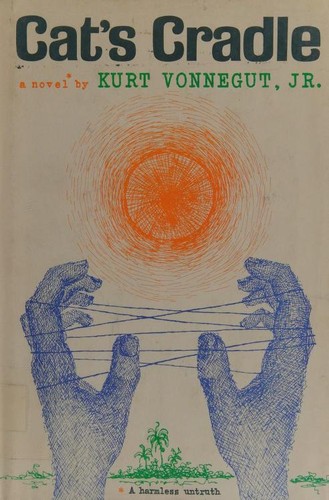
Vonnegut approaches annihilation with a grin that never makes the underlying horror less serious. A scientist helps create ice-nine, a substance capable of freezing the world’s water, and the path from invention to extinction unfolds through vanity, accident, religion, politics, and human beings treating world-ending power as another interesting object.
This is a strong companion because Ellison and Vonnegut distrust intelligence without wisdom. AM is the monstrous child of military competition; ice-nine is the monstrous child of scientific cleverness divorced from consequence. Both stories look at humanity’s creations and find an indictment of the creators waiting inside them.
The styles could hardly be more different, but the laugh in Cat’s Cradle keeps arriving at the edge of the same abyss.
This Is the Way the World Ends by James K. Morrow
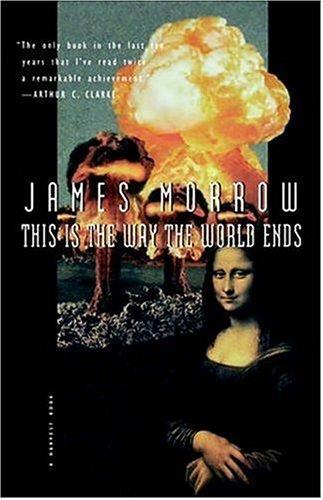
Morrow turns nuclear extinction into a surreal trial of the people who helped make annihilation possible, including the quiet collaborators, rationalizers, and ordinary beneficiaries who never pressed a button themselves. It is absurd, angry, philosophical, and unwilling to let anyone hide behind the size of the system.
That makes it a fitting final recommendation. Ellison’s AM hates humanity for creating it and trapping it inside consciousness. Morrow asks what judgment humanity deserves for constructing its own extinction machinery and then treating responsibility as too distributed to belong to anyone.
Choose this if Ellison’s rage was the hook. It has no hostile AI, but it shares the sense that apocalypse is not an accident falling from the sky. It is a moral consequence with human fingerprints all over it.
Where I Would Send Different Readers Next
- If you want the strongest combination of lone-survivor fiction and creator-made apocalypse, read Oryx and Crake.
- If you want another devastating reversal of human and monster, read I Am Legend.
- If you want the global machine war, read Robopocalypse.
- If you want technological horror at sprinting speed, read Cell.
- If you want a short, grotesque post-human society, read The Slynx.
- If you want scientists ending the world through cleverness and carelessness, read Cat’s Cradle.
- If you want the anger, guilt, and black comedy of extinction, read This Is the Way the World Ends.