Books Like Station Eleven: 7 Literary Pandemic Apocalypses
The Ultimate Guide to Post-Apocalyptic Fiction
Station Eleven leaves behind a slightly unusual post-book ache. The Georgia Flu matters, obviously, but Emily St. John Mandel is not really offering two hundred pages of masks, triage, and outbreak procedure. The novel keeps looking past the mechanics of dying toward the stranger question of what the survivors will choose to keep.
That is why generic pandemic lists tend to miss the mark. Another fast-moving superflu novel may match the catastrophe and still feel nothing like the book. Station Eleven is also about actors carrying Shakespeare around the Great Lakes, obsolete objects becoming museum pieces, celebrity lives echoing through strangers, and the stubborn belief that survival without art, memory, or connection is not much of a victory.
I built this list around those qualities rather than the pathogen alone. Some of these books share Mandel’s quiet, literary treatment of the aftermath. Some match the before-and-after structure. Others focus on preserving books, stories, culture, or ordinary human tenderness when practical survival is already taking everything people have.
If what you really want is more Mandel, The Glass Hotel is the natural choice for another web of intersecting lives, while Sea of Tranquility returns to pandemics, art, time, and the strange connections between apparently separate stories. The recommendations below take the other route: seven post-apocalyptic novels that carry a recognizable part of Station Eleven into a different ruined world.
Best Books Like Station Eleven at a Glance
- Closest overall emotional match: The Dog Stars
- Best for another before-and-after pandemic mosaic: The Year of the Flood
- Best for a harsher traveling-survivor story: The Book of the Unnamed Midwife
- Best for preserving books, memory, and culture: A Gift Upon the Shore
- Best for long-term community rebuilding: Earth Abides
- Best if you want literary apocalypse with the hope stripped away: The Road
- Best deep cut about stories surviving civilization: Engine Summer
> Ryan's quick-start picks
The Dog Stars
Start here for the closest blend of pandemic grief, lyrical quiet, loneliness, and the dangerous pull of human connection.
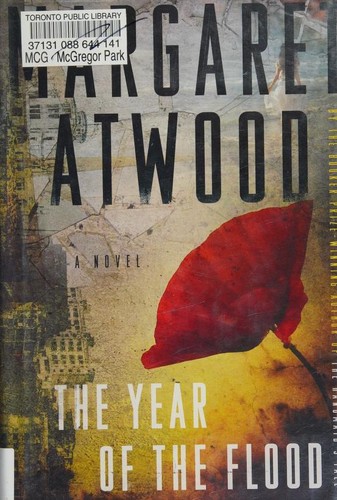
The Year of the Flood
Start here for another story moving between the culture that created catastrophe and the improvised communities living through its aftermath.
A Gift Upon the Shore
Start here if the Museum of Civilization and the Traveling Symphony mattered more to you than the flu itself.
The Dog Stars by Peter Heller
After a pandemic empties the world, Hig lives at an abandoned Colorado airfield, flies reconnaissance in his small plane, mourns the people and animals he has lost, and tries to decide whether reaching toward another human being is worth the danger. There is more practical survival here than in Station Eleven, but the book never confuses logistics with its real subject.
The match is emotional. Heller gives emptiness room to breathe, lets landscape carry grief, and understands that loneliness can become both protection and prison. Where Mandel distributes that ache across a large constellation of characters, The Dog Stars narrows it to one damaged man wondering whether life can become more than repetition. It is rougher, more masculine, and more violent, but it shares the same belief that connection is the part of survival that makes survival matter.
The Year of the Flood by Margaret Atwood
Atwood’s second MaddAddam novel moves between the years before an engineered pandemic and the lives of people enduring its aftermath. The God’s Gardeners community gives the book rituals, hymns, private histories, practical skills, and a social world that looks eccentric before collapse and unexpectedly durable after it.
That movement between timelines makes it one of the most useful structural matches for Station Eleven. Both novels understand that an apocalypse gathers meaning from what came before it, and both use recurring people, objects, beliefs, and stories to connect lives that do not initially seem to belong together. Atwood is angrier, more satirical, and much more interested in corporate biotech, but she shares Mandel’s fascination with the improvised cultures people build when the official one disappears.
This is the pick for readers who loved the Traveling Symphony as a community rather than simply as a premise: a group held together by habits, shared language, old wounds, and a way of seeing the world that becomes more necessary once the world changes.
The Book of the Unnamed Midwife by Meg Elison

A fever kills most of the population and disproportionately devastates women, leaving an unnamed midwife to move through a newly predatory America. She disguises herself, trades medical care and contraception, records what she sees, and keeps traveling through communities that reveal very different ideas about what should replace the old order.
This is considerably harsher than Mandel. There is little of the Symphony’s grace, and survival cannot be separated from gendered violence or reproductive control. The connection lies in movement, testimony, and the gradual assembly of a world from scattered encounters. Kirsten carries performance and memory between settlements; Elison’s midwife carries medicine, warning, and a written record.
If Station Eleven left you curious about the practical dangers its elegance often holds at a distance, this is the sharpest corrective on the list. It keeps the traveling-after-pandemic shape and changes almost everything about the temperature.
A Gift Upon the Shore by M. K. Wren
This is the recommendation most directly connected to Station Eleven’s conviction that culture is not an optional luxury. In the aftermath of nuclear war and disease, two women on the Oregon coast work to preserve books and memory while a more authoritarian religious community gathers nearby.
The obvious parallel is the Museum of Civilization: the impulse to save objects, stories, and knowledge not because they will solve tomorrow’s food shortage, but because a future without cultural memory would be another kind of extinction. Wren is also interested in the difficult handoff between survivor generations. The people who remember the old world do not always agree with those who inherit only fragments of it.
It is quieter and less formally intricate than Mandel, but it asks one of the same essential questions with unusual seriousness: once survival is possible, what deserves to survive with us? If “Survival is insufficient” is the line you carried out of Station Eleven, start here.
Earth Abides by George R. Stewart
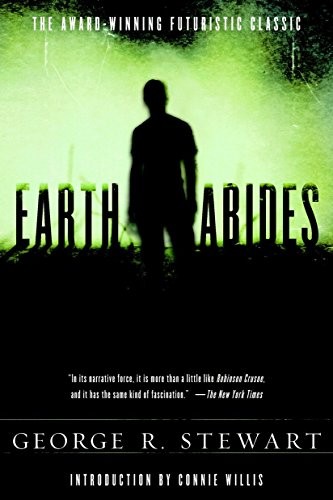
After disease removes most of humanity, ecologist Isherwood Williams watches the nonhuman world reclaim its space and gradually helps form a small community around the San Francisco Bay Area. The novel then keeps going, following the survivors beyond the emergency and into generational change.
That timescale makes Earth Abides a strong match for readers interested in settlements such as the airport community and the broader question of how a post-pandemic culture becomes ordinary. Stewart is much more anthropological than Mandel. He cares about tools, habits, education, language, and the quiet moment when knowledge stops being useful enough to preserve automatically.
What the books share is patience with aftermath. Neither treats the end of civilization as a final scene. The interesting part is the long cultural afterlife: which memories become rituals, which objects become meaningless, and whether a community can transmit more than basic survival to the people born after the break.
The Road by Cormac McCarthy
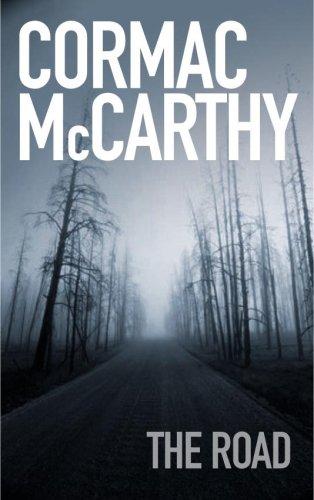
This is the obvious recommendation for readers who want another literary apocalypse, but it comes with the largest tonal warning on the page. A father and son travel through an ash-covered world where almost every social structure has vanished and moral decency has become a private discipline rather than a shared expectation.
McCarthy and Mandel both make ordinary objects feel charged by loss. Both are more interested in memory, love, and what people owe one another than in explaining their catastrophes. But The Road removes almost all of Station Eleven’s communal warmth. There is no Traveling Symphony waiting over the horizon, and art has narrowed to stories a father tells his child while trying to keep him alive.
Read it if you want the lyricism, intimacy, and ruined-world melancholy pushed toward absolute bleakness. If that is the direction you choose, continue with Books Like The Road afterward.
Engine Summer by John Crowley

This is the deep cut. Long after the old world has collapsed, Rush That Speaks leaves his community and moves through a landscape where lost technology, inherited stories, and altered social customs have become difficult to separate. The novel is quiet, strange, and much more concerned with how a life becomes a story than with reconstructing the disaster that ended modernity.
That makes it a particularly good match for readers fascinated by the Station Eleven comic, the web of accidental influence around Arthur Leander, and the way art can travel further than its creator ever knows. Crowley treats storytelling as both preservation and transformation. What survives is never a perfect copy. It becomes myth, identity, misunderstanding, and eventually somebody else’s memory.
It is less immediately accessible than the other books here, but it reaches closest to Mandel’s deeper concern with narrative itself: the strange routes by which one person’s private creation can outlive its original circumstances and help another person understand the world.
Where I Would Send Different Station Eleven Readers Next
- If you want the closest overall emotional follow-up, read The Dog Stars.
- If you want another layered before-and-after pandemic story, read The Year of the Flood.
- If you want the survival danger that Mandel mostly keeps offstage, read The Book of the Unnamed Midwife.
- If art, museums, books, and cultural preservation were the real hook, read A Gift Upon the Shore.
- If you want to watch a survivor community change over generations, read Earth Abides.
- If you want literary beauty with almost none of the hope, read The Road.
- If you want the strangest, most story-obsessed recommendation here, read Engine Summer.
- If the pandemic angle matters more than Mandel’s literary style, continue to the best pandemic books.