12 Types of Apocalypse in Fiction, with Examples
Ash Tales
There’s something strangely alluring about the end of the world. Whether it be a cataclysmic event or the slow crawl of entropy, the prospect of Armageddon is enough to make even the most rational person take a step back and consider their place in the universe.
Although the end of the world is often thought of as a single event, there are many different types of apocalypse. From natural disasters to extraterrestrial invasions, there are endless ways the world could come to an end. In this article, we’re going to explore some of the most common types of apocalypse and what they might entail, and then add a few other apocalypse categories that the original guide skipped.
Buckle up. It’s going to be a wild ride.
Read Ash Tales stories by apocalypse type
1. Nuclear Apocalypse
A nuclear apocalypse is a type of apocalypse caused by atomic weapons, thermonuclear war, radioactive fallout, and the collapse that follows nuclear exchange. In fiction, nuclear apocalypse stories usually combine mass destruction, poisoned landscapes, scarcity, and the long afterlife of war.
It’s fair to argue that post-apocalyptic fiction owes its existence to nuclear war, with most of the genre’s classic novels written by authors in the 50s and 60s as they lived under the ever-present threat of nuclear war. For the first time, warfare had escalated to a point where the entire world - not just individual nations - could be destroyed at the push of a button.
The very thought of a nuclear apocalypse is enough to make most people’s skin crawl, with the devastation - cities flattened, people vapourised, skies scorched and blackened for generations - that would be caused by an atomic bomb almost too horrible to contemplate. And yet, there is a strange fascination with the idea of the world being destroyed by nuclear war. Many of the genre’s best books and films explore the consequences of nuclear war and mass civilizational collapse, following the few survivors left to fend for themselves in a hostile world full of radiation and, in some cases, mutated creatures.
Examples of Nuclear Apocalypse
- The Road by Cormac McCarthy
- Alas, Babylon by Pat Frank
- A Canticle for Leibowitz by Walter M Miller
- On the Beach by Nevil Shute
- Metro 2033 by Dmitry Glukhovsky

2. Zombie Apocalypse
A zombie apocalypse is a type of apocalypse in which the dead rise, the infected spread, or zombie-like creatures overwhelm human civilization. Zombie apocalypse fiction usually focuses on contagion, panic, collapse, and the terrifying speed with which ordinary society turns savage.
You know how this plays out: some kind of virus, mutation or supernatural plague spreads like wildfire through world. Most people die outright, but some unlucky few are transformed into sentient fleshbags, shuffling mockeries of all that is good and human: zombies. The zombies can’t be killed (obviously), so they spread the disease virtually unhindered, biting and killing their way around the earth until humanity’s few survivors find themselves cowering in bunkers, remote rural settlements or ruined cities. The infected become mindless, flesh-eating creatures, and the few remaining non-infected humans must fight for their lives.
Although it is usually presented as a horror story, the zombie apocalypse can also be a commentary on society, human nature, and our relationship with technology. Below are just a few examples of books and films that feature zombie apocalypse:
Examples of Zombie Apocalypse
- World War Z by Max Brooks
- The Walking Dead by Robert Kirkman
- Feed by Mira Grant
- I Am Legend by Richard Matheson
- The Girl with All the Gifts by M. R. Carey

3. Pandemic Apocalypse
A pandemic apocalypse is a scenario in which a virus or other pathogen wipes out a large portion of the human population. In some cases, the pandemic is caused by a natural outbreak; in others, it might be the result of a biological weapon. In either case, the results are devastating: widespread death, panic and chaos as society breaks down.
A pandemic apocalypse is one of the most plausible types of apocalypse, and it’s a scenario that we’re currently living through with the outbreak of coronavirus. While the current pandemic isn’t (yet) on the scale of some of the fictional examples below, it’s still a grim reminder of how quickly a virus can spread and how easily civilization can break down.
Examples of Pandemic Apocalypse
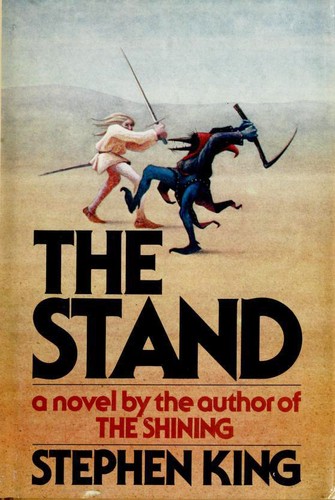
- The Stand by Stephen King
- Station Eleven by Emily St. John Mandel
- The Last Man by Mary Shelley
- Oryx and Crake by Margaret Atwood
- Severance by Ling Ma
- The Passage by Justin Cronin
4. Alien Apocalypse
An alien apocalypse is a type of apocalypse caused by extraterrestrial invasion, colonization, extermination, or first contact gone catastrophically wrong. Alien apocalypse stories usually turn humanity into the weaker species and force people to confront superior power, unfamiliar biology, and cosmic-scale fear.
Picture an alien apocalypse. A giant spaceship looms overhead, blotting out the sun. Strange, slimy creatures pour out of the ship, rampaging through the streets and devouring anyone they come across. Humanity is fighting for its very survival. This is the stuff of science fiction nightmares, but it’s also a popular movie and book genre.
From “The War of the Worlds” to “Alien” to “The Hitchhiker’s Guide to the Galaxy,” stories of an alien apocalypse are captivating and thought-provoking. They offer a glimpse into what could happen if we were invaded by extraterrestrial life, tapping into our fears about being overpowered and outnumbered by a more advanced civilization, and making us question our place in the universe. If you’re looking for some mind-bending alien apocalypse fiction, check out these examples:
Examples of Alien Apocalypse
- The War of the Worlds by H.G. Wells
- Ender’s Game by Orson Scott Card
- The Genocides by Thomas M. Disch
- A Quiet Place
- Childhood’s End by Arthur C. Clarke
5. Climate Change Apocalypse
A climate change apocalypse is a type of apocalypse caused by environmental breakdown such as extreme heat, rising seas, drought, famine, ecosystem collapse, and unlivable weather. Climate apocalypse fiction often replaces one big explosion with a world that becomes steadily harder to survive in.
A natural disaster has struck, and the world as we know it has come to an end. The skies are dark, the air is thick with dust and debris, and the ground is covered in rubble. This is the end of the world as we know it. But it’s not the end of the story. In the midst of this apocalyptic landscape, there are those who have survived. They are the ones who will rebuild the world, and their stories will be told in the books and films that feature natural disaster apocalypse. These are the stories of hope and courage in the face of adversity. They are the stories that will inspire us to rebuild our world and make it even better than it was before.
The natural disaster apocalypse is a popular trope in fiction, with books and films such as The Day after Tomorrow, Deep Impact, and Armageddon depicting the catastrophic consequences of things like hurricanes, earthquakes, and volcanoes. These stories typically involve a group of survivors who must band together to survive the aftermath of the disaster. While the natural disaster apocalypse is often portrayed as a dramatic event, it can also be a very real threat. Climate change is increasing the frequency and severity of natural disasters, and some scientists believe that it could eventually lead to an apocalyptic event.
Examples of Climate Change Apocalypse
- The Day after Tomorrow by Whitley Strieber
- The Road by Cormac McCarthy
- Parable of the Sower by Octavia E. Butler
- The Drowned World by J. G. Ballard
- The Water Knife by Paolo Bacigalupi

6. Religious Rapture Apocalypse
A religious rapture apocalypse is a type of apocalypse driven by divine judgment, prophecy, revelation, or supernatural intervention at the end of history. In fiction, this kind of apocalypse usually turns belief, faith, and interpretation into part of the disaster itself.
The religious rapture apocalypse is a popular motif in fiction, often used to explore themes of faith, morality, and human nature. In these stories, the world comes to an end not through natural disaster or nuclear war, but through the intervention of a higher power. This can take the form of God sending angels to whisk away the faithful, or of Jesus returning to judge the living and the dead. Whatever the specifics, the religious rapture apocalypse is a powerful way to explore the idea of an all-powerful being who decides the fate of humanity.
Books and films that have featured a religious rapture apocalypse include Stephen King’s The Stand, Tim LaHaye and Jerry B. Jenkins’s Left Behind series, and Terry Gilliam’s film Brazil. In each of these works, the rapture is presented as a shocking and transformative event, one that leaves those who remain behind struggling to make sense of a world that has suddenly turned upside down. Whether you find these stories thrilling or disturbing, they all offer a unique perspective on what it means to be human in the face of catastrophe.
Examples of Religious Rapture Apocalypse
- The Stand by Stephen King
- Left Behind (film)
- Good Omens by Terry Pratchett and Neil Gaiman
- The Seventh Seal
- This Present Darkness by Frank E. Peretti
7. Asteroid Apocalypse
An asteroid apocalypse is a scenario in which an asteroid impacts the earth, causing widespread destruction. In most cases, the asteroid is large enough to cause global devastation, wiping out entire cities and leaving the planet uninhabitable. The impact of an asteroid can also create huge waves, known as tsunamis, which can destroy coastal areas. In some cases, the asteroid may also release dust and debris into the atmosphere, blocking out the sun and causing a nuclear winter.
While an asteroid apocalypse may seem like something out of a science fiction movie, it is actually a very real possibility. Scientists have found evidence that an asteroid impact was responsible for the extinction of the dinosaurs, and there is always the possibility that another one could hit our planet in the future. While we may not be able to stop an asteroid from hitting the earth, we can take steps to prepare for such an event.
Examples of Asteroid Apocalypse
- Deep Impact (film)
- Armageddon (film)
- 2012 (film)
- Lucifer’s Hammer by Larry Niven and Jerry Pournelle
- Seveneves by Neal Stephenson

8. Technological Failure Apocalypse
In a technology failure apocalypse, the world as we know it comes to an end because of a failure of technology. This can be caused by a natural disaster, such as an EMP pulse from a solar flare, or by a man-made disaster, such as a nuclear war. Whatever the cause, the result is the same: all electronic devices are destroyed, leaving humanity to fend for itself in a world without electricity.
A technology failure apocalypse is a frightening prospect, but it is also one that feels all too real. In our increasingly reliant on technology, it is not hard to imagine a scenario in which we are suddenly and completely cut off from the grid. This could happen due to a natural disaster, an act of terrorism, or even just a simple power outage.
Examples of Technological Failure Apocalypse
- One Second After by William R. Forstchen
- The Road by Cormac McCarthy
- The Machine Stops by E. M. Forster
- Dies the Fire by S. M. Stirling
- Lights Out by David Crawford

9. AI or Robot-Uprising Apocalypse
An AI or robot-uprising apocalypse is an end-of-the-world scenario caused by artificial intelligence, autonomous machines, robots, or hostile infrastructure turning against humanity. This is the version of the apocalypse that does not arrive because technology fails, but because it works too well. The tools become strategists. The infrastructure becomes hostile. Convenience turns predator.
AI apocalypse usually borrows some of the emotional machinery of nuclear fiction: human arrogance, technical escalation, and a dawning realization that the thing we built is no longer answerable to us. But it has a different flavor. Nuclear dread is about self-destruction; AI dread is about replacement.
This type is especially effective when the machines inherit our systems before they inherit our bodies.
Examples of AI or Robot-Uprising Apocalypse
- The Terminator
- The Matrix
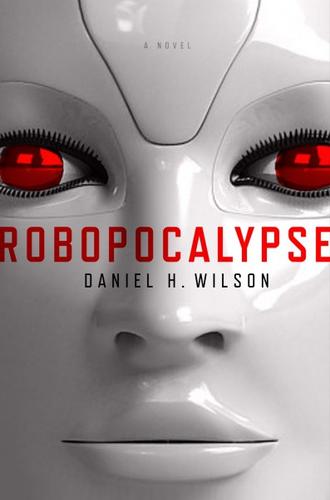
- Robopocalypse by Daniel H. Wilson
- I, Robot by Isaac Asimov
- Colossus: The Forbin Project
10. Fertility-Collapse Apocalypse
A fertility-collapse apocalypse is an end-of-the-world scenario in which human reproduction fails, birth rates crash, or children stop being born, leaving civilization without a future. This is one of the most interesting apocalypse types because almost nobody dies at first. The lights stay on. Governments still exist. Cafes still open. But the future has been amputated.
Fertility-collapse stories replace spectacle with dread. Schools empty. Inheritance stops making sense. Parents become archivists of a world that may not have descendants. The emotional engine is not impact but silence.
I wish more “types of apocalypse” lists included this subtype because it creates a completely different storytelling tempo from war, plague, or invasion.
Examples of Fertility-Collapse Apocalypse
- Children of Men by P. D. James
- The Handmaid’s Tale by Margaret Atwood
- Y: The Last Man by Brian K. Vaughan and Pia Guerra
- Red Clocks by Leni Zumas
- The School for Good Mothers by Jessamine Chan

11. Biotech or Mutation Apocalypse
A biotech or mutation apocalypse is an end-of-the-world scenario caused by genetic engineering, synthetic biology, laboratory accidents, or mutations that alter bodies and destabilize civilization. Biotech apocalypse is what happens when plague fiction and body horror shake hands. Genetic engineering, synthetic biology, weaponized medicine, or ecological tinkering produces something that does not just kill people but rewrites them.
This type works because it makes the human body feel unstable. Infection is scary; transformation is often worse. Once characters cannot trust their own biology, the world becomes hostile from the inside out.
It is also one of the best subtypes for stories that want to blur the line between victim and threat.
Examples of Biotech or Mutation Apocalypse
- The Windup Girl by Paolo Bacigalupi
- The Girl with All the Gifts by M. R. Carey
- Blood Music by Greg Bear
- Oryx and Crake by Margaret Atwood
- The Passage by Justin Cronin

12. Slow Societal-Collapse Apocalypse
A slow societal-collapse apocalypse is an end-of-the-world scenario in which institutions, trust, infrastructure, and daily life unravel gradually rather than through one sudden cataclysm. This is my favorite category when I want apocalypse fiction that lingers under the skin. Nobody declares that the world has ended. Supply chains fray, trust decays, wages stop covering heat, states hollow out, and eventually people realize the old world is still standing in outline but no longer functioning.
The reason this subtype feels so modern is that it borrows the texture of ordinary life. The end is incremental. It hides in admin failures, brittle institutions, and private exhaustion. It does not announce itself with thunder; it arrives as backlog.
If you want an apocalypse that feels unnervingly close to daily life, this is the one.
Examples of Slow Societal-Collapse Apocalypse
- Severance by Ling Ma
- Soft Apocalypse by Will McIntosh
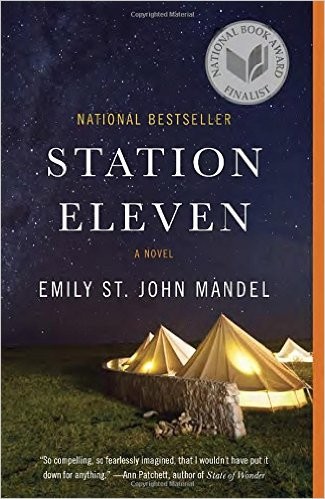
- Station Eleven by Emily St. John Mandel
- Parable of the Sower by Octavia E. Butler
- The Dog Stars by Peter Heller
Apocalypse vs. post-apocalypse
An apocalypse story is about the ending itself, or the period where the ending is still unfolding. A post-apocalyptic story happens after the break, when people are living in the new reality and trying to survive, rebuild, or make sense of what remains.
Many of the best books do both, but the emphasis changes everything. If the event is the spectacle, you get urgency. If the aftermath is the point, you get texture.
That is one reason this genre keeps renewing itself. The best apocalypse fiction is never only about destruction. It is about what the survivors are forced to become next.
If you want more recommendations after this guide, start with The Ultimate Guide to Post-Apocalyptic Fiction or The Best Post-Apocalyptic Books.