The 15 Best Books About Alien Invasion
The Ultimate Guide to Post-Apocalyptic Fiction
Alien-invasion fiction has one brutally effective way of rearranging the universe: it makes humanity the weaker species. The best books about alien invasion do more than park a mothership over a capital city. They ask what happens to politics, trust, identity, and ordinary life once we discover that intelligence does not make us important.
I have used a broad but deliberate definition here. Some of these books give you tripods, orbital battles, and open war. Others imagine infiltration, occupation, ecological replacement, or an apparently peaceful intervention that becomes something much stranger. What joins them is the loss of human control—and the question of what, if anything, people can preserve after that loss.
Best Alien-Invasion Books at a Glance
- Best place to start: The War of the Worlds by H. G. Wells
- Best slow-burn modern invasion: The Three-Body Problem by Cixin Liu
- Best military spectacle: Footfall by Larry Niven and Jerry Pournelle
- Best paranoid invasion: The Body Snatchers by Jack Finney
- Bleakest alien apocalypse: The Genocides by Thomas M. Disch
- Best invasion without a conventional war: Childhood’s End by Arthur C. Clarke
- Best ecological invasion: A Matter for Men by David Gerrold
- Best YA entry point: The 5th Wave by Rick Yancey
- Best short, frantic read: All You Need Is Kill by Hiroshi Sakurazaka
> Ryan's quick-start picks
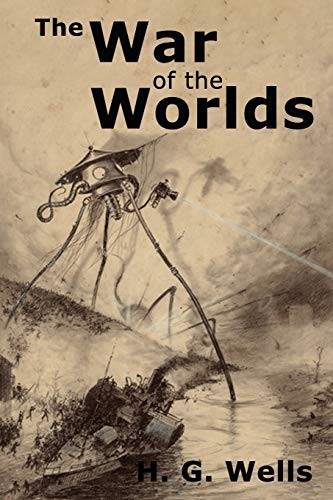
The War of the Worlds
For the foundational invasion story: fast, frightening, and still surprisingly modern.
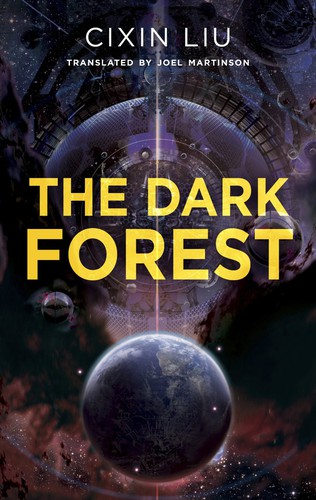
The Three-Body Problem
For scientific scale, political paranoia, and an invasion that begins long before the fleet arrives.
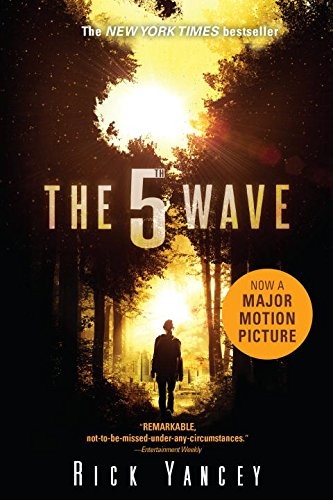
The 5th Wave
For a propulsive YA survival thriller built around infiltration and mistrust.
What Counts as an Alien-Invasion Book?
I am not treating every novel with an extraterrestrial as an invasion story. Contact, Project Hail Mary, and Rendezvous with Rama are excellent books, but contact and discovery are not the same thing as invasion. For this list, aliens have to threaten human sovereignty in some meaningful way: through attack, occupation, bodily takeover, forced transformation, or the replacement of Earth’s ecology.
That still leaves room for arguments. Dawn begins after humanity has destroyed itself, and Childhood’s End looks peaceful for most of its length. I included them because both are really about superior outsiders taking control of humanity’s future. Invasion fiction becomes more interesting when it stops meaning only laser fire.
1. The War of the Worlds by H. G. Wells
Martians arrive in late-Victorian England, emerge from their cylinders, and begin sweeping aside the world’s most powerful empire with heat-rays, poison gas, and towering fighting machines. Wells keeps the story close to the ground: roads clog, families scatter, institutions fail, and the narrator survives mostly by running in the right direction at the right time.
This is the foundation stone because it already understands nearly everything the subgenre needs. The invaders are technologically overwhelming. Mass panic matters as much as combat. Humanity is not saved by courage or tactical brilliance. More than a century later, the novel still feels mean, fast, and remarkably free of comforting illusions.
2. Childhood’s End by Arthur C. Clarke
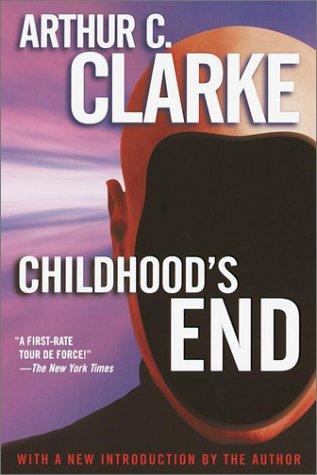
Alien ships appear above Earth’s cities, and the mysterious Overlords impose peace without conquest in the usual sense. War, poverty, and much suffering disappear. Humanity enters a golden age. The cost only becomes visible slowly, as culture stagnates and a new generation begins changing into something its parents cannot follow.
I like this here because it turns invasion into a gift you cannot refuse. There are no ruined skylines, but there is an occupying power with complete control and a plan for the species. Clarke trades battlefield suspense for cosmic melancholy, and the result is more unsettling than many novels full of explosions.
3. The Puppet Masters by Robert A. Heinlein
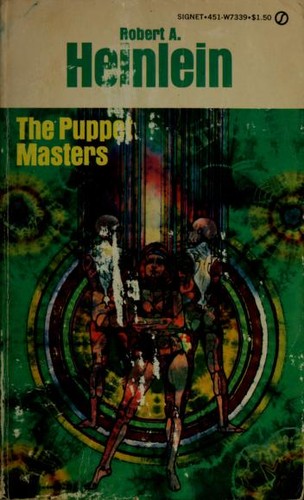
Slug-like parasites land in the American Midwest, attach themselves to human hosts, and quietly begin expanding their control. A secret intelligence unit investigates while the government struggles to accept that apparently normal citizens are being operated from the outside.
The politics and sexual attitudes are unmistakably Heinlein’s, but the central nightmare remains potent: your neighbor may look unchanged and still belong to the enemy. This is invasion as counterintelligence thriller, driven by secrecy, compromised institutions, and the impossibility of knowing who is still themselves.
4. The Body Snatchers by Jack Finney
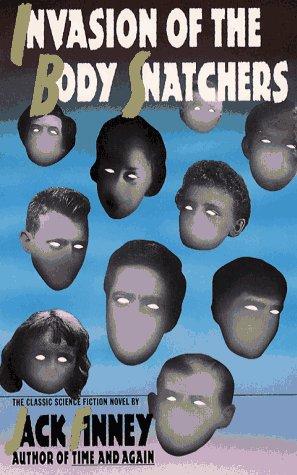
In the quiet town of Mill Valley, people begin insisting that husbands, relatives, and friends have somehow become impostors. The copies have the right faces and memories, but none of the emotional life. Soon, giant seed pods reveal an invasion designed not to destroy the town but to reproduce it perfectly.
This is the more intimate companion to The Puppet Masters. Finney makes recognition itself unreliable: how do you prove that a person has been replaced when they can perform normality better than you can? The ending is softer than the famous film adaptations, but the book remains one of the purest expressions of invasion paranoia.
5. The Genocides by Thomas M. Disch
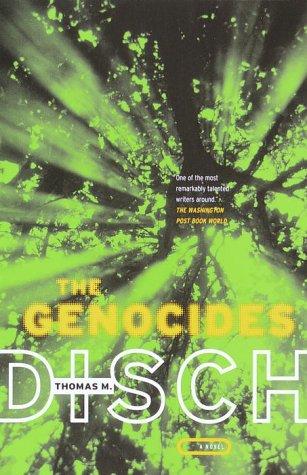
Enormous alien plants cover Earth, destroying human agriculture and remaking the planet for purposes no survivor understands. The remaining people retreat into a harsh rural community, then underground, while the invaders treat them less like military opposition than pests in a field.
This is the bleakest recommendation on the list and one of the sharpest. Disch refuses the genre’s flattering assumption that invaders would find us interesting. Humanity is neither chosen nor tested; it is cleared away. Short, ugly, and unsentimental, The Genocides turns alien invasion into ecological extermination.
6. The White Mountains by John Christopher
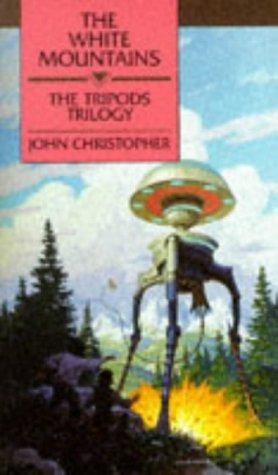
Earth has already lost. Alien Tripods rule a technologically regressed humanity, and at adolescence every person receives a metal Cap that makes them obedient. Before his Capping Day, thirteen-year-old Will Parker escapes his village and begins a dangerous journey toward a rumored community of free people in the Alps.
This is one of the cleanest occupation stories in science fiction. The aliens’ greatest weapon is not their machinery but a social order that makes surrender look like maturity. It is accessible enough for younger readers, yet its questions about conformity, freedom, and inherited obedience hold up perfectly well for adults.
7. A Matter for Men by David Gerrold
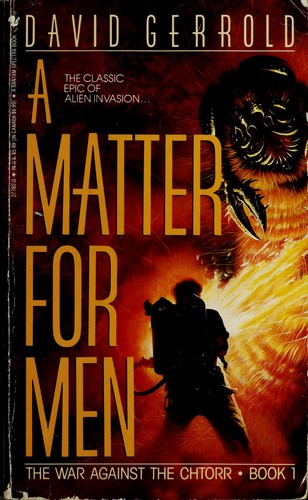
The first book in The War Against the Chtorr opens after plague has devastated humanity and an aggressive alien ecology has begun spreading across Earth. The Chtorran worms are the obvious monsters, but they are only one part of a complete biological system replacing native species from the ground up.
I include it because ecological invasion is much scarier than a line of flying saucers. There may be no general issuing orders on the other side at all. Gerrold is interested in training, psychology, institutional confusion, and the nasty realization that Earth’s biosphere itself has become contested territory. One warning: the series remains unfinished.
8. Footfall by Larry Niven and Jerry Pournelle
Elephant-like aliens arrive in the Solar System, attack from orbit, and attempt to force humanity into the dominance rituals of their herd culture. Scientists, soldiers, politicians, and science-fiction writers are pulled into an enormous counterattack as both species repeatedly misread the other’s behavior.
For big military-invasion spectacle, this is still hard to beat. It has dated Cold War politics and enough hardware talk to stock a warehouse, but it also thinks seriously about asymmetrical warfare and cultural misunderstanding. When I want the version with orbital mechanics, improvised superweapons, and a genuinely enormous final act, this is the pick.
9. The Forge of God by Greg Bear
Unexplained objects appear on Earth, contradictory alien messengers deliver warnings, and scientists slowly realize that the planet has been targeted by a civilization-destroying mechanism. The question is not simply how to repel an enemy. It is whether anyone can identify what is happening before the process becomes irreversible.
Bear writes this as disaster fiction on a planetary scale, full of dread, denial, and dwindling options. What distinguishes it from most invasion novels is its willingness to treat Earth’s destruction as a real possibility rather than a threat waiting for a heroic reversal. It is devastating precisely because the universe does not owe us a fair fight.
10. Dawn by Octavia E. Butler
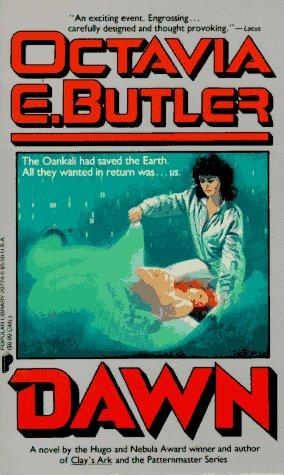
Lilith Iyapo wakes aboard an alien ship centuries after nuclear war has made Earth uninhabitable. The Oankali have restored the planet and rescued the surviving humans, but they will only return them as part of a compulsory genetic trade. Lilith must prepare other survivors for a future that many of them consider a form of extinction.
This is not a conventional invasion—humanity ruins the world before the aliens arrive—but it may be the best colonization novel here. Butler makes rescue and coercion impossible to separate. The Oankali are persuasive, frightening, and not easily reduced to villains, which makes the book’s questions about consent, hierarchy, and survival far more difficult than a simple war story allows.
11. All You Need Is Kill by Hiroshi Sakurazaka
Keiji Kiriya is a new recruit in humanity’s war against the alien Mimics. He dies during his first battle, wakes the previous morning, and discovers that he is trapped in a loop. Repetition turns him into a better soldier, but escape depends on understanding both the aliens and Rita Vrataski, the legendary fighter known as the Full Metal Bitch.
The novel is leaner and stranger than its film adaptation, Edge of Tomorrow. It compresses alien war into the experience of doing the same terrifying day until competence begins to look like imprisonment. Pick this when you want powered armor and battlefield momentum without committing to an 800-page military epic.
12. The Three-Body Problem by Cixin Liu
A physicist’s death draws nanotechnology researcher Wang Miao into a mystery involving a virtual world, impossible experimental results, and a message sent into space during the Cultural Revolution. Humanity learns that an alien fleet is coming—but its arrival is centuries away, giving the invasion time to become a political, scientific, and philosophical crisis before it becomes a battle.
This is the best modern recommendation for readers who want scale and ideas. Liu asks what preparation for an invasion would do to generations of people who will never see the enemy arrive. It can be emotionally cool and heavily expository, but the concepts keep expanding until the human future feels both vast and horribly constrained.
13. The 5th Wave by Rick Yancey
After an alien attack knocks out technology, triggers disasters, and unleashes disease, Cassie Sullivan searches for her missing brother in a nearly emptied America. The invaders’ most effective weapon is their final one: making the survivors suspect that some humans are no longer human at all.
This is the easiest YA entry point on the list. Yancey borrows the subgenre’s classic paranoia and gives it blockbuster pace, multiple viewpoints, and a sharp survival premise. The romantic plot will work better for some readers than others, but the invasion strategy is genuinely nasty because it targets cooperation itself.
14. Fear the Sky by Stephen Moss
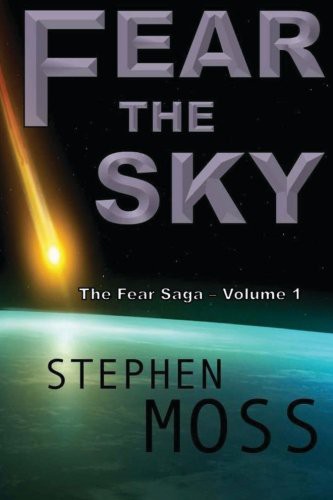
A hostile alien force is approaching Earth, while infiltrators equipped with advanced technology prepare the planet for conquest from within. A small group discovers the threat and begins a desperate attempt to accelerate human defenses before the main fleet arrives.
This is the indie, modern military-thriller pick: less polished than the classics, but very good at countdown pressure, clandestine preparation, and the pleasure of watching people build a response under impossible time constraints. If The Three-Body Problem sounds too philosophical and Footfall too Cold War, this sits neatly between them.
15. The Sound of Stars by Alechia Dow
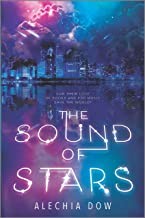
Two years after the Ilori invade Earth and outlaw emotional expression, Ellie Baker secretly preserves books in an occupied New York center. Morris, an Ilori commander with a forbidden love of human music, discovers her library and becomes her unlikely partner in a journey that could change the relationship between both species.
I wanted to end with an invasion novel that values culture as much as resistance. The romance is central, but so are censorship, occupation, and the stubborn survival of art. It is warmer than nearly everything else here, making it a useful palate cleanser after planetary destruction, body theft, and several hundred pages of military panic.
Where I Would Start
If you want the genre in its purest form, read The War of the Worlds, The Body Snatchers, and Footfall. Between them you get open attack, secret replacement, and full-scale military resistance.
If you prefer bigger ideas to combat, choose Childhood’s End, Dawn, or The Three-Body Problem. Each asks whether humanity can survive contact without ceasing to be recognizably human.
For the bleak path, go with The Genocides and The Forge of God. For a fast entry point, choose The 5th Wave or All You Need Is Kill. And if you want the occupied-Earth version, start with The White Mountains before moving to The Sound of Stars.
Three Runners-Up
- Out of the Dark by David Weber: a straightforward modern military invasion with a famously divisive late twist. Worth trying if you want maximum hardware and do not mind the book changing genres at the finish line.
- Columbus Day by Craig Alanson: the comic military-space-opera route, beginning with an attack on Earth before expanding into a much larger galactic conflict. Read it for banter and series momentum rather than apocalyptic dread.
- The Killing Star by Charles R. Pellegrino and George Zebrowski: a hard-to-find, deeply pessimistic take on why an advanced civilization might strike first. It is one of the colder answers to the invasion question, but availability keeps it off the core list.