
What Caused the Apocalypse in The Road? Every Major Theory
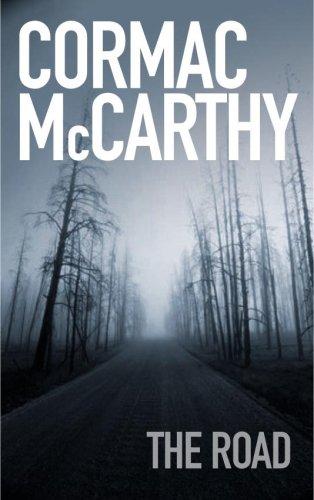
Books Like The Road by Cormac McCarthy
Cormac McCarthy never tells us exactly what caused the apocalypse in The Road. The novel gives us a flash, concussions, dead power, years of ash, a hidden sun, bitter cold, burning cities, earthquakes, and the near-total collapse of plant and animal life. It never names a bomb, meteor, volcano, war, or environmental crisis.
That omission is deliberate. A meteor or asteroid impact is probably the strongest physical explanation, nuclear war is the most familiar visual match, and a supervolcano fits much of the ash-filled aftermath. None explains every detail neatly—and McCarthy did not want one to.
Short Answer
The apocalypse is officially unexplained. If I had to choose, I would put meteor impact first, nuclear war second, and a supervolcano third—but the ambiguity matters more than the ranking.
What the Novel Actually Tells Us
The disaster itself appears only in a brief memory. The clocks stop at 1:17. The man sees what McCarthy calls a “long shear of light,” hears low concussions, finds the electricity already gone, and begins filling the bathtub while distant fires color the window.
Years later, ash covers everything. The sun has almost disappeared behind the atmospheric murk. The weather is cold, trees are dying and falling, crops no longer grow, animals have almost vanished, and the survivors are running out of scavenged food. Fires and tremors continue after the original event.
Those clues narrow the field, but they do not identify one cause.
| Clue in The Road | What it suggests | Theories it supports |
|---|---|---|
| Sudden flash and low concussions | A violent, near-instant event | Meteor impact or nuclear attack |
| Clocks stop and electricity fails | Grid destruction or a powerful electromagnetic/physical shock | Nuclear attack or major impact |
| Persistent ash and weak sunlight | Huge quantities of material in the atmosphere | Impact winter, nuclear winter, or volcanic winter |
| Cold, failed crops, and dying forests | Photosynthesis and the food chain have collapsed | All three leading theories |
| Distant cities burn | Widespread ignition after the event | Nuclear war or impact; possibly volcanic activity |
| Continuing tremors and falling trees | Long geological or structural aftershocks | Impact or major eruption |
| No discussion of radiation or fallout | The survivors do not behave as if contamination is the central danger | Weakens—but does not eliminate—the nuclear theory |
The most important limitation is geographical. The man and boy see only a narrow portion of the ruined United States. The prose speaks as if the whole world is dead, but the characters have no working communications and no way to verify the global scale of the disaster.
Theory 1: A Meteor or Asteroid Impact
This is the theory I find most convincing. A sufficiently large impact would produce an immense flash, shock waves, earthquakes, wildfires, and atmospheric debris. Dust and soot could block sunlight, drive temperatures down, stop photosynthesis, and collapse food chains—the exact combination that defines the world of The Road.
It also has the strongest connection to McCarthy’s own comments. In a 2009 Wall Street Journal interview, he said he had no fixed answer, but geologists he knew at the Santa Fe Institute thought the landscape looked like the result of a meteor. He immediately added that volcanic activity or nuclear war could also produce it.
The weaknesses are mostly about scale and proximity. An impact close enough for the man to see the initiating light and hear the shock would be extraordinarily destructive, while a distant strike might not stop the clocks at precisely that moment. But the novel is not a forensic simulation. As a broad explanation for the flash, ash, cold, fires, tremors, and biological collapse, an impact covers more clues with fewer extra assumptions than the alternatives.
Verdict: the best physical fit, but not a confirmed answer.
Theory 2: Nuclear War and Nuclear Winter
Nuclear war is the default assumption for many readers because The Road looks like the cultural image of nuclear winter. The sudden light could be a detonation. The concussions could be multiple strikes. An electromagnetic pulse could explain the clocks and electricity failing. Burning cities would pump smoke into the atmosphere, and a large exchange could produce prolonged cooling and crop failure.
The father’s fatal respiratory illness also tempts readers toward radiation sickness. That is possible, but it is weak evidence. He has spent years breathing ash, living in extreme cold, and suffering malnutrition without meaningful medical care. The book never identifies his illness, just as it never identifies the catastrophe.
The bigger problem is what McCarthy leaves out. Nobody mentions missiles, enemy nations, fallout, radiation, contaminated zones, blast centers, or the political events that would have preceded a nuclear exchange. The man is extremely practical about water, food, shelter, and danger, yet he never treats radiation as a survival problem.
That silence does not disprove nuclear war. Years have passed, and the characters’ immediate concern is starvation. But for a writer as selective as McCarthy, the total absence of nuclear language feels meaningful.
Verdict: very plausible imagery, surprisingly little direct textual support.
Theory 3: A Supervolcano
A massive volcanic eruption explains the novel’s most persistent substance: ash. An eruption on the scale of Yellowstone could fill the atmosphere with dust and sulfur aerosols, darken the sky, reduce temperatures, wreck harvests, poison water, and leave enormous regions buried. Earthquakes, ongoing fires, and a landscape that continues to shift also sit comfortably with a geological catastrophe.
McCarthy mentioned Yellowstone in the same interview in which he discussed the meteor and nuclear possibilities. That does not mean he secretly selected it as the answer. It shows that volcanic catastrophe was one of the real-world scenarios in his mind.
The initiating scene is the problem. Unless the family lives very close to the eruption, a supervolcano does not explain the visible shear of light and immediate concussions as cleanly as a bomb or impact. If they are close enough to witness its most violent effects directly, their survival becomes harder to credit. The stopped clocks also need a secondary explanation, such as grid failure or earthquake damage.
Verdict: the best explanation for the ash, but a weaker match for the opening flash.
Theory 4: Climate Change or Ecological Collapse
The dead forests, unstable weather, food scarcity, and vanished animals make The Road feel environmental. It has often been read as an ecological warning, and that reading is completely reasonable. But gradual climate change does not explain the sudden 1:17 event, the flash, the concussions, or the immediate power failure.
The same problem rules out a pandemic as the primary cause. Disease could kill most people, but it would not burn cities, fill the atmosphere with ash, stop photosynthesis, and eliminate most nonhuman life.
A slower environmental crisis could have made the world more vulnerable before a final catastrophe, but the book supplies no evidence for that chain of events. Climate collapse works better as a thematic lens than as the literal trigger.
Verdict: important to the novel’s meaning, unlikely to be the initiating event.
Theory 5: A Biblical or Supernatural Apocalypse
The Road is saturated with religious language. The father imagines the boy as something sacred, the pair talk about carrying the fire, and ruined landscapes take on the scale of judgment. The book repeatedly tests whether moral law, God, and human goodness can mean anything in a world that seems to have withdrawn support for life itself.
That has led some readers to treat the disaster as a biblical apocalypse or divine judgment. It is a powerful interpretation, but not a strong literal theory. McCarthy provides physical clues—light, concussions, ash, fires—and later spoke about meteor, volcanic, and nuclear explanations. The religious language tells us how the characters understand their ordeal, not necessarily what caused it.
I would put this in a different category from the first three theories. A meteor and a bomb compete as plot mechanics. The biblical reading explains why the destruction feels like more than scenery.
Verdict: thematically essential, physically unprovable.
Could It Be a Combination of Disasters?
Yes, and this solves several awkward details. A nuclear exchange could trigger mass fires and atmospheric cooling. An impact could cause earthquakes, tsunamis, wildfires, and secondary industrial disasters. A major eruption could coincide with grid collapse and urban fires. Once modern infrastructure fails, disease, starvation, exposure, and violence do most of the remaining killing.
But a multi-cause theory can become too convenient. If every unexplained clue receives its own disaster, the explanation stops being an interpretation and becomes fan-written backstory. McCarthy gives us one abrupt initiating moment and a long cascade of consequences. The cleanest reading is still one primary catastrophe followed by ordinary systems collapse.
What Caused the Apocalypse in the Movie The Road?
The 2009 movie does not provide a different answer. It retains the stopped clocks, light, concussions, fires, ash, cold, tremors, and dying landscape while refusing to name the event.
Director John Hillcoat described that choice as intentional. In a Washington Post interview, he said the production wanted the apocalypse to feel familiar but non-specific. The film combines associations from different real disasters rather than turning the story into a recognizable account of nuclear war, an asteroid strike, or a volcanic eruption.
The visual evidence still nudges many viewers toward a natural catastrophe. Repeated earthquakes, falling trees, a stranded ship, and the film’s ash-covered landscape look like an impact or geological event. The orange glow and dead electricity can look nuclear. Neither interpretation becomes canon.
Movie answer: the catastrophe is deliberately unnamed, just as it is in the book.
Why McCarthy Refuses to Explain It
A conventional apocalypse novel often organizes itself around cause. Who launched the missile? Where did the virus begin? Can the asteroid be stopped? The Road begins after all of those questions have become useless.
McCarthy’s characters cannot prevent the disaster, investigate it, or teach future generations what happened. They can only decide what kind of people they will be while hungry and frightened. Naming the cause would encourage us to look backward toward politics or science. Withholding it forces us to remain beside the father and son in the present tense of survival.
McCarthy’s own summary was blunt: the precise cause was “not really important.” The important question was what people do next. That is why the ambiguity does not feel like missing world-building. It is the mechanism that strips the story down to love, fear, hunger, and moral choice.
So, What Is the Most Likely Answer?
My ranking is:
- Meteor or asteroid impact: best overall match for the flash, concussions, ash, cold, tremors, fires, and mass extinction—and the explanation geologists reportedly suggested to McCarthy.
- Nuclear war: strong match for the sudden light, power failure, burning cities, and nuclear-winter atmosphere, but weakened by the absence of radiation or warfare.
- Supervolcano: excellent explanation for the ash and prolonged cold, less convincing for the precise initiating moment.
- Climate or ecological collapse: central to how the aftermath reads, but too gradual to explain the event itself.
- Biblical apocalypse: a rich account of the novel’s symbolism, not a testable physical cause.
The honest answer remains that The Road has no canonical apocalypse. Meteor impact is the best theory, not the solution to a puzzle McCarthy left for readers to crack. The uncertainty is part of the novel: the old world is so completely gone that even the story of its ending has become inaccessible.