The 11 Best Young Adult Post-Apocalyptic Books
The 128 Best Post-Apocalyptic Books
The best YA post-apocalyptic books understand that being a teenager already means inheriting a world built by other people—and discovering that many of its rules make no sense. Add zombies, alien occupation, climate disaster, or an authoritarian state, and that coming-of-age conflict becomes a fight over who gets to shape whatever comes next.
This list covers several sides of the genre: immediate catastrophe, survival in the aftermath, and dystopian societies built after an earlier collapse. I have marked the boundary cases rather than pretending every ruined future is the same. I have also replaced Wool from the old version of this guide: Hugh Howey’s novel is an excellent adult crossover, but it was not published as YA.
The recommendations are ordered to put the strongest all-round starting points first, then branch into distinct moods and subgenres. Plot descriptions stay spoiler-light.
The Best YA Apocalypse Books at a Glance
- Best overall: The Hunger Games by Suzanne Collins
- Best realistic survival story: Life As We Knew It by Susan Beth Pfeffer
- Best zombie novel: The Forest of Hands and Teeth by Carrie Ryan
- Best alien-invasion thriller: The 5th Wave by Rick Yancey
- Best for serious political science fiction: War Girls by Tochi Onyebuchi
- Best survival mystery: The Maze Runner by James Dashner
- Best supernatural apocalypse: Angelfall by Susan Ee
- Best social dystopia: Uglies by Scott Westerfeld
- Best action-and-romance dystopia: Divergent by Veronica Roth
- Best hopeful, art-loving apocalypse: The Sound of Stars by Alechia Dow
- Best queer political fantasy: The Fever King by Victoria Lee
> Ryan's quick-start picks
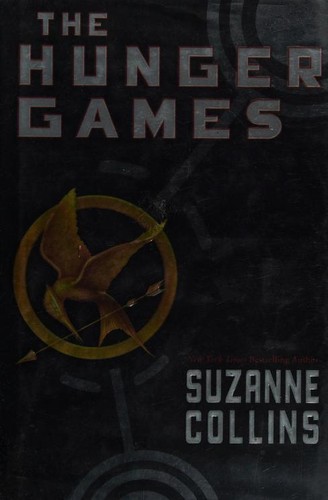
The Hunger Games
Start here for the genre-defining mix of survival, political control, moral compromise, and a heroine who changed YA fiction.
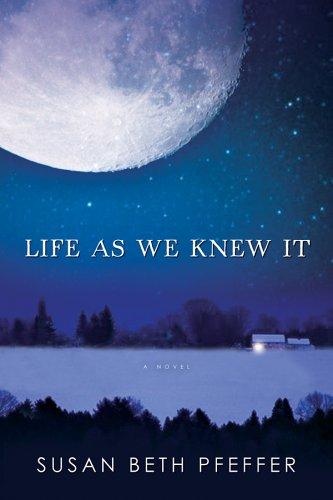
Life As We Knew It
Choose this for a grounded diary of family survival in which food, heat, weather, and ordinary resentment matter more than spectacle.
The Forest of Hands and Teeth
Choose this for a gothic zombie story about faith, desire, enclosure, and the dangerous possibility of another world.
1. The Hunger Games by Suzanne Collins
Best for: survival, political rebellion, and the strongest all-round introduction to YA dystopia.
Katniss Everdeen has learned to keep her family alive in District 12, one of the impoverished regions controlled by the Capitol. When her younger sister is selected for the Hunger Games—a televised contest in which twenty-four children are forced to fight to the death—Katniss volunteers in her place. Surviving the arena means understanding not only violence and scarcity, but performance, propaganda, and what the audience needs her to become.
This is a post-collapse dystopia rather than a novel about the apocalypse itself. Panem arose after disasters and war destroyed the old North America, but Collins keeps the first book focused on the political order built afterward. That distance lets the novel ask a sharper question: how does a regime turn past catastrophe into justification for present cruelty?
Katniss is capable without being emotionally effortless, and every apparent choice carries pressure from family, state, sponsors, allies, and spectators. The book moves like a thriller while refusing to make violence uncomplicated entertainment. It remains the best starting point for most readers.
2. Life As We Knew It by Susan Beth Pfeffer
Best for: plausible household survival and readers who prefer realism to rebellion.
An asteroid knocks the moon closer to Earth, triggering catastrophic tides, earthquakes, volcanic activity, crop failure, and extreme weather. Sixteen-year-old Miranda records the crisis from her Pennsylvania home as school and friendships disappear behind more immediate calculations: food, heat, water, illness, and how long her family can remain together.
The diary format gives Miranda only the information an ordinary teenager could plausibly have. She does not uncover a conspiracy or discover that she alone can save the planet. She watches her world shrink to the house, the pantry, the wood stove, and the people whose needs now compete with her own.
That intimate scale makes this one of the most convincing YA disaster novels. Miranda can be generous, angry, frightened, selfish, and resilient within the same week. The apocalypse does not instantly turn her into an adult; it forces her to grow while the ordinary structures of growing up vanish.
3. The Forest of Hands and Teeth by Carrie Ryan
Best for: gothic atmosphere, zombies, forbidden knowledge, and dangerous longing.
Mary has always lived inside a fenced village surrounded by the Forest of Hands and Teeth. Beyond the barriers, the Unconsecrated press through the trees; inside them, the Sisterhood controls knowledge, faith, marriage, and the stories people are permitted to believe. Mary cannot stop wondering whether the ocean her mother described is real—or whether any world exists beyond the one fear has built around her.
Ryan uses the zombie enclosure as both a physical threat and a social system. Mary’s desire for freedom is understandable but not automatically noble: it affects the people who love her, collides with duty, and sometimes becomes as consuming as the danger outside. That moral friction gives the familiar “girl escapes a restrictive village” premise real bite.
Read this for claustrophobia and yearning rather than tactical zombie combat. It is romantic, bleak, and unusually good at making hope feel dangerous.
4. The 5th Wave by Rick Yancey
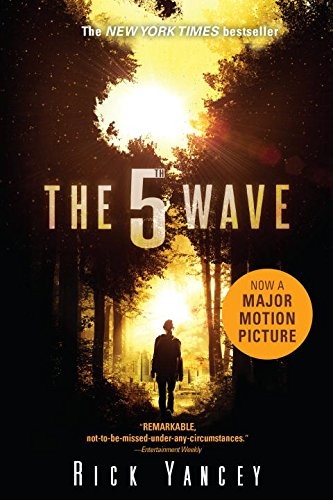
Best for: a fast alien-invasion thriller built around mistrust.
Four waves of attack have stripped humanity of electricity, destroyed coastal cities, spread a lethal disease, and made every survivor fear that the enemy may look human. Cassie Sullivan is alone and searching for her younger brother when the anticipated fifth wave begins to take shape. To reach him, she has to decide whether trusting another person is more dangerous than continuing alone.
The novel uses several viewpoints, widening the story beyond Cassie’s journey and gradually revealing how the invaders weaponise uncertainty. Its best idea is simple: once nobody can reliably identify the enemy, human cooperation becomes almost impossible. The alien strategy attacks social trust as thoroughly as infrastructure.
There is romance, military training, and blockbuster plotting here. Choose it when you want the pace and scale of a summer film without losing the paranoid survival problem underneath.
5. War Girls by Tochi Onyebuchi

Best for: climate-ravaged Afrofuturism, sisterhood, and the human cost of war.
In 2172, climate change and nuclear disasters have made much of Earth unlivable while privileged populations escape to space colonies. A renewed civil war divides a futuristic Nigeria where soldiers use flying mechs, bionic limbs, and artificial organs to survive a radiation-heavy environment. Sisters Onyii and Ify are separated by an attack and drawn onto opposing paths through the conflict.
The technology is spectacular, but Onyebuchi keeps returning to the bodies and relationships that war alters. The novel takes inspiration from the Nigerian Civil War and refuses to reduce either side to a clean heroic faction. Onyii and Ify experience ideology, propaganda, grief, and survival from positions that keep changing what each believes about the other.
This is heavier and more politically demanding than most entries here. It belongs high on the list because it treats the post-apocalyptic setting as history with causes, beneficiaries, and consequences—not merely an exciting ruined backdrop.
6. The Maze Runner by James Dashner

Best for: puzzles, dangerous tests, amnesia, and a quick-moving series opener.
Thomas wakes in a rising lift able to remember only his name. It delivers him to the Glade, where a community of boys lives inside towering walls. Beyond them is an enormous maze whose routes change each night and whose mechanical creatures make exploration lethal. Then the first girl arrives with a message that destabilises every routine the Gladers have built.
The first book reveals its apocalypse indirectly. Thomas and the reader begin with the same missing information, so the immediate question is not what ended the world but who created the maze and why teenagers have been placed inside it. That controlled ignorance gives the novel its momentum.
Characterisation is broader than it is deep, and the story saves major answers for later books. Pick it for the survival-puzzle structure, group dynamics, and the pleasure of a mystery that keeps changing its walls.
7. Angelfall by Susan Ee

Best for: supernatural apocalypse, sibling loyalty, horror, and enemies-to-allies tension.
Six weeks after angels descend and demolish the modern world, gangs control the streets by day and fear governs the night. Seventeen-year-old Penryn watches warrior angels abduct her younger sister, Paige. Her only possible guide is Raffe, an injured enemy angel who has lost his wings and needs to reach the same stronghold in San Francisco.
Penryn’s priorities keep the enormous premise personal. She is not trying to solve angelic theology or rescue humanity; she is trying to recover her sister while also protecting a complicated, vulnerable family. Her alliance with Raffe grows from necessity, distrust, and incompatible goals rather than instant destiny.
This is the book to choose when scientific explanations feel less important than nightmare imagery and relentless movement. It mixes horror, action, humour, and romantic tension without softening how strange its angels are.
8. Uglies by Scott Westerfeld
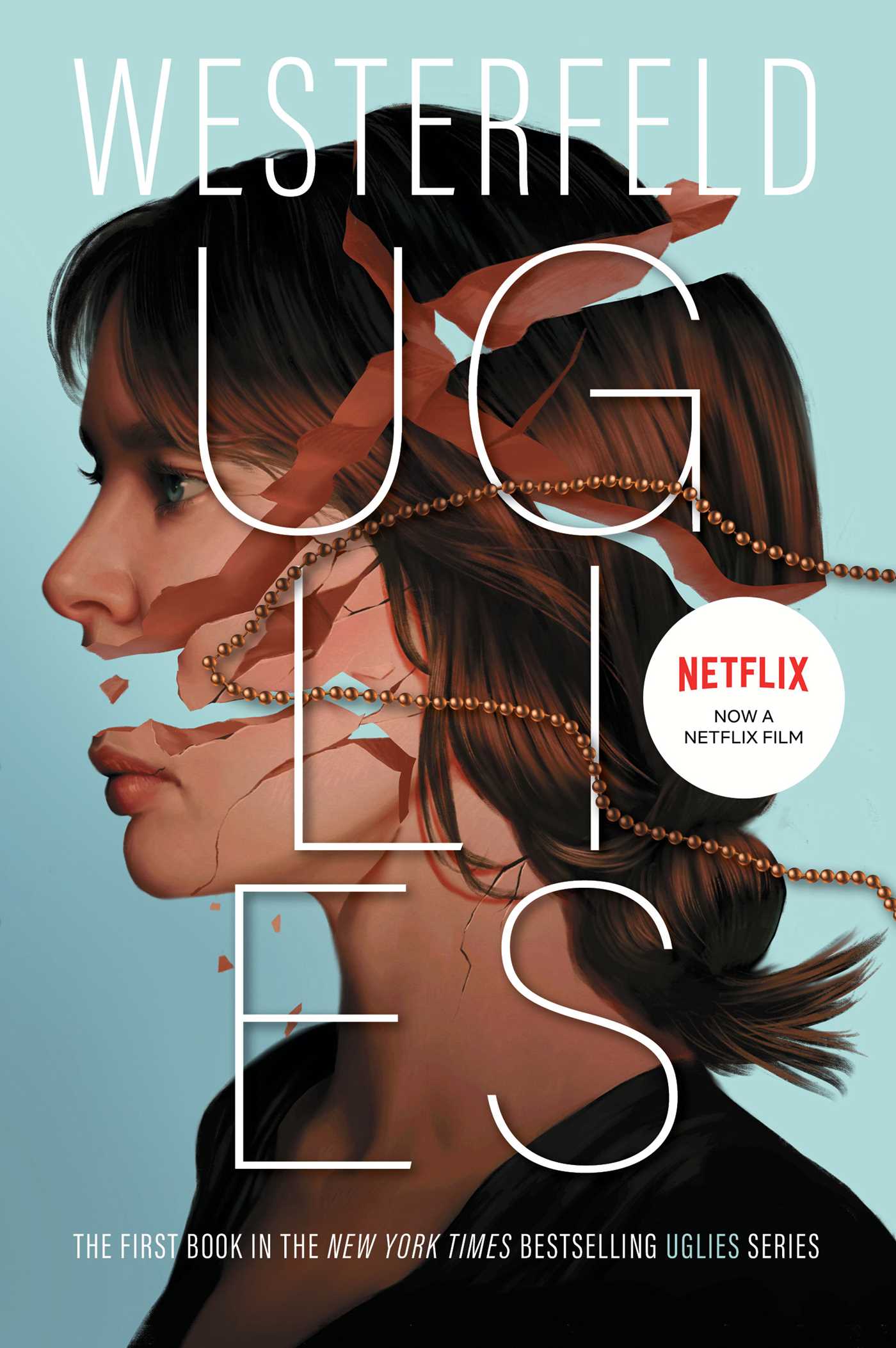
Best for: beauty standards, conformity, and a heroine who begins by wanting what the system offers.
Tally Youngblood is waiting for the operation that will make her “pretty” at sixteen and admit her to a life of engineered beauty and endless fun. Her friend Shay does not want the surgery. When Shay runs away, the authorities give Tally a choice: find and betray her friend, or remain ugly forever.
This is another post-collapse dystopia rather than an active apocalypse. The old “Rusty” civilisation destroyed itself; Tally’s high-tech society claims that compulsory transformation helped create a stable replacement. The novel’s real subject is how coercion works when the promised reward is something the protagonist sincerely desires.
Tally compromises, makes mistakes, and learns slowly. That is more interesting than making her immune to propaganda from page one, and it gives the series room to explore how identity changes when bodies and minds can both be redesigned.
9. Divergent by Veronica Roth

Best for: training sequences, faction politics, romance, and decisive action.
In a future Chicago, society sorts people into five factions built around a single defining virtue. Beatrice Prior has grown up in selfless Abnegation, but her aptitude test produces a dangerous result spanning more than one faction. She chooses Dauntless, renames herself Tris, and enters an initiation process designed to test courage through competition, fear, and physical risk.
The first novel is much more interested in its faction system than the catastrophe that preceded it; the wider post-apocalyptic history emerges across the trilogy. What earns it a place here is the way Tris discovers that the qualities her culture treats as incompatible can coexist inside one person.
Roth writes for momentum. The faction logic becomes less convincing the harder it is examined, but the initiation structure, identity conflict, and romance make this an extremely accessible gateway into YA dystopia.
10. The Sound of Stars by Alechia Dow
Best for: books, pop music, queer romance, and hope under alien occupation.
Two years after the Ilori invasion kills a third of humanity, seventeen-year-old Ellie Baker lives in an occupied centre in New York City. Creative expression is illegal, but Ellie maintains a secret library. Morris, a young Ilori commander who secretly loves human music, discovers her books and faces a choice between enforcing the law and pursuing a rebellion of his own.
Their connection gives the novel a softer centre than most alien-apocalypse fiction. Art is not decorative evidence that civilisation once existed; it is how Ellie and Morris recognise an inner life the occupation wants to suppress. A cross-country journey adds danger, but the real stakes remain expression, trust, and whether two people raised as enemies can imagine another relationship.
This is earnest, romantic, and deliberately hopeful. Choose it when you want resistance powered by stories and songs rather than another arena or military unit.
11. The Fever King by Victoria Lee

Best for: queer romance, refugee politics, science-based magic, and morally dangerous mentorship.
In the former United States, sixteen-year-old Noam Álvaro survives a viral outbreak that kills his family and leaves him with technopathic magic. His new ability attracts the defence minister of Carolinia, a nation that excludes and deports refugees fleeing magical disease. Noam enters the magical elite intending to use its training against the government, but power, attraction, and manipulation make his loyalties increasingly difficult to separate.
This is dystopian fantasy built after waves of plague rather than a conventional survival story. Lee is interested in who controls borders, who is allowed to become a citizen, and how a traumatised teenager can be exploited by adults who make political ambition feel like personal recognition.
The romance and mentor relationships contain sharp power imbalances, and the book engages directly with abuse, suicide, and intergenerational trauma. Read it for political tension and character damage, not a comforting magical academy.
Where Should You Start?
- Start with The Hunger Games for the strongest overall blend of pace, character, and political purpose.
- Choose Life As We Knew It for realistic survival or The Forest of Hands and Teeth for gothic zombies.
- Choose The 5th Wave or The Maze Runner for high-concept science-fiction momentum.
- Choose Angelfall for supernatural horror and romantic tension.
- Choose Uglies or Divergent for classic YA dystopian systems.
- Choose War Girls for the most serious treatment of war and climate collapse.
- Choose The Sound of Stars for hope and art, or The Fever King for darker queer political fantasy.
YA apocalypse fiction works best when catastrophe intensifies the questions its characters were already facing: Who am I apart from the system that raised me? What do I owe my family? Which adults deserve trust? What kind of future is worth rebuilding? These eleven books answer in radically different ways, which is exactly why the genre remains bigger than any single arena, faction, maze, or outbreak.
Content note: these books collectively include child death, war, suicide, abuse, medical experimentation, ableism, body horror, sexual threat, and graphic violence. Check title-specific guidance if you need more detail before reading.