Draft: The Best Post-Apocalyptic Fantasy Books, from Dying Earth to Mythic Wastelands
Ash Tales
If classic fantasy can sometimes feel a little too polished, and straight post-apocalyptic fiction a little too brutally literal, this is the overlap I keep coming back to. Post-apocalyptic fantasy gives you relics, ruined empires, half-understood technology, broken cosmologies, and landscapes that feel old enough to have turned into myth.
It is also a messier category than people think. A lot of dark fantasy gets called post-apocalyptic just because it is dirty, violent, or ash-covered. That is not really what I mean here. For this list, I wanted books where a world has clearly fallen from some earlier height, or where catastrophe has so thoroughly reshaped reality that the setting feels like fantasy growing out of rubble.
When I look for post-apocalyptic fantasy, I am usually after one of four flavors: the dying-earth book where civilization has been decaying for ages; the science-fantasy ruin where old technology now reads like magic; the mythic wasteland quest where the world has quite literally moved on; or the cataclysm novel where fantasy elements start blooming out of disaster. The books below are the strongest examples I have found across those lanes.
Best Post-Apocalyptic Fantasy Books at a Glance
- Best overall: The Book of the New Sun by Gene Wolfe
- Best for modern epic scope: The Fifth Season by N.K. Jemisin
- Best for mythic wasteland questing: The Dark Tower by Stephen King
- Best classic dying-earth pick: Dying Earth by Jack Vance
- Best for nuclear-folkloric weirdness: Riddley Walker by Russell Hoban
- Best if you want brutality over comfort: Prince of Thorns by Mark Lawrence
- Best borderline pick for ash-choked ruined empire: Mistborn by Brandon Sanderson
- Best if you want fantasy rising out of nuclear horror: Swan Song by Robert McCammon
> Ryan's quick-start picks
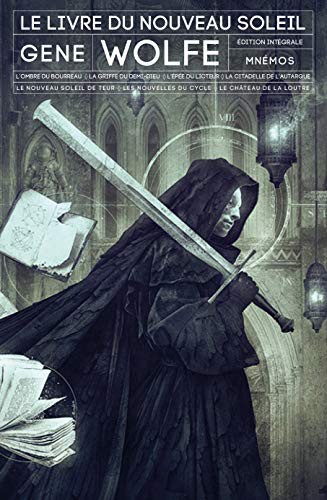
The Book of the New Sun
Start here for the richest all-in-one version of the subgenre: ruins, relics, decay, theology, and science-fantasy haze.

The Fifth Season
Start here if you want the most contemporary, emotionally intense version of catastrophe turned mythic epic.
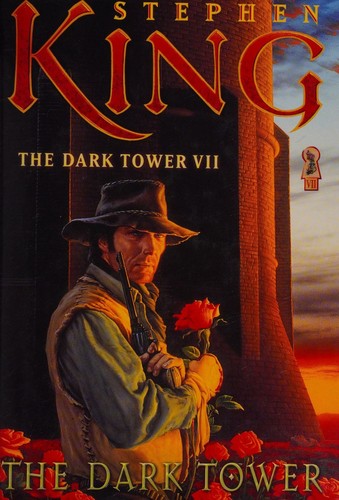
The Dark Tower
Start here for gunslinger quest energy, broken worlds, and the feeling that the apocalypse happened so long ago it became folklore.
What counts as post-apocalyptic fantasy?
For me, the key test is simple: if you removed the long shadow of collapse, would the book still be the same book?
In The Book of the New Sun, Riddley Walker, and A Canticle for Leibowitz, the answer is clearly no. Their religions, vocabularies, politics, and landscapes all exist because some prior civilization fell and left scraps behind. In The Fifth Season and Swan Song, catastrophe is more immediate, but it still remakes the world so completely that the story starts behaving like fantasy rather than ordinary disaster fiction.
That is why I left out a few books people sometimes throw into this bucket. Grimdark on its own is not enough. Secondary-world misery is not enough. I wanted books where apocalypse feels structural, not decorative.
The Book of the New Sun by Gene Wolfe
If you only read one book from this list, I would make it this one. Wolfe’s far-future Urth is one of the great ruined settings in speculative fiction: decayed citadels, broken hierarchies, relic technologies treated like miracles, and a sun so exhausted that the whole world feels spiritually dimmer for it.
This is my favorite version of post-apocalyptic fantasy because it does not explain itself in the tidy modern way. It lets you feel the age of the world first. You get the texture of collapse before you get the map of collapse. That makes the setting feel genuinely ancient, not just cosmetically wrecked.
The warning is that Wolfe is demanding. If you want hand-holding, this is not the friendly starter pick. If you want atmosphere, ambiguity, and the strongest possible argument that science-fantasy ruins can feel more magical than many actual magic systems, it is superb.
The Fifth Season by N.K. Jemisin
Jemisin’s novel belongs here because it understands catastrophe on every scale at once: continental, political, intimate, geological. The Stillness is already a civilization built around repeated world-breaking events, and the book’s magic, prejudice, architecture, and survival logic all grow directly out of that fact.
This is the book I would hand to readers who want post-apocalyptic fantasy without giving up modern narrative velocity. It is sharper and more emotionally punishing than some of the older classics on this list, and it feels much more interested in systemic cruelty than romantic decay.
It is also one of the best examples of the category not needing to look medieval. Jemisin makes apocalypse feel infrastructural. You are not just wandering pretty ruins. You are living inside a society that reorganized itself around recurring civilizational trauma.
If this is your lane, the natural Ash Tales side route after it is climate fiction books, because that guide overlaps on ecological stress, collapsing systems, and adaptation under planetary pressure.
The Dark Tower by Stephen King
This is still one of the best answers for readers who want the wasteland as myth. Mid-World feels like a fantasy realm, a western, and a post-collapse afterimage of some older technological order all at once. Time is wrong. Geography is wrong. History feels splintered. That instability is exactly why it works.
I do not reach for The Dark Tower first when someone wants the most rigorous apocalypse premise. I reach for it when they want atmosphere, pilgrimage, relics, and the sensation that the world has become a haunted corridor of leftovers. It is less about the event and more about the long spiritual aftertaste.
If your favorite version of apocalypse is the one where every surviving institution has turned eccentric, ceremonial, or half-mad, this is a brilliant fit. It also makes a strong companion to Books Like Fallout, just from the more mythic, less satirical end of the ruined-world spectrum.
Dying Earth by Jack Vance
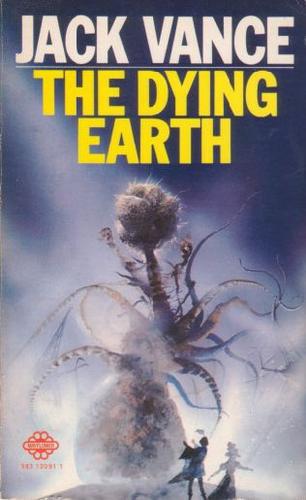
Jack Vance is one of the clearest foundational texts for this whole mode. The world of Dying Earth is not fresh from disaster; it is centuries deep into exhaustion. The sun is failing, civilizations are threadbare, and the mood is less “how do we survive?” than “what strange habits and vanities survive at the edge?”
That long-tail decay is why I like it so much here. Plenty of post-apocalyptic books still behave like thrillers. Dying Earth behaves like a decadent travelogue through the late afternoon of history.
If you want clean plot propulsion, other books on this page do that better. If you want the subgenre’s most important old-school atmosphere piece, though, start here and then move outward to Wolfe.
Riddley Walker by Russell Hoban

This is the strangest recommendation on the list, and one of the most rewarding. Hoban imagines a post-nuclear England whose language, religion, politics, and puppet-show mythology have all been warped by centuries of partial remembering. It reads like folklore built out of fallout.
I would not call it the easiest entry point, but I do think it is one of the purest examples of post-apocalyptic fantasy. The fantasy feeling does not come from dragons or spellcraft. It comes from the way history has been chewed up and reissued as ritual, misunderstanding, and sacred story.
That makes it a great pick for readers who care more about cultural afterlife than battle scenes. If you liked the relic-and-monastic side of A Canticle for Leibowitz, this is a rougher, weirder cousin worth your time.
Prince of Thorns by Mark Lawrence

This is the recommendation I make with the most caveats. Lawrence’s world is unmistakably post-collapse, but the appeal is very specific: brutality, forward momentum, damaged psychology, and the nasty pleasure of watching a fantasy setting reveal the broken technological skeleton underneath itself.
I keep it on the page because there is a real subset of readers who want exactly that flavor. They do not want elegiac ruins or mystical wonder. They want a ruined world that has gone feral and stayed that way.
If that sounds exhausting rather than enticing, skip it. If you like your post-apocalyptic fantasy sharp-edged and mean, it earns its spot.
Mistborn by Brandon Sanderson
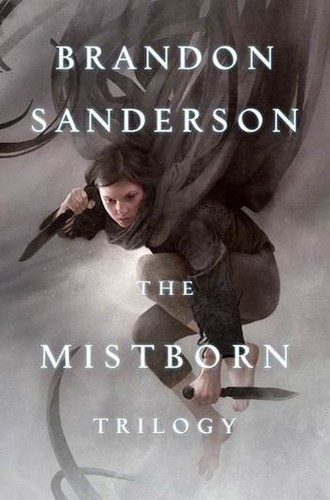
This is my biggest borderline inclusion, but I still think it belongs. Mistborn is not a classic rubble-and-relic apocalypse novel in the same way as Wolfe or Hoban. What it does have is an ash-choked, ecologically exhausted world whose society has clearly been shaped by prior cosmic disaster and by the attempt to freeze history in a broken equilibrium.
That is enough for me, especially because readers searching this topic are often after vibe as much as taxonomy. If what you want is a fantasy world that already feels used up, chemically wrong, and permanently dimmed, Mistborn scratches that itch very well.
I would not use it to define the subgenre. I would absolutely use it as a bridge book for fantasy readers who want to step toward post-apocalyptic atmosphere without starting with something as difficult as Wolfe.
Swan Song by Robert R. McCammon
Most of Swan Song begins as nuclear horror, but I think it earns its place here because it gradually swells into something mythic, symbolic, and openly fantastical. The ruined America it gives you is huge, violent, grotesque, and weird enough to feel closer to dark fantasy than to cleanly realist disaster fiction.
This is the recommendation I use when someone wants the apocalypse big. Not tasteful. Not minimal. Big. If you like the idea of wasteland travel, uncanny figures, moral starkness, and a novel that occasionally feels like it is trying to out-shout the mushroom cloud, this is the one.
It also pairs well with The 19 Best Books About Nuclear War if what you really want is to stay in the atomic branch of the family tree a little longer.
A Canticle for Leibowitz by Walter M. Miller Jr.

This is another borderline case, but a very useful one. Strictly speaking, it is post-nuclear science fiction. In reading experience terms, though, it often lands like post-apocalyptic fantasy because its monks, relics, illuminated schematics, and cycles of memory feel almost monastic-mythic.
I like keeping it in the conversation because it gets at one of the deepest pleasures of the subgenre: the point where technology has become ritual object and history has become half-legible scripture. If that is the aspect you care about most, do not skip it just because the shelving category says science fiction.
Readers who end up loving this one should go next to Books Like A Canticle for Leibowitz for the narrower readalike lane.
An honest Ash Tales house pick: The Green Priest

I am flagging this separately because it is mine, so treat it as a disclosed house recommendation rather than a neutral placement. I have kept it here because it genuinely does sit in the overlap this guide is about: drowned ruins, hard travel, relics of older civilization, and a fantasy mode growing out of post-collapse landscape rather than existing independently of it.
If your taste runs less toward blasted deserts and more toward wet, overgrown aftermath, this is the branch I almost never see enough of in mainstream roundups. Flooded settlements, scavenged remnants, and half-mythic ecological danger make for a different kind of apocalypse than the usual ash-and-cannibal road.
That wetter, stranger lane is one reason I think this subgenre is still under-served by generic listicles. There are more interesting textures here than most pages admit.
Final Thoughts
If you want the clearest all-purpose answer, start with The Book of the New Sun. If you want the best contemporary entry point, pick The Fifth Season. If you want the weirdest and most distinct book on the page, go with Riddley Walker. And if what you really mean by post-apocalyptic fantasy is “give me a mythic quest through the bones of a dead world,” The Dark Tower is still the obvious move.
The thing I would not do is flatten all of these books into one mood. Some are really about relic culture. Some are about environmental catastrophe. Some are about history turning into folklore. Some are just what happens when the apocalypse sits around long enough to become fantasy by erosion.
That difference is the whole pleasure.