The 13 Best Climate Fiction Books
Climate fiction is 50% adventurous romp through the end of the world, and 50% prescient warning about the perils of our present way of life. What would happen if the sea levels rose, and never stopped? What if grass stopped growing, and our major crops failed? How would society change?
Well - these books have a few ideas to offer. Whether you’re interested in post-apocalyptic tales or stories that explore the effects of climate change on society, we’ve compiled a list of the best climate fiction (or cli-fi) novels out there.
So sit back, relax, and prepare to be transported to a world where the climate has gone haywire.
Where to Start
If you’re new to climate fiction, I’d start with one book that feels politically immediate, one that feels systems-heavy and brutal, and one that imagines adaptation rather than total extinction.
Parable of the Sower is still my easiest entry-point recommendation because Butler makes climate collapse feel social before it feels spectacular. The Windup Girl is the one I’d pick if you want scarcity, biotech, and ugly power politics all grinding against each other. And New York 2140 is great if you want to see what climate fiction looks like when people are not simply fleeing disaster, but figuring out how to live inside the new reality.
> Ryan's quick-start favorites

Parable of the Sower
For climate collapse as social pressure, resilience, and adaptation.

The Windup Girl
For the harsher cli-fi version: scarcity, biotech, and ecological stress all at once.
New York 2140
For a flooded-city future that cares about adaptation as much as disaster.
The Windup Girl by Paolo Bacigalupi
The Windup Girl is set in Thailand in the 23rd century, where the climate has been ruined by global warming, the country is plagued by food shortages, oil has run out and the only source of energy is wind power. The title character is a windup girl, a member of a new race of genetically engineered humans who have been designed to be used as slaves. The novel follows the struggles of the windup girl - named Emiko - and her owner as they try to survive in a world that is slowly falling apart.
Bacigalupi’s depiction of a future world that has been ravaged by climate change is both chilling and thought-provoking, exploring themes of prejudice, bigotry, and survival with characters that are complex and sympathetic. The Windup Girl is a must-read for fans of cli-fi.
This is one of the densest books on the list, but also one of the most rewarding if you want climate fiction that feels genuinely hard-edged. It is less interested in tidy moral lessons than in showing how food systems, trade, labor, and engineered biology all start grinding against one another once environmental stability disappears.
The Year of the Flood by Margaret Atwood
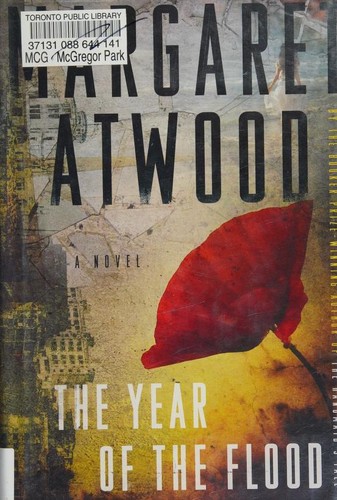
The Year of the Flood is a gripping tale of survival in a future world that has been decimated by a man-made disaster. The story follows the lives of two women who are among the few survivors of the “Waterless Flood,” a catastrophic event that has wiped out most of humanity. The two women - one a member of a religious cult that believes that the world will soon be destroyed by a great flood, the other a former scientist desperate to save the world from the impending disaster - must struggle to survive in a hostile world that is filled with deadly animals and treacherous people.
Atwood’s portrayal of this future world is both frightening and believable, and her characters are richly drawn and deeply sympathetic. The Year of the Flood is a brilliant and disturbing novel that will leave readers haunted long after they have finished reading it.
What I especially like here is that Atwood gives climate-adjacent collapse a social and spiritual texture. The book is not just about the event itself; it is about belief, community, improvisation, and the weird ways people prepare themselves for futures they half expect and half refuse to believe in.
The Fifth Season by N.K. Jemisin

The Fifth Season is the first book in N.K. Jemisin’s Broken Earth trilogy. It’s a post-apocalyptic fantasy story about a world that is plagued by an ever-changing climate and beset by catastrophic climate events.
The main character, Essun, is a woman who has been forced to flee her home after her husband brutally murders their child. As she journeys across the broken landscape, she must find a way to survive in a world that is constantly on the brink of disaster. Along the way, she meets other survivors who help her to understand the true nature of the world she lives in - all while dealing with hostile forces that seek to control the power of the Earth’s magical core.
The Fifth Season is an epic tale of hope and despair, love and loss, and the power of the human spirit. Jemisin’s writing is beautiful and evocative, and her story will keep readers hooked from beginning to end.
This is the most fantasy-leaning book here, but I still think it earns its place easily. If what you want from climate fiction is the feeling of living under permanent planetary instability, few novels make catastrophe feel this intimate, bodily, and relentless.
The Green Priest by Ryan Law

The Green Priest is a classic “drowned world” story. Set hundreds of years after a catastrophic flood has swamped the world, the story follows a band of hunter-gather-style survivors that eke out a living in the crowded forests and meandering rivers that have become their world.
As the story unfolds, we begin to discover hints about the origin of the cataclysm that has flooded the world, in the form of ancient technologies hoarded by a mysterious religious cult called The Green Priests - the series’ titular rainmakers. The book contains themes of magic, technology and classic end-of-the-world survivalist - all set to backdrop of climate fiction, and a new world emerging from the ruins of the old.
I’d keep this one on the list for readers who want climate fiction with more overt adventure and atmosphere. It leans harder into drowned-world exploration and post-collapse travel than some of the more explicitly political books here, which gives the guide a useful change of flavor.
Parable of the Sower by Octavia Butler
Octavia Butler’s Parable of the Sower is a gripping tale of one woman’s fight for survival in a post-apocalyptic world. Lauren Olamina is just eighteen years old when her family is brutally murdered and her home is burned to the ground. Forced to flee, Lauren begins a journey north in search of safety. Along the way, she meets other survivors, including a man who believes that the end of the world is just the beginning of humanity’s journey to greatness. Together, they fight against all odds to reach safety. But even if they make it, will there be anything left to save?
Parable of the Sower is a shocking and paradigm-shifting work of climate fiction. With her trademark eloquence and insight, Butler imagines a future that is all too plausible, and challenges us to consider what kind of world we want to create. This is a book that will stay with you long after you turn the last page.
If I had to name the one book on this page that feels closest to the present, it would probably be this one. Butler understands that climate collapse does not arrive as abstract weather alone; it arrives through housing, labor, private security, migration, and the slow corrosion of anything that used to feel stable.
The Death of Grass by John Christopher
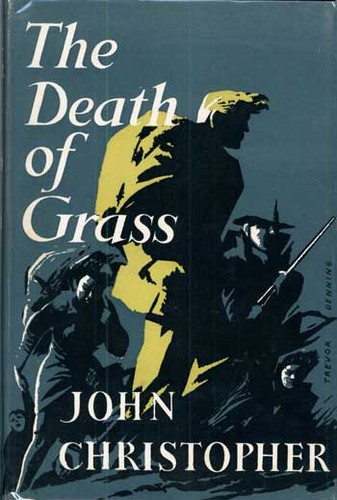
The Death of Grass is a novel by John Christopher that was published in 1956. The book is set in a post-apocalyptic world where a virus has killed off all the grasses, leading to widespread famine. Set in the UK, the story follows the journey of a group of survivors as they attempt to flee the chaos of London and cross England in search of food and safety.
The novel is notable for its depiction of the collapse of society and the dangers of nuclear war, as well as exploring one possible outcome of a significant climate shift.
I’m always glad to see this one on climate-fiction lists because it reminds you how old some of these anxieties really are. It is efficient, grim, and very good at showing how quickly “modern society” becomes negotiable once the food system snaps.
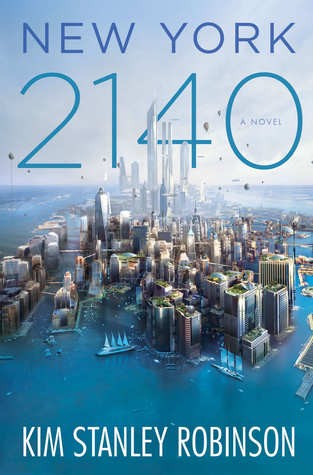
New York 2140 by Kim Stanley Robinson
In Kim Stanley Robinson’s novel New York 2140, the world has been transformed by rising sea levels. The city of New York has been submerged, and its residents now live in a series of high-rise buildings (at least, those that are lucky enough to live above the high tide line). Despite the new landscape, life goes on much as it did before. The characters still go to work, raise families, and fall in love. But their lives are also shaped by the new reality of living in a flooded city.
The novel explores what it would be like to adapt to this new world, and how the people of New York would find ways to cope with the changed environment. It’s a thought-provoking look at a future that is not so far-fetched, and an enjoyable read for anyone who loves science fiction.
That adaptation angle is exactly why I’d keep this in the guide. A lot of climate fiction is about collapse or warning; Robinson is often more interested in what infrastructure, finance, mutual aid, and ordinary urban life look like after the water has already won.
The Drowned World by J.G. Ballard
The Drowned World is a climate fiction book by J.G. Ballard set in the year 2145. The world has been ravaged by solar radiation and the seas have risen, submerging most of the land.
The story follows Dr. Robert Kerans, a biologist who is part of a team studying the effects of the radiation on the plant and animal life that has adapted to the new environment. As the team’s work takes them deeper into the drowned world, they begin to lose touch with reality, succumbing to the primitive urges that are awakened by their surroundings. The Drowned World is a gripping tale of survival and primal instinct set in a future world that is all too believable.
This is still one of the best picks here if you want climate fiction to feel feverish, uncanny, and psychologically warped rather than straightforwardly realist. Ballard is not really trying to give you policy extrapolation; he is giving you the dream logic of a world becoming biologically and mentally alien.
Oryx and Crake by Margaret Atwood

If The Year of the Flood works for you, I would absolutely go back and read Oryx and Crake. It is colder, sharper, and more satirical, with more emphasis on corporate biotech, engineered extinction, and the ugly logic of treating the natural world as something to optimize until it breaks.
What I like about it in a climate-fiction context is that it widens the conversation beyond weather and floodwater. It treats ecological collapse as something entangled with markets, pharmaceuticals, vanity, and the fantasy that we can engineer our way past every limit.
MaddAddam by Margaret Atwood
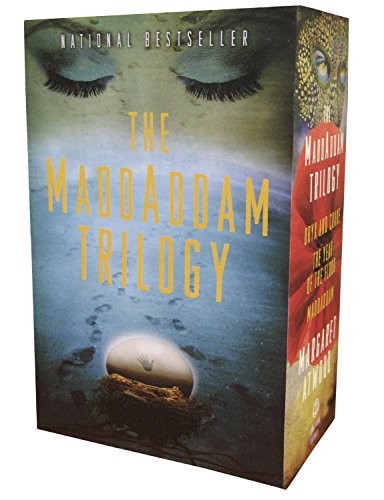
MaddAddam earns a place here because it rounds out the trilogy’s picture of what survival, adaptation, and social rebuilding look like after ecological and biotech disaster have already changed the rules. It is less interested in first-impact panic than in what kinds of communities, stories, and compromises emerge afterward.
If you want climate fiction that eventually becomes a question of coexistence rather than just warning, this is a smart one to add after Oryx and Crake and The Year of the Flood.
The Water Knife by Paolo Bacigalupi
The Water Knife is set in a near-future American Southwest where drought has turned water into the defining political weapon. States raid one another for access, developers gamble on collapse, and survival depends as much on legal documents, pipelines, and private violence as on the weather itself. The novel follows a “water knife” named Angel Velasquez, a journalist named Lucy Monroe, and a Texas refugee named Maria Villarosa as their lives converge in a Phoenix that feels one bad week away from total civic failure.
What makes it worth adding here is how brutally material it is. This is climate fiction about water rights, border hardening, extraction, and the people left exposed when scarcity becomes a business model. If The Windup Girl is Bacigalupi’s global biotech nightmare, The Water Knife is his meaner, dustier, more immediately American climate-thriller.
The Ministry for the Future by Kim Stanley Robinson
The Ministry for the Future starts with a devastating heatwave in India and then widens outward into a dense, global story about policy, activism, finance, migration, geoengineering, and the long fight to keep climate breakdown from becoming total civilizational failure. It is less interested in one conventional plot than in showing how many different systems, institutions, and moral compromises sit inside the climate crisis.
I’d add it here because it fills a gap the rest of the list does not quite cover. A lot of climate fiction is about aftermath or localized collapse. Robinson is trying to imagine what intervention, adaptation, and partial rescue might actually look like while history is still unfolding. If you want the most systems-heavy book on the page, this is probably it.
Migrations by Charlotte McConaghy
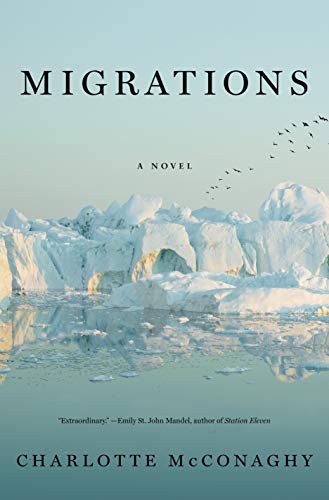
Migrations takes a quieter route into climate fiction. It follows Franny Stone as she pursues the last Arctic terns on what may be their final migration, moving through a near-future world defined by ecological loss, extinction, and private grief. The climate catastrophe here is not always staged as spectacular collapse; often it arrives as absence, thinning, and the realization that whole living systems are slipping out of reach.
I think it earns a place because it broadens the emotional register of the guide. Not every climate-fiction novel needs to be infrastructural, satirical, or end-of-the-world grand. This one is elegiac and intimate, which makes it a useful counterweight to the harsher survival books on the list.
If you’re looking for a good read, or want to get ahead of the curve on climate change and its effects, check out one of these thirteen great climate fiction books. They’ll give you a fascinating look at the future – and maybe make you think about how we can avoid some of the worst-case scenarios. So which one will you choose first?