Books Like A Canticle for Leibowitz: 6 Similar Reads
If A Canticle for Leibowitz is your flavor of apocalypse, you’re probably not just chasing explosions and ash. You want that weird blend of sacred ritual, broken history, dark humor, and the awful feeling that humanity learns exactly nothing even when it gets a second chance. Same. These are the books I reach for when I want that same “civilization as a glitchy loop” energy, with different spins on memory, faith, and fallout.
Riddley Walker by Russell Hoban

Set centuries after nuclear war, this follows a young boy in a tribal, myth-drenched England where fragments of old technology survive as misunderstood legend. The language itself is transformed, so reading it feels like excavating history with your bare hands.
I always pair this with Canticle because both books are obsessed with what survives when knowledge collapses into folklore. Hoban is rougher, stranger, and less satirical than Miller, but the core ache is the same: culture rebuilds on top of ruins it can’t fully read.
Dr. Bloodmoney by Philip K. Dick
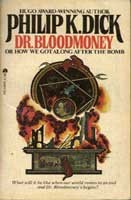
After nuclear catastrophe, communities in Northern California improvise their way through a cracked social order full of paranoia, mutation, and weirdly tender local relationships. Dick keeps the tone unstable on purpose, swinging between absurdity and dread.
If Canticle gave you that mix of gallows humor and civilizational grief, this lands in a similar zone. It’s less monastic and more chaotic street-level survival, but it shares the same suspicion that modernity is always one bad decision away from primitive reboot.
Anathem by Neal Stephenson
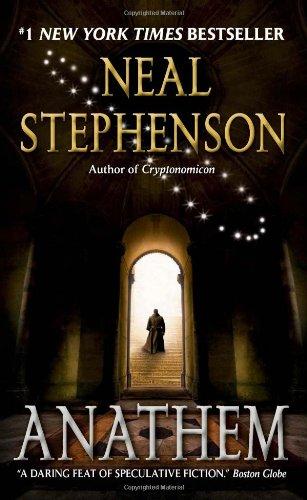
On a distant world, scholar-monastics live in secluded orders, preserving and debating knowledge while secular society rolls on outside their walls. When a cosmic-scale threat appears, those cloistered thinkers get dragged into events far bigger than their routines.
This is one of my favorite deeper-cut companions to Canticle because it echoes the monastery-plus-knowledge-preservation structure in a radically different register. Stephenson is denser and more speculative, but the tension between intellectual stewardship and political reality is very Miller-core.
Engine Summer by John Crowley

Far in the future after societal collapse, a wanderer named Rush That Speaks moves through small communities living among the leftovers of a lost high-tech age. The story is quiet, elegiac, and preoccupied with identity, memory, and stories as survival tools.
I recommend this to Canticle readers who loved the long-view historical melancholy more than the explicit nuclear politics. Crowley goes softer and more lyrical, but he hits the same nerve about how human beings inherit broken worlds and invent meaning anyway.
The Book of the New Sun by Gene Wolfe
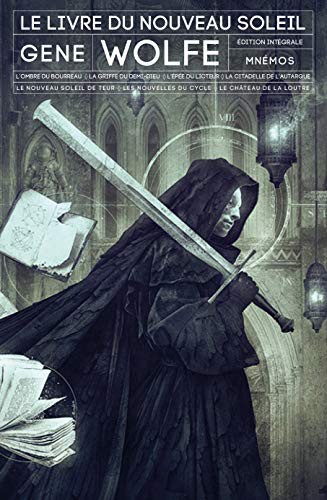
In Earth’s remote far future, Severian leaves the guild of torturers and travels through a decayed civilization where advanced technology and medieval-seeming culture blur together. Wolfe gives you a dense, unreliable narrative loaded with religious symbolism and historical echoes.
This belongs here because it scratches the same “future that feels ancient” itch as Canticle. It’s more baroque and less satirical, but both books force you to think about cyclical decline, sacred language, and how institutions preserve power as much as truth.
Warday by Whitley Strieber and James Kunetka
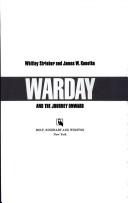
Presented as a reported journey through the United States years after a limited nuclear exchange, this novel maps fractured regions, improvised governments, and uneven recovery. It reads like documentary fiction, which makes the damage feel uncomfortably plausible.
I include this because if Canticle made you think about the societal afterlife of nuclear war rather than just the blast itself, Warday is a sharp companion. It’s less theological, sure, but it shares that cold-eyed interest in what nations become when continuity shatters.
If you want the closest tonal cousin, start with Riddley Walker. If you want the monastic-intellectual angle modernized, go straight to Anathem. And if you want grounded nuclear-aftershock realism before you dive back into symbolic stuff, pick up Warday first.