Books Like Fallout
If what you love about Fallout is the mix of ruined highways, improvised settlements, dark humor, and “well, I guess I run this town now” chaos, I absolutely get it. I’ve read a lot of post-nuclear and post-collapse fiction, and the best companions are not always the books with the biggest explosions. They are the ones that understand relic worship, scavenger economics, bunker paranoia, faction politics, and the weird stubbornness of people trying to rebuild civilization out of junk.
One thing worth clearing up first: there is not a big official Fallout novel line waiting for you. So when people search for fallout books, they are usually really asking for one of three things: books that inspired the games, books with the same retro-nuclear wasteland mood, or books with the same mix of scavenging, settlement-building, and bad-idea politics. This guide is aimed at the second and third buckets.
I grouped these picks around the parts of Fallout readers usually mean when they ask the question: Vault-Tec-style sealed communities, Brotherhood-of-Steel relic worship, NCR-and-Minutemen rebuilding energy, Mojave-strange irradiated weirdness, and the basic pleasure of wandering through a broken world full of factions that all think they should be in charge.
Closest Fallout Matches at a Glance
- Best for vault paranoia and sealed-community control: Wool
- Best for Brotherhood-of-Steel relic worship: A Canticle for Leibowitz
- Best for factions and scavenging pressure: Metro 2033
- Best for settlement-building and civic rebuilds: The Postman
- Best for big-map wasteland road-trip energy: Swan Song
- Best for radioactive weirdness and black humor: Dr. Bloodmoney
- Best for realistic post-strike America: Warday
- Best for quieter survival logistics: Alas, Babylon
> Ryan's quick-start favorites

A Canticle for Leibowitz
Start here for retro-futurist relic worship and nuclear irony.

Wool
Start here for the closest vault-life match: sealed systems, bunker lies, and engineered obedience.

Metro 2033
Start here for factions, scarcity, and survival pressure around every corner.
The Postman
Start here for rebuilding politics, improvised institutions, and hopeful wasteland myth-making.
If you loved a specific Fallout flavor, start here
- Vault experiments, bunker rules, and locked-world secrets: Wool
- Old-world manuals, pseudo-religion, and retro-tech relic worship: A Canticle for Leibowitz
- Dense faction politics and constant scavenger danger: Metro 2033
- Rebuilding towns, routes, and institutions after collapse: The Postman
- Big wasteland sprawl with nasty surprises around the bend: Swan Song
- Irradiated oddballs, dark comedy, and post-nuclear strangeness: Dr. Bloodmoney
- The “what would America actually look like a few years later?” question: Warday
A Canticle for Leibowitz by Walter M. Miller Jr.
This is still the book I recommend most often to Fallout fans who love the museum-of-ruins side of the franchise. Set centuries after nuclear war, it follows a monastic order in the desert preserving scraps of scientific knowledge, ritualizing old manuals, and slowly rebuilding a civilization that seems determined to make the same mistakes twice.
It nails one of Fallout’s most specific pleasures: people making culture out of radioactive leftovers. If Brotherhood of Steel energy, relic worship, retro-futurist debris, and old-world irony are what keep you wandering the map, this is the literary cousin I would hand over first.
The difference is pace. Canticle is more meditative, more philosophical, and much less quest-driven than Fallout. But if your favorite parts of the games are the bits where old technology starts feeling half sacred and half absurd, it is almost embarrassingly on target.
Wool by Hugh Howey
If the vault sections are your favorite parts of Fallout, start here. Wool traps its survivors in a sealed underground silo where every rule, ritual, and social boundary exists to keep order intact and curiosity dangerous. The bunker logic does a huge amount of narrative work.
I usually point Fallout readers to this when what they really want is Vault-Tec paranoia without the franchise wink. It has the same fascination with closed systems, manipulated histories, and the awful suspicion that the people running the shelter are not telling the whole story.
Where it differs is tone. Wool is tighter, cleaner, and less openly goofy than Fallout. It swaps scavenger-road-trip freedom for locked-world mystery, which is exactly why it works so well if the vaults are the bit you always remember.
Metro 2033 by Dmitry Glukhovsky
After nuclear war, the survivors of Moscow live in metro stations that have effectively turned into tiny faction-states, complete with propaganda, paranoia, barter economics, and constant fear of what waits in the tunnels. It is claustrophobic, bleak, and relentlessly survival-focused.
This is the strongest pick here for readers who love Fallout as a faction machine. It has that same “danger around every corner, but ideology might kill you first” feel, just moved from open wasteland to underground choke points.
The big tonal change is that Metro 2033 is colder and more severe. It has less of Fallout’s playful satire and much more dread. But in terms of scarcity, scavenging, and political rot under nuclear pressure, it absolutely belongs.
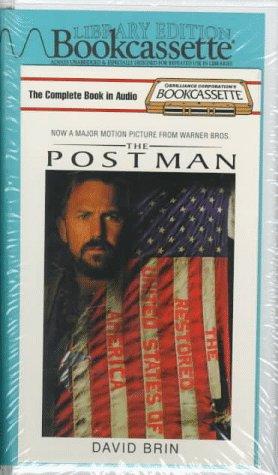
The Postman by David Brin
This one still feels like a Fallout side quest that unexpectedly becomes the main story. In a fractured post-collapse America, a drifter puts on a dead postal worker’s uniform for shelter and accidentally becomes the symbol of a rebuilding nation.
I like it most for readers whose favorite Fallout stories are the settlement-and-republic ones: NCR-style statecraft, Minutemen-style local cooperation, and the constant question of whether institutions can come back without dragging their old failures along with them. It is less about looting ruins and more about what myths people need in order to govern again.
That is also the main difference. The Postman is more earnest than Fallout, less interested in ironic spectacle, and far more interested in symbols, routes, and civic imagination. If that sounds appealing rather than boring, it is a superb match.
Swan Song by Robert R. McCammon
Nuclear war devastates the United States, and a wide cast of survivors crosses a shattered landscape full of violence, scarcity, strange encounters, and competing visions of what comes next. It is long, messy, huge, and unapologetically maximalist.
This is the pick I reach for when someone wants the broad-map wasteland energy of Fallout: ruined travel routes, improvised communities, dangerous detours, and the feeling that the world stays interesting because it is always one bad decision away from getting weirder.
The warning label is that Swan Song goes bigger and stranger than Fallout. It leans harder into mythic good-versus-evil territory. If you want the wasteland as a giant, unruly road trip rather than a tightly controlled scenario, though, it absolutely scratches the itch.
Dr. Bloodmoney by Philip K. Dick
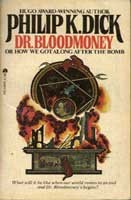
If you love the off-kilter side of Fallout, this is one of the better sleeper picks. Dick imagines Northern California after nuclear catastrophe as a place of mutation, improvisation, paranoia, absurdity, and weird little local relationships that somehow keep going anyway.
What I like about it is the tonal instability. It can be funny, sad, ugly, and oddly tender in the same stretch, which is a big part of why Fallout works when it works. The world feels patched together from bad science, stubborn survivors, and very questionable leadership.
It is not as structurally neat as some of the other books here, and Dick is always a little unruly. But if you want radioactive weirdness, black humor, and the sense that post-nuclear life is both tragic and faintly ridiculous, it earns its place.
Warday by Whitley Strieber and James Kunetka
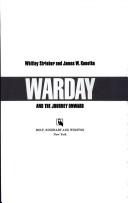
Presented as a pseudo-journalistic journey through the United States five years after a limited nuclear exchange, Warday reads like a field report from a civilization that did not quite die, but definitely stopped functioning properly.
This is the one I recommend when a reader’s favorite part of Fallout is wandering around piecing together what happened from regional differences, institutional collapse, and the practical realities of who still has fuel, medicine, food, and authority. It is less side-quest fun and more national-scale consequence mapping.
The tradeoff is obvious in the format: Warday is more document than adventure. But that documentary realism is exactly what makes it useful if your brain latches onto terminals, local histories, and the slow administrative horror of post-strike America.
Alas, Babylon by Pat Frank

When nuclear war erupts, a small Florida town has to relearn food security, medicine, defense, and governance almost overnight. It stays focused on ordinary people making practical decisions under pressure, which is why it still feels sharper than plenty of newer collapse fiction.
I keep this on the list because some Fallout fans are less interested in mutants and relics than in the basic settlement math underneath the genre. If your favorite quests are the ones about water, guard duty, local leadership, and keeping a community functional, Alas, Babylon gives you that stripped of spectacle.
It is quieter and more local than Fallout, and that is the point. This is the recommendation for readers who want the settlement brain rather than the wasteland fireworks.
One weirder bonus pick: Damnation Alley

I would not call this the most polished book on the page, but it is a good deep-cut recommendation for readers who specifically want wasteland ride energy. Roger Zelazny goes pulpy, violent, and old-school with a ruined-America journey that feels much closer to the franchise’s road-warrior side than to its quieter settlement stories.
If you like the cracked-highway, jury-rigged-vehicle, “what kind of lunatic is running the next stretch of map?” part of Fallout, this is worth knowing about. I would read it as a bonus pick after the stronger core matches above, not before them.
If you want the closest overall starting points, begin with A Canticle for Leibowitz, Wool, and Metro 2033. If your favorite Fallout flavor is political rebuilding, move The Postman to the front of the queue. And if you mostly want to understand the nuclear-aftershock logic underneath the franchise, do not skip Warday or Alas, Babylon.
If you want to keep going after this, the cleanest next stops are Books Like A Canticle for Leibowitz, Books Like One Second After, The 19 Best Books About Nuclear War, and the wider Best Post-Apocalyptic Books roundup.