11 Best Post-Apocalyptic Books with Female Protagonists
The 128 Best Post-Apocalyptic Books
The best post-apocalyptic heroines are not interchangeable action figures with crossbows. They are planners, witnesses, journalists, medics, reluctant rebels, community-builders, and children forced to understand worlds the adults around them have broken.
That range is what this list celebrates. Some of these women can win a fight; others survive through foresight, empathy, specialist knowledge, or a refusal to accept the role their society has written for them. The books range from literary apocalypse to zombie horror and YA dystopia, but every selection gives its female protagonist meaningful control over the story.
I have kept the plot descriptions spoiler-light. Where a novel sits closer to dystopia than a conventional aftermath story, I say so rather than quietly stretching the definition.
The Best Books at a Glance
- Best overall: Parable of the Sower by Octavia E. Butler
- Best feminist survival novel: The Book of the Unnamed Midwife by Meg Elison
- Best literary apocalypse: Station Eleven by Emily St. John Mandel
- Best eco-apocalypse: The Year of the Flood by Margaret Atwood
- Best zombie reinvention: The Girl with All the Gifts by M. R. Carey
- Best domestic survival story: Life As We Knew It by Susan Beth Pfeffer
- Best political thriller: Feed by Mira Grant
- Best lyrical horror novel: The Reapers Are the Angels by Alden Bell
- Best feminist dystopia: Daughters of the North by Sarah Hall
- Best action-heavy YA pick: Divergent by Veronica Roth
- Best YA social satire: Uglies by Scott Westerfeld
> Ryan's quick-start picks

Parable of the Sower
Start here for the strongest all-round combination of plausible collapse, leadership, ideas, and emotional force.

The Book of the Unnamed Midwife
Choose this for an adult feminist survival story built around medical knowledge, bodily autonomy, and life on the road.
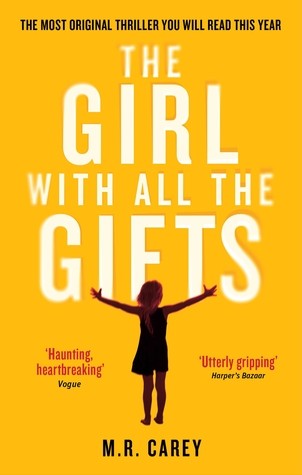
The Girl with All the Gifts
Choose this for a tense, compassionate zombie novel whose young heroine changes the meaning of the apocalypse.
1. Parable of the Sower by Octavia E. Butler
Best for: frighteningly plausible social collapse and a heroine who thinks beyond survival.
Lauren Olamina has grown up behind the walls of a California neighbourhood while climate disruption, inequality, addiction, and institutional failure make the world outside steadily more dangerous. She also lives with hyperempathy, a condition that makes her experience the pain she sees in others. When the community can no longer hold, Lauren heads north and begins turning a private belief system called Earthseed into a practical basis for collective survival.
What makes Lauren exceptional is not invulnerability. She prepares while the people around her prefer denial; she changes plans when reality changes; and she understands that surviving alone is not enough to build a future. Butler lets her be frightened, calculating, compassionate, visionary, and occasionally wrong. The result is a protagonist whose leadership feels earned rather than announced.
If you only read one book on this list, make it this one. It is both a gripping journey through collapse and one of the genre’s sharpest arguments about adaptation, power, and community.
2. The Book of the Unnamed Midwife by Meg Elison
Best for: harsh adult survival fiction focused on gender, medicine, and bodily autonomy.
A plague kills most of humanity, with women and children suffering disproportionately. An unnamed former labour-and-delivery nurse wakes into a country where the surviving gender imbalance has made women targets. She travels disguised as a man when necessary, offers medical care and contraception, and records what she sees as new communities form around old appetites for control.
The midwife’s clinical knowledge matters, but Elison never turns competence into a superpower. Supplies run out, information is incomplete, and helping another person can expose both women to danger. Her shifting names and disguises also make identity part of the survival problem: who can she afford to be in any given place?
This is frequently brutal, including sexual violence and reproductive coercion. It earns that darkness by keeping its attention on systems as well as individual villains, and on the small acts of care that resist both.
3. Station Eleven by Emily St. John Mandel
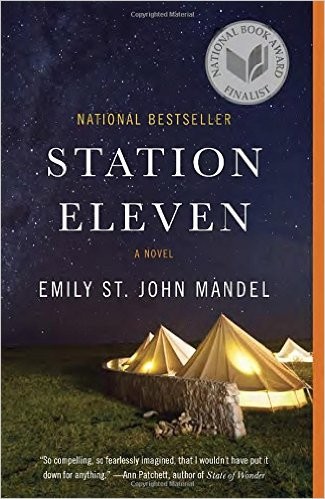
Best for: readers who want art, memory, and human connection after a pandemic.
Twenty years after the Georgia Flu destroys modern civilisation, Kirsten Raymonde travels through the Great Lakes region with the Travelling Symphony, performing Shakespeare and music for scattered settlements. Her route eventually brings the troupe into conflict with a dangerous prophet, while the novel moves between the pandemic’s aftermath and the lives that converged before it.
Kirsten is one of several central characters rather than a conventional lone heroine. That ensemble structure is the point. Her survival is inseparable from the actors, musicians, friends, and fragments of art that give the new world continuity with the old one. Miranda Carroll, whose handmade comic lends the novel its title, becomes another vital female presence even though her story unfolds on a different timeline.
Choose this over the more action-driven books here if you care less about defeating the apocalypse than about what makes survival worth the effort. Mandel’s answer includes beauty, work, memory, and other people.
4. The Year of the Flood by Margaret Atwood
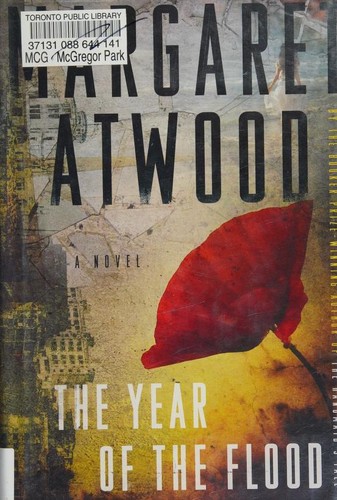
Best for: ecological catastrophe, complex women, and communities preparing at the margins.
Toby and Ren survive the bioengineered pandemic known as the Waterless Flood in very different forms of isolation. Their histories connect through God’s Gardeners, an eco-religious movement that combines scavenged science, practical preparation, ritual, and resistance to the corporate world surrounding it. As the novel moves between before and after, their experiences reveal how belief and community can both protect and constrain.
Atwood sets the book in the same catastrophe as Oryx and Crake, but shifts attention away from the powerful men who helped create it. Toby’s wary practicality and Ren’s more vulnerable perspective make the apocalypse feel lived-in rather than observed from a laboratory. Neither fits the simple “strong female character” template; both endure partly by recognising their own limits and relying on knowledge held by others.
You can read this without Oryx and Crake, although the larger design becomes richer if you read the MaddAddam trilogy in order.
5. The Girl with All the Gifts by M. R. Carey
Best for: a fast zombie thriller with moral and scientific weight.
Melanie is an intelligent, affectionate child who begins each school day locked in a cell. Armed soldiers strap her into a wheelchair before taking her to class, and nobody will explain why they are so afraid of her. Her favourite teacher, Miss Justineau, treats her as a person; the scientist Dr Caldwell sees an answer to the fungal infection that has devastated humanity.
That is as much of the premise as it is safe to reveal. Carey’s cleverest move is not simply placing a girl at the centre of a zombie story, but making every adult assumption about childhood, infection, and the future open to challenge. Melanie is curious and loving without being innocent in a sentimental way. As she learns what she is, the reader has to reconsider who the real inheritors of the world might be.
This is one of the easiest books on the list to recommend: tense, accessible, emotionally effective, and much smarter than its familiar outbreak setup suggests.
6. Life As We Knew It by Susan Beth Pfeffer
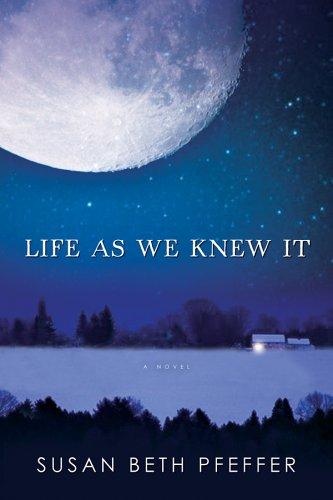
Best for: intimate YA survival and the frightening logistics of keeping a family alive.
When an asteroid knocks the moon closer to Earth, the gravitational consequences trigger tides, earthquakes, volcanic activity, crop failure, and a rapidly deepening global crisis. Sixteen-year-old Miranda records the aftermath from her Pennsylvania home as shopping trips, school, friendships, and family arguments give way to rationing, cold, hunger, and isolation.
The diary format keeps the disaster at household scale. Miranda does not know how governments are responding or what is happening everywhere else; she knows how many tins remain in the pantry, whether the stove will keep working, and which member of the family needs food most. Her heroism is messy because scarcity makes love messy. She can be selfish, resentful, frightened, and still keep going.
Few apocalypse novels are as good at showing how an ordinary teenager experiences the slow conversion of home into a survival system.
7. Feed by Mira Grant
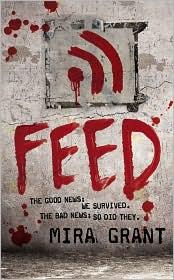
Best for: zombies, political conspiracy, and a heroine whose real weapon is reporting.
Georgia and Shaun Mason were raised after the Rising, when a medical breakthrough created a virus that causes the dead to reanimate. They are bloggers in a media culture rebuilt around constant testing, public-health protocols, and distrust of traditional news. When their team is chosen to cover a presidential campaign, Georgia discovers that the living can manipulate fear at least as effectively as the infected can spread it.
Georgia is not primarily a zombie killer protecting her little brother; that description misses what makes her distinctive. She is the team’s rigorous news journalist, while Shaun courts danger as an action blogger. Georgia’s courage lies in following evidence, publishing what powerful people want buried, and understanding how a frightened public can be governed through information.
Read Feed when you want an outbreak world that has moved beyond the initial collapse and built new institutions—along with a heroine determined to find out where those institutions are rotten.
8. The Reapers Are the Angels by Alden Bell
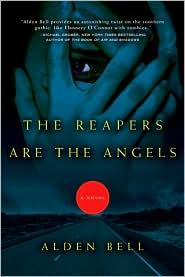
Best for: Southern Gothic atmosphere and a morally complicated survivor.
Temple has grown up after the dead began to rise. She crosses the American South alone, capable of terrible violence but still alert to beauty, wonder, and moments of grace. After a killing brings a relentless pursuer onto her trail, her journey becomes both a chase and a reckoning with the guilt she has carried for years.
The book’s undead are dangerous, but Temple’s inner life is the reason to read it. She is neither a blank killing machine nor a symbol of untouched innocence. Bell gives her a strange, lyrical voice and lets survival coexist with spiritual hunger, regret, humour, and an imperfect instinct to protect people more vulnerable than herself.
This is a short, violent novel with a literary cadence. Pick it when standard zombie action feels too mechanical and you want the road itself to feel haunted.
9. Daughters of the North by Sarah Hall

Best for: feminist dystopia, bodily control, and the uncomfortable politics of resistance.
Published in the UK as The Carhullan Army, Hall’s novel imagines a near-future Britain governed by the Authority after environmental and economic breakdown. Women are subjected to state reproductive control. The narrator, known as Sister, leaves an oppressive marriage and travels north to Carhullan, an isolated community of women living outside the regime.
Escape does not deliver a frictionless utopia. Carhullan has discipline, hierarchy, and its own ideas about what resistance demands from an individual. Sister’s transformation forces the book’s hardest question: if a state claims ownership of your body and future, what forms of rebellion remain possible—and what might those forms turn you into?
This sits on the dystopian edge of post-apocalyptic fiction, with political systems more prominent than ruins. Read it for its cold landscape, compressed prose, and refusal to make female solidarity simple.
10. Divergent by Veronica Roth

Best for: faction politics, training sequences, romance, and YA action.
In a future Chicago divided into five factions, Beatrice Prior grows up in self-denying Abnegation but feels drawn toward the dangerous freedom of Dauntless. Her aptitude test produces an anomalous result spanning more than one faction, marking her as Divergent. She chooses a new name, Tris, and enters a brutal initiation process while the faction system moves towards open conflict.
Tris is compelling because the qualities her society treats as mutually exclusive—courage, intelligence, selflessness—coexist within her. Her development is physical, but it is also a struggle to decide whether identity comes from a test, a community, a choice, or a pattern of choices repeated under pressure.
The first novel reads more as dystopia than aftermath; the post-apocalyptic history becomes clearer across the series. It is also the most romance-forward and blockbuster-shaped entry here, making it a good gateway choice for readers who want momentum before philosophical weight.
11. Uglies by Scott Westerfeld
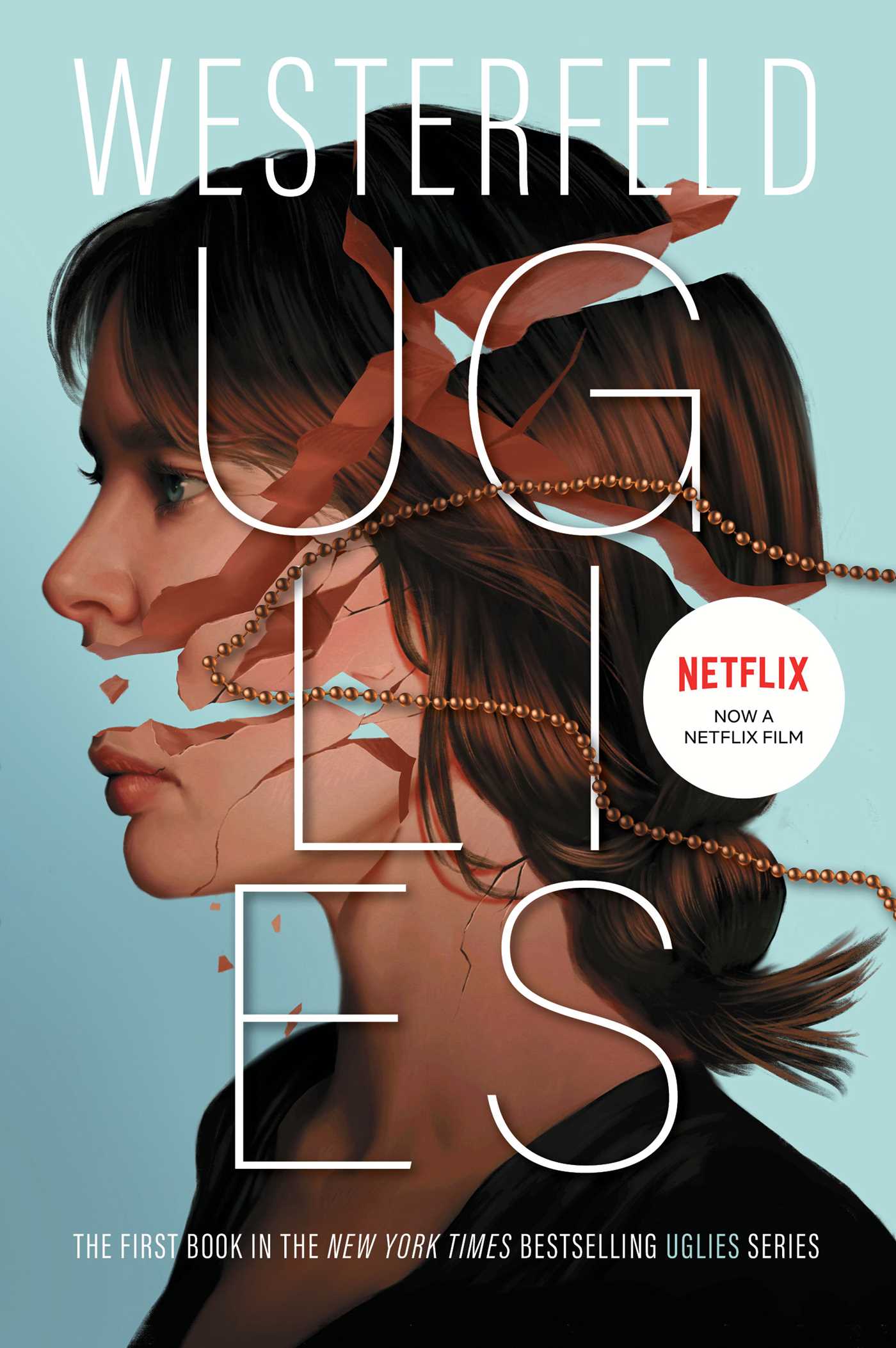
Best for: YA readers interested in beauty standards, conformity, and manufactured consent.
Tally Youngblood cannot wait for the surgery that will turn her “pretty” at sixteen and admit her to a life of pleasure. Her friend Shay does not share that dream. When Shay runs away, the authorities order Tally to find her and betray the rebels she has joined—or lose her own chance to become pretty.
Tally begins inside the values the novel wants to question, which makes her more interesting than a heroine who sees through propaganda from page one. Her loyalties shift as she learns what the operation really does and how completely her civilisation manages dissent. The journey from longing for acceptance to choosing resistance carries more weight because compromise and betrayal remain part of it.
Like Divergent, this is primarily a dystopian novel set in a society built after the collapse of our own. It belongs here for the way Tally contests the post-collapse order rather than merely surviving its landscape.
Where Should You Start?
- Start with Parable of the Sower for the strongest overall novel and the most convincing leader.
- Choose The Book of the Unnamed Midwife for uncompromising feminist survival fiction.
- Choose Station Eleven for a literary, hopeful book about art and memory.
- Choose The Girl with All the Gifts or The Reapers Are the Angels for zombies with something more on their minds.
- Choose Life As We Knew It, Divergent, or Uglies for YA protagonists and accessible pacing.
- Choose Feed for politics and media, The Year of the Flood for ecology and community, or Daughters of the North for feminist dystopia.
The phrase “strong female protagonist” can flatten very different characters into a single type. These books are better than that. Their heroines lead, endure, fail, adapt, investigate, create, and rebel in ways shaped by their particular worlds. The apocalypse does not make them interchangeable; it reveals what each of them values when the old rules stop holding.
Content note: several books in this guide contain sexual violence, reproductive coercion, child endangerment, suicide, gore, and other distressing material. Check edition-specific content guidance if you need more detail before reading.