
Books Like The Handmaid's Tale: 6 Similar Reads
If you’re here because The Handmaid’s Tale left you angry, wired, and suddenly suspicious of every smiling political slogan, welcome. What Atwood nails so brutally well is how fast rights can become privileges, and how everyday life can be reorganized into a cage one “reasonable” rule at a time. So I picked books that hit that same pressure point: bodily autonomy, state or social control, and people trying to keep a self alive inside systems designed to erase it.
The Power by Naomi Alderman

Girls around the world develop the ability to generate electric shocks, and the gendered power balance flips hard and fast. The novel follows multiple characters across politics, religion, crime, and media as new hierarchies form and old ones crack.
I always recommend this after The Handmaid’s Tale because it’s not just “what if women had power,” it’s “what does power do to anyone who gets it?” It works as a mirror-image companion to Gilead: instead of institutionalized female subjugation, you get a global stress test of dominance itself.
Vox by Christina Dalcher
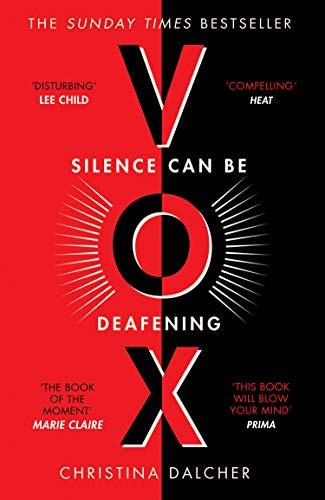
In this near-future America, women are legally limited to speaking just 100 words per day, enforced by electronic counters on their wrists. Dr. Jean McClellan, a linguist, is pulled into a government project while trying to protect her daughter from growing up muted.
This one has huge Handmaid’s Tale energy in the most uncomfortable way: legal control of women’s bodies extends directly to voice, language, and participation in public life. It’s blunter and faster-paced than Atwood, but the central warning feels chillingly adjacent.
The Children of Men by P.D. James
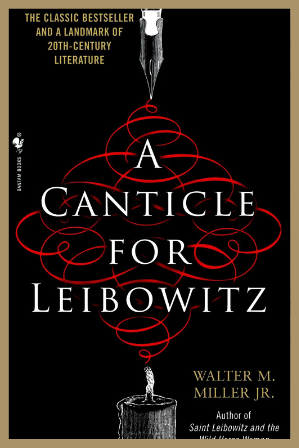
Humanity has become infertile, no children have been born in decades, and Britain slides into authoritarian management under the logic of national survival. Theo Faron, initially detached and cynical, gets pulled into dissident circles as the regime tightens control.
If your favorite part of The Handmaid’s Tale was the fertility politics and the way reproduction becomes state business, this is a direct thematic hit. P.D. James leans more philosophical and elegiac than Atwood, but both books show how reproductive panic becomes a perfect excuse for cruelty.
Red Clocks by Leni Zumas
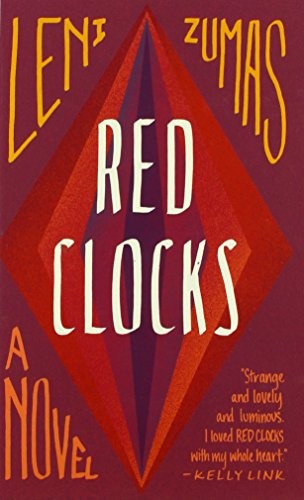
Set in an America where abortion is banned and even in vitro fertilization is illegal, this novel follows four women navigating legal, social, and emotional fallout. It’s less about one giant coup and more about cumulative restrictions reshaping ordinary lives.
I rate this as one of the strongest less-obvious follow-ups to The Handmaid’s Tale because it captures the incremental path to control rather than the fully built dystopian end-state. It feels frighteningly plausible, which is exactly why it lands.
The School for Good Mothers by Jessamine Chan
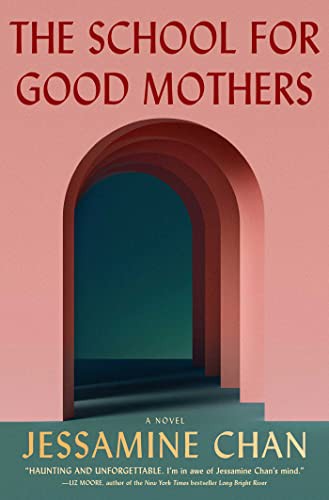
After a moment of parental failure, Frida Liu is sent into a state-mandated reeducation program designed to measure and reform maternal behavior. The surveillance is intimate, the punishments are bureaucratic, and motherhood itself becomes a performance graded by the system.
This is a great contemporary companion to The Handmaid’s Tale because it shows social control operating through care rhetoric instead of overt theocracy. Different machinery, same result: women’s identities and choices are treated as public property.
Parable of the Sower by Octavia E. Butler

In a collapsing near-future America marked by climate disaster, violence, and institutional breakdown, Lauren Olamina flees her destroyed community and builds a belief system focused on adaptation and change. It’s brutal, prophetic, and intensely character-driven.
I include this because if Atwood gives you the anatomy of oppressive structure, Butler gives you the lived survival playbook after systems fail or turn predatory. The tone is more openly post-apocalyptic, but the emotional throughline—female resilience under political and social hostility—is dead on.
If you want the closest structural cousin to Gilead, start with Vox or The Children of Men. If you want subtler, modern dread, go with Red Clocks or The School for Good Mothers. And if you want to leave pure dystopia for full collapse-and-rebuild mode, Parable of the Sower is the one I’d put in your hands first.