The 10 Best Books About the Atomic Bomb
The 19 Best Books About Nuclear War
If you want to understand humanity’s most terrifying invention, not just the science, but the people, politics, and fallout, these are the 10 books about the atomic bomb I would start with.
Most pages targeting this topic make the same move: they throw Oppenheimer books, Hiroshima testimony, and Cold War titles into one heap and leave you to sort out the difference. That is not very helpful if you are trying to decide whether you want the story of how the bomb was built, what it did to actual human beings, or how fiction metabolized the shock afterward.
That is the split I used here. I kept a few of the strongest books from the original guide, cut the ones that felt too generic or too far from the actual query, and added a couple I think make the page more useful and more distinctive. If you want one definitive history, start with The Making of the Atomic Bomb. If you want the essential human document, read Hiroshima. If you came here because recent nuclear anxiety made the subject feel present-tense again, Nuclear War: A Scenario is the modern stress test.
Best Books About the Atomic Bomb at a Glance
- Best single-volume history: The Making of the Atomic Bomb
- Best survivor-centered entry point: Hiroshima
- Best book for present-day nuclear dread: Nuclear War: A Scenario
- Best Oppenheimer biography: American Prometheus
- Best hidden-history pick: The Girls of Atomic City
- Best firsthand diary: Hiroshima Diary
- Best novel of radiation aftermath: Black Rain
- Best quiet doomsday novel: On the Beach
- Best visual gateway into atomic-bomb literature: Barefoot Gen
> If you want the fiction-aftershock branch
Ash Tales' archive leans harder into nuclear aftermath fiction than Manhattan Project history, so these are the three adjacent books I would use to continue the trail after the core non-fiction picks.
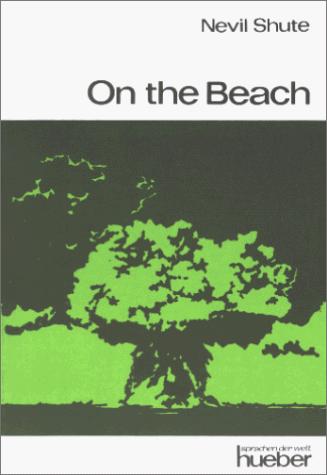
On the Beach
Read this next if you want the hush, dread, and terminal waiting that nuclear fiction does better than almost any other subgenre.

Alas, Babylon
Read this if you want the small-town survival version of nuclear catastrophe rather than the laboratory-and-policy history.

A Canticle for Leibowitz
Read this if the bomb interests you less as an event and more as a civilizational wound that keeps echoing for centuries.
The Making of the Atomic Bomb by Richard Rhodes
If you only read one book on this subject, this is still the obvious place to begin. Rhodes does the rare thing a truly great history book does: it gives you the science, the personalities, the wartime pressure, and the moral scale without turning any of them into homework.
What I like about it most is that it refuses the neat myth version of the bomb. You do not just get a handful of genius physicists and one fateful breakthrough. You get decades of scientific discovery, rivalries, ambition, fear, bureaucratic machinery, and the accumulating sense that once the idea became possible, the world was going to build it somewhere.
If a reader tells me, “I want the full story, not just Oppenheimer,” this is the book I hand over first.
Hiroshima by John Hersey
This is the book that strips away abstraction. Hersey follows six survivors of the Hiroshima bombing and records what happened to them in the hours, days, and months after August 6, 1945. The prose is calm. The effect is devastating.
I do not think a guide on this topic is serious if it omits this book or buries it halfway down. Plenty of atomic-bomb reading lists get mesmerized by laboratories, generals, and statecraft. Hersey makes you look directly at burns, thirst, confusion, radiation sickness, and the horrible slowness of survival.
It is short, but it is not light reading. I always think this is the book people should read before they get too comfortable discussing nuclear weapons as theory.
Nuclear War: A Scenario by Annie Jacobsen
This is the least historical book on the page, and I kept it because it does something the older titles cannot: it drags the subject into a modern command-and-control timeline and makes the danger feel live again.
Jacobsen’s premise is simple and nasty. Starting from one plausible launch sequence, she walks minute by minute through escalation, decision bottlenecks, system failures, and the speed at which nuclear catastrophe would outrun politics. Strictly speaking, it is broader than “atomic bomb” history. Practically, it is the book that reminds a contemporary reader that the bomb is not only a past-tense subject.
I read it with the same knot-in-the-stomach reaction the original version mentioned, and that reaction still feels like a good reason to keep it here.
Command and Control by Eric Schlosser
If Rhodes tells you how the bomb came into the world, Schlosser tells you how frighteningly imperfect the systems around it remained afterward. His central story is the 1980 Damascus Titan missile accident, but the real achievement of the book is how thoroughly it dismantles the fantasy of flawless nuclear stewardship.
This is the title I recommend to readers who are less interested in the Manhattan Project itself and more interested in the long afterlife of nuclear risk. Maintenance errors, procedural complacency, design flaws, near misses: Schlosser shows that the danger was never only the weapon, but the humans and institutions charged with managing it.
It reads faster than its page count suggests, largely because every chapter makes you mutter some version of, “You are kidding.”
American Prometheus by Kai Bird and Martin J. Sherwin
If your way into this topic was Oppenheimer, this is the biography you want rather than a stack of lighter tie-in reading. Bird and Sherwin make Oppenheimer legible as more than a symbolic genius in a porkpie hat. You get the charm, vanity, brilliance, political entanglements, moral evasions, and eventual humiliation.
What earns it a place on this list is that it makes the bomb personal without making it simplistic. Oppenheimer did not “become the atomic bomb,” but his life is one of the clearest ways into the problem of scientific ambition colliding with state power.
For that reason, I think this works best as a second or third book, not the first. Read Rhodes or Hersey first if you want the bomb itself to stay centered rather than the man most associated with it.
The Girls of Atomic City by Denise Kiernan
One of the things a lot of atomic-bomb lists miss is labor. Not just the celebrity scientists, but the huge hidden workforce that made the Manhattan Project possible. Kiernan’s book is strong because it widens the frame to Oak Ridge and to the women who kept an enormous secret machine running, often without being told what they were helping build.
This is not the most comprehensive book on the page, but it is one of the most useful if you want the subject to feel less inevitable and more humanly constructed. Entire towns, routines, friendships, and work cultures had to be built around secrecy for the bomb to happen.
I also think it keeps this guide from collapsing into the usual all-great-men, all-high-command reading list.
Hiroshima Diary by Michihiko Hachiya
If Hiroshima is the essential reportorial witness, Hiroshima Diary is the intimate clinical one. Hachiya was a doctor in Hiroshima who began recording what he saw and experienced after the blast, including his own injuries, the collapse of medical order, and the strange early confusion around radiation sickness.
This is one of the books I most wanted to add because it gives the page something many competitors lack: a firsthand Japanese medical perspective rather than another Western summary of the bomb’s meaning. The diary form also makes the catastrophe feel less neatly narrated and more painfully lived through, day by day.
Readers who already know the big historical outline and want a closer human document should come here early.
Black Rain by Masuji Ibuse
This is my favorite fiction pick on the page because it does not treat the bomb as a single flash and then stop. Ibuse is interested in aftermath: stigma, illness, memory, marriage prospects, community damage, and the way catastrophe lingers in ordinary life.
That makes it more valuable than a lot of louder atomic-bomb fiction. Instead of turning Hiroshima into spectacle, Black Rain keeps returning to the long contamination of the everyday. It is one of the clearest bridges between survivor testimony and literary imagination.
If you want the novel that best conveys fallout as a social and bodily condition rather than a mushroom-cloud image, this is the one I would not skip.
On the Beach by Nevil Shute
This is the quietest book here, and that is exactly why it works. Shute imagines a world after global nuclear war in which Australians wait for the radiation cloud they know is coming. Nobody is going to save the day. The plot is really about how people behave when extinction has become scheduled.
I kept this from the original guide because the judgment still holds: it lingers. I once read it on vacation, which was an appallingly bad pairing, and the book still managed to turn sunshine into atmosphere. It is not “about the atomic bomb” in the Manhattan Project sense, but it is one of the most memorable fictional meditations on the bomb’s civilizational endgame.
Read it if history alone is not enough and you want to feel the existential temperature of the nuclear age.
Barefoot Gen by Keiji Nakazawa
I wanted one pick here that made the page less uniformly adult, male, and prose-bound. Barefoot Gen earns that place. Nakazawa’s manga draws directly on his own experience as a Hiroshima survivor and turns the bombing and its aftermath into something immediate, visual, and brutally accessible.
This is the recommendation I would make for readers who want atomic-bomb literature, not just atomic-bomb history. It is also a useful corrective to the idea that the subject only belongs to historians and policy writers. The bomb also created a body of art, memory work, and witness literature that runs through modern Japanese culture.
If you are building a more rounded reading list, this belongs beside Hersey and Ibuse rather than being treated as a side note.
How I Would Actually Read These
- Start with The Making of the Atomic Bomb if you want the big, definitive history.
- Start with Hiroshima if you want the fastest route to the human reality.
- Start with American Prometheus if you came here from Oppenheimer and want the best serious follow-up.
- Start with Nuclear War: A Scenario if your interest is really present-tense nuclear fear rather than World War II alone.
- Start with Black Rain or On the Beach if what you want most is fiction that keeps the bomb’s moral weather intact.
The strongest version of this topic is not one list that flattens everything together. It is a reading path: creation, witness, control, aftermath, and memory. That is the path I would use.