Books Like Metro 2033: 7 Nuclear Wasteland Survival Novels
The Best Books About Nuclear War
Metro 2033 has one of those premises that sounds simple until you start trying to recommend something after it. Nuclear war has made the surface unlivable, humanity has retreated into the Moscow Metro, and a young man must cross that underground world. Easy enough. Find more bunker books.
Except the tunnels are only half the appeal. Dmitry Glukhovsky also gives every station its own politics, economy, superstition, military posture, and explanation of the apocalypse. The journey moves through a physical map and a map of ideas at the same time. Darkness becomes atmosphere, infrastructure becomes geography, and nobody can agree whether the worst things in the tunnels are mutated, supernatural, psychological, or human.
That is the standard I used here. These books match different parts of Metro 2033: enclosed survival, nuclear mutation, factional societies, wasteland journeys, corrupted memory, and old systems continuing long after the people inside have forgotten their original purpose.
Best Books Like Metro 2033 at a Glance
- Closest underground-survival match: Wool
- Best for deep-bunker nuclear dread: Level 7
- Best for a strange Russian post-nuclear society: The Slynx
- Best for underground factions and a long wasteland saga: The Amtrak Wars
- Best for a lethal cross-country mission: Damnation Alley
- Best for faith, knowledge, and nuclear recurrence: A Canticle for Leibowitz
- Best for language and myth after the blast: Riddley Walker
> Ryan's quick-start picks

Wool
Start here for another sealed underground civilization where survival depends on rigid rules and dangerous questions about the surface.
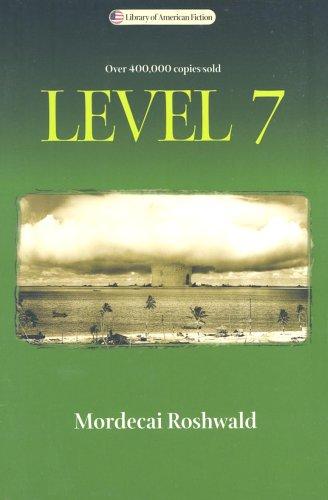
Level 7
Start here for the tightest possible nuclear-bunker pressure, with people reduced to roles inside a system built for annihilation.
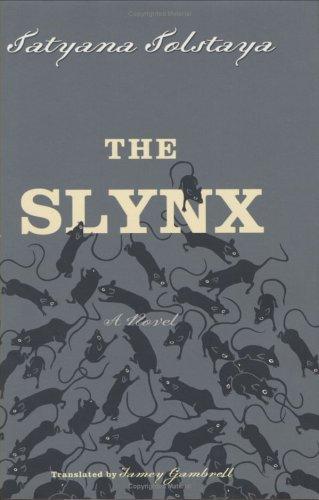
The Slynx
Start here for a Russian post-Blast society that is grotesque, funny, authoritarian, and haunted by a past it cannot properly remember.
Wool by Hugh Howey
Humanity survives inside a vast underground silo, its population stacked across levels devoted to farming, machinery, administration, and law. Going outside is a death sentence. Asking too much about outside can become one too. When Juliette begins pulling at the system’s official story, maintenance work turns into political archaeology.
The difference is scale and movement. Metro 2033 sends Artyom across a fractured network of station-states. Wool traps its characters inside one vertically integrated society and makes every staircase part of the power structure. Both treat underground infrastructure as a whole world rather than a backdrop.
If your favorite Metro chapters involved station politics, guarded borders, rumors about the surface, and the suspicion that inherited knowledge is unreliable, read this next and continue to Books Like Silo and Wool.
Level 7 by Mordecai Roshwald
A military officer lives in the deepest level of an underground complex, where distance from the surface offers safety while also cutting the inhabitants off from ordinary human life. His work is embedded in the machinery of nuclear retaliation, and the bunker organizes people by function with almost bureaucratic calm.
This is not an adventure through competing factions. It is a sealed descent into the logic that creates the wasteland in the first place. The same concrete, air systems, protocols, and depth that promise survival also turn the bunker into a machine whose inhabitants cannot simply leave.
Read it if Metro 2033 worked best when the tunnels felt oppressive rather than exciting. It is short, cold, and much closer to existential nuclear horror than mutated-monster fiction.
The Slynx by Tatyana Tolstaya
After an event called the Blast, a mutated settlement occupies the ruins of Moscow. Old books, language, technology, and political habits survive in mangled forms, while fear of a mysterious creature beyond the settlement’s edges gives the culture another darkness to organize itself around.
The geographical link to Metro 2033 is obvious, but the deeper match is cultural. Both books imagine Russian societies rebuilding from nuclear catastrophe through scarcity, authoritarian power, folklore, and competing explanations of what the world has become. Tolstaya is more satirical and linguistically playful, but the laughter never makes the mutations or cruelty harmless.
This is the choice for readers who want the strangest parts of Metro: the uncertainty over what is real, the distorted inheritance of the old world, and a society that has normalized the grotesque.
The Amtrak Wars by Patrick Tilley
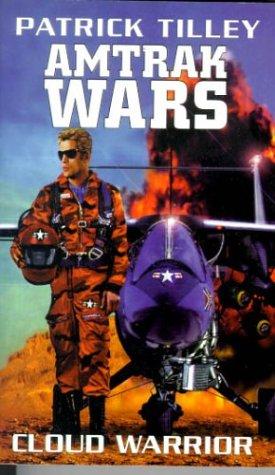
Centuries after nuclear devastation, technically advanced underground survivors fight surface societies they regard as mutated and inferior. The series widens into a long conflict of military expeditions, tribal cultures, ideological certainty, and discoveries that complicate every side’s version of history.
This scratches the large-scale factional itch better than almost anything else here. Metro’s stations turn political ideologies into geography; Tilley does something similar across an entire post-nuclear continent. Underground life produces its own hierarchy and prejudices, while the surface becomes both threat and forbidden object of fascination.
It is more pulpy, more military, and much longer than Glukhovsky’s first novel. Choose it when you want the faction map expanded into a saga.
Damnation Alley by Roger Zelazny

Hell Tanner is sent across a wrecked United States to deliver vital medicine, driving through extreme weather, radiation, ruined terrain, and oversized post-apocalyptic threats. The novel is lean, aggressive, and delighted by the lethal possibilities of its wasteland.
The match is the journey through hostile zones. Artyom moves from station to station, never entirely certain what the next tunnel contains or whether the people guarding it are safer than the darkness. Tanner’s route is above ground and far louder, but each stretch of territory carries its own hazard and survival logic.
Read this if you want to leave the Metro tunnels without losing the mission structure, mutants, radiation, and constant forward pressure.
A Canticle for Leibowitz by Walter M. Miller Jr.

Miller looks much further beyond the blast, following an order of monks that preserves fragments of knowledge while civilizations rise, rediscover technology, and edge toward the same destructive choices. It is less interested in immediate survival than in the cultural half-life of nuclear war.
That makes it a strong match for Metro’s arguments about belief and memory. Glukhovsky’s stations develop religions, ideologies, and political myths because nobody has reliable access to the whole world. Miller’s survivors turn damaged records into sacred duty for the same reason: when continuity breaks, institutions fill the gaps with stories.
Choose this if the philosophical conversations in the tunnels mattered more than the creatures. It is the book here most interested in why humanity rebuilds the machinery that destroyed it.
Riddley Walker by Russell Hoban

In a far-future England transformed by nuclear catastrophe, language itself has fractured. Riddley moves through a tribal world where old technology survives as legend, performance carries political meaning, and attempts to recover lost power threaten to repeat the original disaster.
This is the difficult, literary recommendation. Like Metro 2033, it makes travel a passage through competing settlements and belief systems. Unlike Glukhovsky, Hoban places the catastrophe so far in the past that readers must reconstruct it from words that no longer quite remember what they describe.
If Metro’s campfire stories, cults, rumors, and uncertain history were the most compelling parts, Riddley Walker takes those elements furthest. The reading experience itself becomes an expedition through the dark.
Where I Would Send Different Metro 2033 Readers Next
- If you want the closest underground-world match, read Wool.
- If you want sealed-bunker nuclear dread, read Level 7.
- If you want another strange Russian post-nuclear society, read The Slynx.
- If you want a long factional saga, read The Amtrak Wars.
- If you want a lethal wasteland mission, read Damnation Alley.
- If you want nuclear philosophy, faith, and historical cycles, read A Canticle for Leibowitz.
- If you want the deepest literary treatment of myth after nuclear war, read Riddley Walker.