Draft: Books Like Alas, Babylon: 6 Small-Town Nuclear Survival Reads

If Alas, Babylon worked on you, it was probably not because you wanted bigger explosions. It was the Fort Repose-ness of it. The grocery-shelf arithmetic. The amateur governance. The unnerving way Pat Frank makes Randy Bragg’s town feel less like a genre playground than like a real place trying to keep its head while the systems under it quietly fail.
That book is catnip for anyone who likes their apocalypse with a side of practical decision-making. When I recommend readalikes for Alas, Babylon, I am looking for books that understand collapse as logistics, community, and political temperament rather than just ash and marauders.
If you want the closest modern tonal match, start with One Second After. If you want the older Cold War companion piece, go with On the Beach. If what you loved most was the sober social-rebuild texture, Earth Abides is the sleeper pick I would not skip.
Best Alas, Babylon Matches at a Glance
- Closest modern match: One Second After
- Best classic companion: On the Beach
- Best for quiet civic realism: Earth Abides
- Best for art-and-memory melancholy: Station Eleven
- Best for harsher political collapse: Parable of the Sower
- Best for bigger disaster scale: Lucifer’s Hammer
> Ryan's quick-start shelf

One Second After
Start here for the closest modern version of small-town triage after infrastructure failure.
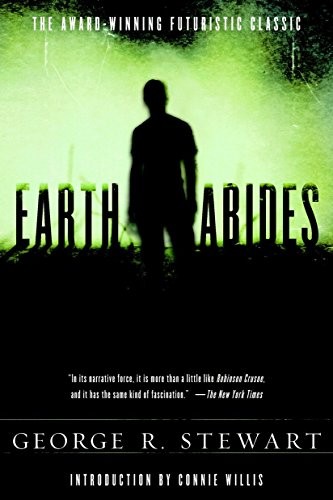
Earth Abides
Start here for the slower, more anthropological version of ordinary life rebuilding itself after disaster.
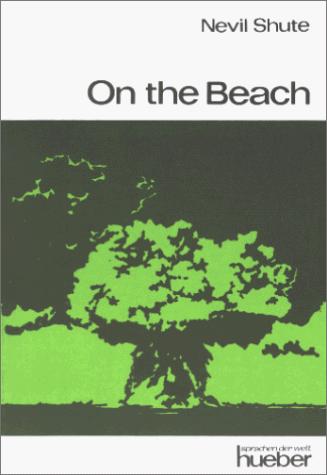
On the Beach
Start here for the classic nuclear-age companion when you want the dread turned up and the hope turned down.
What Most Alas, Babylon Readers Usually Mean
- More town-level triage: books where the real drama is rationing, road watches, medicine, water, and the miserable business of keeping neighbors coordinated.
- More atomic-age dread: books that keep the mid-century nuclear mood, civil-defense anxiety, and old-school restraint even when the ending gets darker.
- More civic rebuild energy: books where institutions, stories, and social trust matter almost as much as canned food and ammunition.
If your favorite part of Alas, Babylon was the practical stuff, the first pick is still One Second After. If you were more interested in the older Cold War mood and the way ordinary routines suddenly become historically fragile, go straight to On the Beach.
One Second After by William R. Forstchen
An EMP attack wipes out the electrical grid across the United States, and a North Carolina town has to relearn medicine, food, security, and public order in brutal real time. It is angrier and more sermon-forward than Pat Frank, but it understands the same terrifying truth: once systems fail in the wrong sequence, decency starts running on a timer.
I recommend this first because both books care about community-scale problem-solving more than apocalypse spectacle. If what you loved in Alas, Babylon was the practical stuff, the “who is rationing what, who is guarding the road, who is making the medical calls” stuff, this hits the same nerve hard.
The difference is tone. One Second After is more alarmist, more contemporary, and less elegant sentence-for-sentence, but as a readalike for small-town triage it is still the cleanest fit. If you want to stay in this sublane after that, Books Like One Second After is the natural next stop.
Earth Abides by George R. Stewart
After a plague wipes out most of humanity, Ish Williams wanders through the ruins and slowly becomes part of a small survivor community trying to invent ordinary life again. The novel is patient, observant, and much more interested in adaptation than in set pieces.
This one has the same sober, practical brain that makes Alas, Babylon so satisfying. Neither book is trying to dazzle you with flashy apocalypse nonsense; both care about habits, authority, tools, and the quiet question of what survives once civilization becomes local again.
The key difference is tempo. Earth Abides is less emergency management and more long-view anthropology. If Pat Frank gave you the thrill of immediate municipal improvisation, Stewart gives you the slower, stranger feeling of watching a civilization become memory.
On the Beach by Nevil Shute
This novel takes place in Australia after global nuclear war has already destroyed the Northern Hemisphere, and the remaining characters are living through the final wait for fallout to reach them. It is quiet, controlled, and absolutely soaked in dread.
I chose this because Alas, Babylon and On the Beach are both classic nuclear-age novels that take atomic catastrophe seriously. They are very different in momentum, but they share that same unsensational, human-scale focus on what ordinary people do when history suddenly gets very cruel.
What changes is the emotional register. Alas, Babylon still leaves room for practical hope; On the Beach mostly removes it. If you want another old-school apocalypse novel with brains, and you do not mind trading civic resilience for existential dread, this is a great pick. It also pairs well with the broader best books about nuclear war roundup.
Station Eleven by Emily St. John Mandel
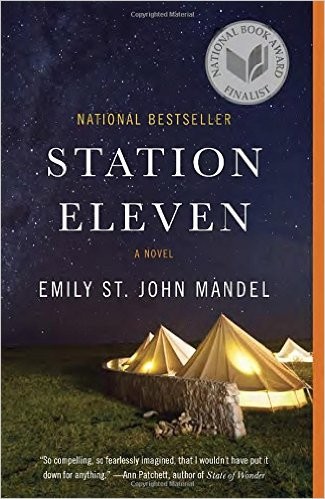
A flu pandemic collapses modern civilization, and the story moves between the world before and after, following connected lives and a traveling symphony in the ruins. It is literary without being precious, and it cares as much about memory and art as it does about survival.
This is less about tactical survival than Alas, Babylon, but it hits a similar nerve: both books understand that after disaster, the question is not just how to stay alive, but how to stay human. I reach for it when someone loved the social-rebuilding side of Pat Frank’s novel and wants a version with a little more poetry and a little less canned ham.
The difference is that Mandel is less interested in town logistics and more interested in cultural afterlife. If you want a book that asks what people preserve after the collapse besides food, medicine, and order, this is the one.
Parable of the Sower by Octavia E. Butler

In a collapsing near-future America wrecked by violence, inequality, climate pressure, and institutional failure, Lauren Olamina heads out into a brutal landscape and starts imagining a new way to live. The book is sharp, unsettling, and annoyingly plausible.
I picked this because it shares Alas, Babylon’s core fascination with what happens when the systems people trust stop functioning. Butler is writing a harsher, more political version of collapse, but the overlap is still strong: both novels care about survival, leadership, and the social rules that get reinvented under pressure.
The difference is that Butler is meaner and much less interested in reassurance. If Pat Frank gives you competence under stress, Butler gives you adaptation under moral and structural failure. For readers who want the more prophetic branch of collapse fiction, this is the move, and it fits nicely alongside the site’s climate fiction books guide too.
Lucifer’s Hammer by Larry Niven and Jerry Pournelle

A comet strikes Earth, civilization buckles, and scattered survivors have to deal with scarcity, violence, and the miserable logistics of starting over. The novel is bigger and more sprawling than Alas, Babylon, with multiple viewpoints and a broader disaster canvas.
I went with this one because it shares that same practical interest in how communities organize after catastrophe. Once the spectacle settles down, it becomes a very grounded story about rebuilding under awful conditions, complete with the grim arithmetic of food, defense, and political order.
The gap is scale. Lucifer’s Hammer is larger, messier, and more chaotic than Pat Frank’s novel, which is exactly why I like it as the “same instincts, bigger map” recommendation.
Two More If You Want the Deeper Bench
The first off-list book I would try is Warday by Whitley Strieber and James Kunetka. It is less warm than Pat Frank and much less novelistically cozy, but it absolutely understands infrastructure, institutions, and the weird patchwork of post-strike America. If your favorite Alas, Babylon passages were the ones where survival turns administrative, it is a strong follow-up.
The older wildcard is Leigh Brackett’s The Long Tomorrow, a post-nuclear rural novel about anti-technology communities, local suspicion, and the tension between rebuilding and staying small. It is not the obvious algorithmic answer to this query, which is exactly why I like mentioning it here. And if what you actually want is the civic-symbol side of collapse fiction, not just the bomb, books like The Postman is a very natural lateral move.
Final Thoughts
If I were handing these out in order, I would start with One Second After for the closest modern parallel, then Earth Abides if you want the thoughtful long-view version of collapse. If you want the nuclear dread turned all the way up, go straight to On the Beach. If you want the more literary or more political branches of the same basic fascination, Station Eleven and Parable of the Sower are the strongest pivots.
What I would not do is chase any random “nuclear war book” and assume it will scratch the same itch. A lot of post-bomb fiction is really about spectacle, military escalation, or wasteland weirdness. Alas, Babylon is more particular than that. It is about competence, civic temperament, and the tiny local habits that stop a town from becoming a mob. The better readalikes keep that in view.