Draft: The 19 Best Books About Nuclear War
Ash Tales
I’m fascinated by nuclear war, and after reading a lot of fiction and non-fiction about atomic catastrophe, this is the nuclear-war reading list I would hand to someone who wants more than generic mushroom-cloud vibes.
That distinction matters. A lot of competing lists drift into one of two dead ends: giant, indiscriminate inventories, or recent-event nonfiction lists built almost entirely around Nuclear War: A Scenario. Neither is useless, but neither really helps you decide what kind of nuclear-war book you want. Do you want the bomb actually falling? The slow arrival of fallout? The long cultural hangover centuries later? A command-and-control nightmare? A grimly practical community-survival novel?
So I kept the original period framing, because I still think it works, but I tightened the page around reading experience. I own and have read the core books in this guide, and the goal here is simple: help you find the nuclear-war book that best matches your mood, not just the one that shouts “atomic” the loudest.
Best books about nuclear war at a glance
- Best starting point for pure dread: On the Beach
- Best long-view classic about civilization repeating itself: A Canticle for Leibowitz
- Best practical community-survival novel: Alas, Babylon
- Best strange literary post-nuclear novel: Riddley Walker
- Best modern underground survival novel: Metro 2033
- Best modern nonfiction wake-up call: Nuclear War: A Scenario
> Ryan's starter picks
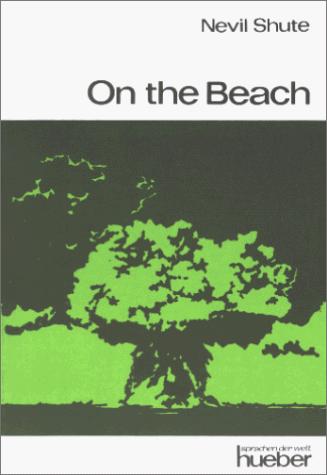
On the Beach
Start here if you want extinction-level dread, moral exhaustion, and almost no false hope.

A Canticle for Leibowitz
Start here if you want the biggest, smartest classic on memory, religion, and rebuilding after the bomb.

Alas, Babylon
Start here if you want nuts-and-bolts collapse, leadership, shortages, and the daily work of staying decent.
The Atomic Age (1945-1960)
The first generation of nuclear-war literature emerged in the immediate aftermath of Hiroshima and Nagasaki. These books are still some of the sharpest because they were written close enough to the bomb that the fear had not yet become genre furniture. The writers are not decorating a wasteland. They are trying to imagine a brand-new human possibility: self-erasure at industrial scale.
1. On the Beach by Nevil Shute (1957)
This is still the book I would give someone who thinks nuclear-war fiction has to be loud to be effective. It is devastating because it stays quiet.
The novel follows Australians waiting for the fallout cloud from a Northern Hemisphere war to drift south and kill them. That premise lets Shute focus on routine, duty, and denial instead of spectacle. People garden, race cars, keep working, fall in love, and talk themselves into believing there might still be time. That emotional register is exactly why the book hits so hard.
What I like most is its refusal to turn apocalypse into adventure. There is no fantasy of competence saving the day. There is only the unbearable dignity of people carrying on when they already know the ending.
2. A Canticle for Leibowitz by Walter M. Miller Jr. (1959)
If I had to pick the single most interesting nuclear-war novel on the page, this would be it.
Miller takes the long view: monks in a post-nuclear dark age preserve scraps of scientific knowledge, and the book keeps jumping forward to show civilization rebuilding itself while remaining perfectly capable of making the same catastrophic mistake twice. That cyclical structure is what makes it feel bigger than a survival novel. It is not just about fallout. It is about memory, ritual, faith, technical knowledge, and humanity’s talent for rebuilding the ladder it once used to climb into hell.
It also matters to me personally. Its vision of holy institutions preserving broken remnants of the old world fed directly into parts of The Green Priest. If you finish it and want more of that “library after the end of history” mood, go next to Books Like A Canticle for Leibowitz.
3. Alas, Babylon by Pat Frank (1959)
This is one of the most useful recommendations on the page because it understands that apocalypse is mostly logistics, leadership, and the slow daily work of staying decent.
The nuclear exchange happens quickly; the real story is what follows in Fort Repose, Florida, where ordinary people have to solve food, security, medicine, communication, and governance without pretending they are action heroes. A lot of later post-nuclear fiction owes this book a debt, especially the more community-minded branch of the genre that cares less about scorched landmarks and more about wells, radios, barter, and trust.
It is also the cleanest bridge between atomic-age fiction and later prepper-adjacent collapse fiction. If this is your lane, Books Like Alas, Babylon is the next guide I would open.
Cold War books that get stranger, bleaker, and more culturally specific
By the 1970s and 1980s, nuclear anxiety had moved from immediate shock into everyday background terror. These books feel different from the atomic-age classics: broader in register, often weirder, and more willing to mix survivalism, allegory, satire, and cultural decay.
4. The Postman by David Brin (1985)
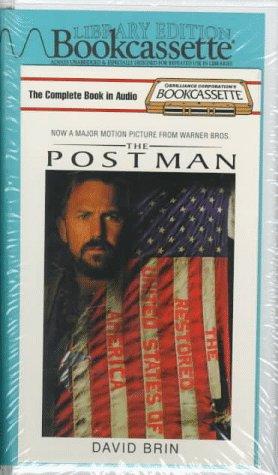
This was the first post-apocalyptic novel I ever read, passed to me as a dog-eared copy by a friend, and it permanently rewired my reading tastes.
That autobiographical attachment is not the only reason it belongs here. Brin understands that after catastrophe, symbols can matter just as much as calories. A worn postal uniform becomes a story people can believe in, and that story becomes social infrastructure. That is the clever move at the heart of the novel. It is not just “man walks through ruins.” It is a book about civic myth, state memory, and the odd fragility of national identity.
If you specifically like post-nuclear fiction about rebuilding institutions instead of merely enduring collapse, this is one of the best handoffs on the page.
5. Riddley Walker by Russell Hoban (1980)

This is the recommendation I make when someone says they want something difficult, singular, and worth the effort.
Hoban’s broken future English is famous for a reason. At first it feels like resistance training. Then it clicks, and once it clicks the whole book becomes more haunting. You realize you are reading a culture that has inherited fragments of nuclear history as myth, puppet show, ritual, and garbled folk memory. There are more accessible nuclear-war novels, but not many that feel this linguistically alive.
It is also one of the best examples of a subtype I wish more lists separated out clearly: the very-long-after book, where the blast itself matters less than the damaged civilization that grows in its crater.
6. When the Wind Blows by Raymond Briggs (1982)

If your preferred flavor of nuclear horror is domestic rather than military, read this.
Briggs follows an elderly British couple who trust civil-defense pamphlets and believe, with heartbreaking sincerity, that doing what the government says will be enough. The result is one of the bleakest books here, precisely because it never raises its voice. It is gentle in presentation and merciless in effect.
I also think it is a particularly good recommendation for readers who were hit hard by films like Threads or The Day After and want a book that captures that same mixture of ordinary life and total policy failure.
Modern books about aftermath, inheritance, and system failure
After the Cold War, nuclear fiction often stopped focusing on the launch itself and became more interested in aftermath: cultural rot, inherited trauma, underground survival, administrative failure, and the weirdness of living in a world where history has already burned once.
7. The Road by Cormac McCarthy (2006)
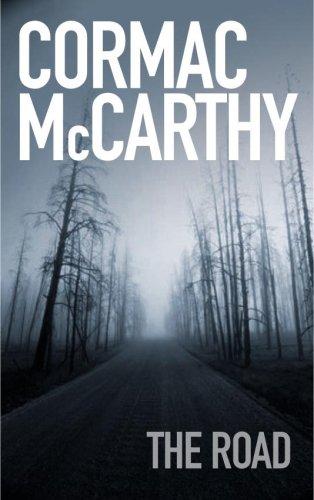
This is still my favorite novel of all time, full stop.
It is the sparsest book in the guide and probably the most discussed, but I do not think that makes it overrated. McCarthy strips the world down so aggressively that every scrap of kindness feels like contraband. Even if the catastrophe is left technically unspecified, the ashen landscape, dead biosphere, and long winter of scarcity make it read like one of the purest nuclear-aftershock novels ever written.
What keeps me returning to it is the balance between horror and grace. It is miserable in the best way, and I still find its ending more humane than its reputation suggests. If you want to stay with McCarthy’s language a little longer, I keep a separate guide to epic quotes from The Road.
8. Metro 2033 by Dmitry Glukhovsky (2002)

This is the bunker-and-tunnel recommendation.
Glukhovsky gives you a post-nuclear Moscow where the Metro has fragmented into ideologically distinct station-states, with the surface world rendered almost mythic by radiation, darkness, and mutant threat. I like it because the underground setting does more than create atmosphere. It turns politics, memory, propaganda, and scarcity into architectural facts. Every station feels like a nervous little theology.
It also brings a distinctly Russian texture to the list. This is not generic ruined-city fiction. It is steeped in Soviet afterlife, urban claustrophobia, and a very specific kind of civilizational hangover.
9. The Slynx by Tatyana Tolstaya (2000)
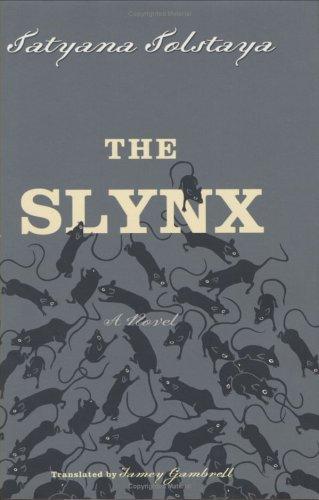
This is the book I reach for when I want to remind myself that nuclear fiction can be grotesque, funny, literary, and deeply uncategorizable.
Tolstaya imagines a mutated post-Blast Moscow where old culture survives as debris, superstition, and authoritarian kitsch. The novel is less interested in the bomb as event than in what happens to language, taste, and power after generations of degradation. That makes it one of the sharpest books here for readers who want cultural satire rather than tactical survival.
If The Road is stripped down and sacred, The Slynx is warped, sly, and contaminated all the way through. I mean that as a compliment.
Non-fiction that makes the fiction feel less hypothetical
The best non-fiction nuclear books do something the fiction sometimes cannot: they restore scale, process, and historical specificity. They remind you that command systems, blast effects, radiation, and human miscalculation are not symbolic devices. They are documented facts.
10. Nuclear War: A Scenario by Annie Jacobsen (2024)
This is the book currently shaping a lot of search interest around the topic, and for good reason: it is fast, frightening, and ruthlessly concrete.
Jacobsen walks through a modern nuclear exchange almost in real time, showing how quickly decisions get made, how little slack exists in the system, and how almost every part of the response structure is built around terrifying speed. I tore through it because it reads with thriller momentum without ever stopping being a nonfiction book about command structures and policy.
It also creates a useful contrast with the older fiction on this page. The classics often imagine fallout, rubble, and social reorganization. Jacobsen makes you sit inside the decision window before any of that has time to happen.
11. Command and Control by Eric Schlosser (2013)
If Jacobsen is the best “here is how the clock runs” book, Schlosser is the best “here is why you should never trust the machinery” book.
The Damascus Titan II explosion becomes the anchor for a much larger argument about fallibility: careless design, human error, aging hardware, bureaucratic optimism, and the recurring fantasy that systems this dangerous can be made perfectly safe. It permanently changes the way you think about arsenals and safeguards, which is exactly what good nonfiction should do.
12. Hiroshima by John Hersey (1946)
This is the indispensable human document behind the whole subgenre.
Hersey does not give you policy abstraction or speculative aftermath. He gives you bodies, burns, confusion, endurance, and the impossibility of fully understanding what happened while it is still happening. If you are reading nuclear-war fiction partly to understand what these weapons actually do to people, this is essential.
And if your interest leans more toward the creation and use of the bomb itself than toward post-nuclear fiction, Books About the Atomic Bomb is the guide I would pair with this section.
7 more nuclear-war books I would recommend after the essentials
These are the books I would reach for once you have covered the core list, or if you want a more specific flavor of nuclear fiction than the big canonical titles provide.
- For surreal afterlife satire: This Is the Way the World Ends by James Morrow. One of the stranger books in the field, and all the better for it. It puts unborn souls, moral reckoning, and absurdist anger where a more ordinary book would put another convoy of survivors.
- For Philip K. Dick at his most post-bomb odd: Dr. Bloodmoney by Philip K. Dick. A very different mood from the solemn classics: Californian, unstable, blackly funny, and alive to how weird people get when collapse becomes normal life.
- For the moment the war breaks out while ordinary life is still in motion: Down to a Sunless Sea by David Graham. The premise alone earns it a place here: a transatlantic flight discovers nuclear war is unfolding below them and has to solve the problem of where a jumbo jet can even land.
- For practical, paranoid Cold War survival thinking: Nuclear War Survival Skills by Cresson H. Kearny. Dated in places, obviously, but still fascinating as a manual written from the conviction that information, improvisation, and shelter design might keep some people alive.
- For a quieter regional aftermath novel: The Wild Shore by Kim Stanley Robinson. Less explosive than many recommendations and much more interested in identity, locality, and what a damaged America might feel like at ground level.
- For pre-Hiroshima prophetic unease: The World Set Free by H. G. Wells. Worth reading less as a polished modern novel than as an eerie historical artifact from before atomic war was technically possible and yet somehow already imaginable.
- For giant, mythic post-nuclear sprawl: Swan Song by Robert McCammon. This is the recommendation for readers who want something bigger, darker, and more operatic than the cooler, leaner classics.