Draft: Books Like One Second After: 8 Grid-Down Collapse Reads
The Ultimate Guide to Post-Apocalyptic Fiction
If One Second After got its hooks into you, it was probably not just because the weapon was an EMP. It was the small-town triage, the shelves-empty-by-Tuesday realism, the hospital panic, and the nasty realization that once refrigeration, fuel, water treatment, insulin, and traffic control fail in the wrong order, morality gets stress-tested fast.
That is why a lot of generic readalike pages for this book are not especially satisfying. They recommend anything with collapse on the cover and call it close enough. I do not think that is precise enough. Some readers want more Black Mountain-style community strain. Some want bug-out survival miles. Some want the same infrastructure-failure dread with less speechifying. Some want the wider systems view that sits just outside Forstchen’s town.
That is the logic behind this rewrite. I kept the strongest original recommendations, tightened the explanation for why each one belongs, and added one quieter left-field pick that crowd-result pages mention but rarely justify properly. If you want the closest overall tonal match, start with Alas, Babylon. If you want the practical grid-down nerves turned up, go to Lights Out. If the part that stayed with you was the systems-collapse thinking more than the politics, Warday and Earth Abides are the two I would not skip.
Best Books Like One Second After at a Glance
- Closest overall match: Alas, Babylon
- Best for immediate grid-down fragility: Lights Out
- Best for bug-out survival momentum: Going Home
- Best for infrastructure and policy aftershock: Warday
- Best for a harsher modern EMP series: After the EMP: The Darkness Trilogy
- Best for a cold-weather thriller version: Edge of Collapse
- Best for old-school big-disaster scale: Lucifer’s Hammer
- Best left-field slow-burn aftermath pick: Earth Abides
> Ryan's quick-start picks

Alas, Babylon
Start here if you want the nearest match for town-level shortages, leadership strain, and the daily mechanics of keeping a place alive.
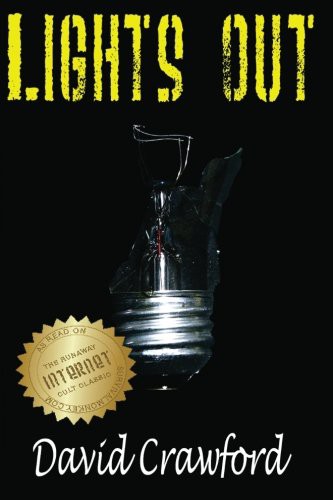
Lights Out
Start here if the real hook was watching ordinary modern life reveal just how fragile it is once the grid goes dark.
Warday
Start here if you finished One Second After thinking less about firefights and more about supply chains, institutions, and uneven recovery.
Alas, Babylon by Pat Frank
I kept this at the top because the judgment still holds. Yes, the trigger is nuclear war rather than a literal EMP. No, that does not really matter once you get to the part readers are actually chasing: a town cut off from the larger system, suddenly forced to improvise food, medicine, security, communication, and some workable version of public order.
What makes Alas, Babylon such a durable handoff is that it understands apocalypse as logistics. Randy Bragg is not surviving because he is the coolest guy in the county. He survives because Pat Frank pays attention to water, routines, neighbors, radios, shortages, and leadership under pressure. If the Black Mountain sections were the reason One Second After worked on you, this is the cleanest next read.
It is also a useful recommendation for readers who liked Forstchen’s scenario more than his tone. Frank is less sermon-forward, more socially observant, and better at making competence feel communal rather than performative.
Lights Out by David Crawford
Lights Out is rougher, pulpier, and less polished than the best books on this page, but it earns its place because it is extremely good at one specific thing: making ordinary modern dependence feel terrifyingly breakable. Communications vanish. Resupply becomes guesswork. Neighborhoods get less legible by the day. Small domestic tasks turn into infrastructure problems.
This is the recommendation I use when somebody says the best part of One Second After was that sickening first-wave realization that almost every convenience in modern life is secretly a machine leaning on another machine. Crawford leans more openly into preparedness fantasy and practical survival competence, but that is also part of the match.
If Alas, Babylon is the best town-level realism pick, Lights Out is the best “show me the grid fail in human-sized detail” pick.
Going Home by A. American
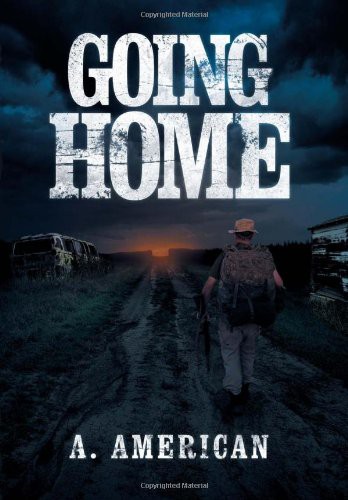
This one belongs here for readers who liked the preparedness side of One Second After more than the committee-meeting side. Morgan Carter is stranded far from home when the world breaks, and the whole novel gets propulsion from a very simple question: how do you cross a country that is degrading by the hour if your only real objective is getting back to your family?
That shift matters. Going Home is more motion-driven, more gear-conscious, and more openly competency-focused than Forstchen’s novel. The pleasures are different. You are not watching a town negotiate its future so much as watching one person try to stay mobile inside a landscape where comfort has suddenly become theoretical.
Goodreads pushes this title hard, and in this case I think the crowd is broadly right. It is not the most elegant book on the list, but it is one of the more direct answers to the bug-out version of the query.
Warday by Whitley Strieber and James Kunetka
This is still my favorite sleeper recommendation for One Second After readers, because it catches an appetite the more obvious EMP readalikes often miss. A lot of readers finish Forstchen’s book less interested in the pulse itself than in the wider machinery of collapse: what happens to supply chains, transport, public health, regional politics, and the parts of the state that half-survive.
Warday goes straight at that. Presented like a reported journey through the United States after a limited nuclear exchange, it reads like documentary fiction: damaged regions, improvised authorities, broken systems, and uneven recovery mapped with unnerving administrative calm.
If you want less firefight energy and more systems thinking, this is the one I would elevate above half the crowd-sourced recommendations in the SERP.
After the EMP: The Darkness Trilogy by Harley Tate

I wanted to keep this pick because it pushes the page a little beyond the same two or three titles that show up everywhere else. Harley Tate stays firmly in the hard-survival EMP lane, but the emotional temperature is harsher: more local power struggle, more distrust, more opportunism, and more grim arithmetic around who gets protected when there is not enough safety to go around.
This is a good next move if One Second After felt a little too civically hopeful, or if you want a modern series that lives in the same broad fear but turns the social violence up a notch. It is less elegant than the classics and more interested in fracture than comfort, which is precisely why it works as a separate lane instead of a duplicate.
Edge of Collapse by Kyla Stone

Here the trigger is a solar flare rather than a weaponized EMP, but the reading experience overlaps enough that I would absolutely keep it on the page. The grid is gone, the cold is closing in, the institutions that ought to help are unreliable, and danger shrinks fast from national to personal.
Stone writes with much more thriller momentum than the older books in this guide. Short chapters, immediate jeopardy, and relentless forward motion make this the easiest recommendation here for readers who want the grid-down fear without the slower, speech-heavier texture of some classic EMP fiction.
If the real request is “give me the same panic in a cleaner page-turner,” this is the answer.
Lucifer’s Hammer by Larry Niven and Jerry Pournelle

The disaster mechanism is different again, this time a comet strike, but the reason I keep this here is scale. The novel moves through panic, failed infrastructure, improvised enclaves, and brutal new hierarchies with a big old-school appetite for what a civilization-level shock actually does to ordinary life.
This is one of the books Reddit readers keep reaching for when they talk about One Second After, and I think the instinct is sound. Not because the setup is identical, but because the systems-collapse canvas is. If your favorite part of Forstchen’s novel was the feeling that the rules had just broken everywhere at once, Lucifer’s Hammer delivers that sensation on a much wider stage.
It is uneven in places, but it belongs in the conversation.
Earth Abides by George R. Stewart
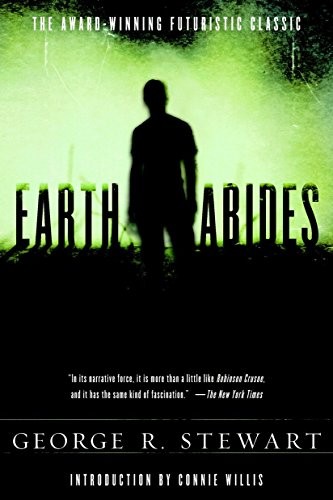
This is the left-field recommendation I most wanted to add. Crowd-result pages mention it, but they often do not explain why it belongs. The reason is not that it feels exactly like One Second After. It does not. The reason is that it follows the thread of civilizational aftershock further than most grid-down thrillers bother to go.
Stewart is patient, observant, and much more interested in what survives of culture, habit, memory, infrastructure, and practical knowledge once the emergency stops being an event and starts becoming a condition. If you finished One Second After wanting not just the panic but the longer question of what people become after systems disappear, this is a very smart branch to take.
I would not lead with it for every reader. I would absolutely lead with it for the readers who say, “Yes, the shortages scared me, but the real hook was seeing modern civilization suddenly look temporary.”
Where I Would Send Different One Second After Readers Next
- If you want the nearest overall tonal companion, read Alas, Babylon.
- If you want the practical grid-failure nerves turned up, read Lights Out.
- If you want more travel, gear, and bug-out pressure, read Going Home.
- If you want the broader systems and policy view, read Warday.
- If you want the slower civilizational aftershock branch, read Earth Abides.
- If you decide the real hook was EMP fiction as a shelf, go next to EMP Books.
- If the older-classic angle appeals most, continue into Books Like Alas, Babylon.
- If you want the wider preparedness-fiction lane, go to SHTF Books.
- If you want bigger geopolitical and nuclear-collapse books, head to The Best Books About Nuclear War.
- If you realize you want a broader apocalypse map rather than one micro-subgenre, zoom back out to The Ultimate Guide to Post-Apocalyptic Fiction.