The Road Quotes: 20 Lines from Cormac McCarthy Worth Re-reading
Ash Tales
When I think back on The Road, I do not mainly remember plot mechanics. I remember sentences. McCarthy writes like somebody carving scripture into ash, and even when the book is at its bleakest, the prose never feels flat or merely grim for the sake of it.
The 2009 film adaptation with Viggo Mortensen and Kodi Smit-McPhee gets the weather of the novel right, but the book is where the full force of the language lands. This is still one of the most quotable post-apocalyptic novels I have ever read, not because it is packed with neat one-liners, but because it keeps finding exact words for fear, tenderness, grief, and endurance.
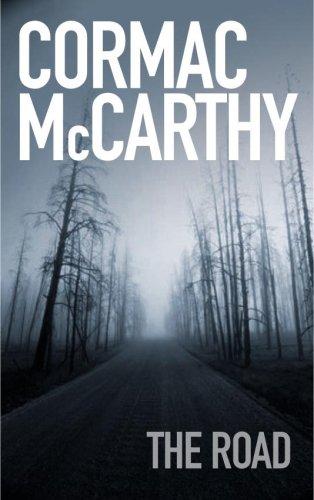
Some readers come here wanting the most famous line. Some want the saddest quotes. Some want passages that explain why people describe The Road as beautiful instead of just depressing. This guide is for all three groups.
Combining some of the bleakest imagery in post-apocalyptic fiction with an almost liturgical rhythm, The Road still feels singular to me. Plenty of apocalypse novels do collapse, hunger, and cruelty. Very few sound like this. Very few can move from cannibal dread to parental tenderness in the same breath without breaking tone.
If I had to reduce the novel to its core emotional circuitry, it would be this: exhausted endurance, fierce love, and a dead world that somehow still leaves a moral residue behind. The quotes below are grouped around those nerves, plus the book’s obsession with memory, time, and the strange afterlife of faith.
Why The Road is so quotable
The best lines in The Road do more than sound good in isolation. They compress whole themes into a few words. “Carry the fire” is not just a memorable phrase; it is the novel’s entire moral argument. “Getting up this morning” is not just darkly funny; it is McCarthy’s definition of courage after the world has emptied out.
That is also why a plain quote dump feels a little thin for this book. The lines hit hardest when you know what kind of fear, love, deprivation, or grace is sitting behind them. So instead of listing twenty passages and leaving, I have added short notes on what each one is doing and why it tends to linger.
Quotes about surviving one more day
“What’s the bravest thing you ever did? He spat in the road a bloody phlegm. Getting up this morning, he said.”
This is still the first quote I think of when someone asks me what The Road is really about. Not mythic heroism. Not glorious resistance. Just the humiliating courage of continuing when there is no audience, no reward, and no sign that tomorrow will improve.
The Road // endurance“What's the bravest thing you ever did? He spat in the road a bloody phlegm. Getting up this morning, he said.”
Cormac McCarthy
“Carry the fire.”
This is the novel’s most famous line for good reason. It works as a survival mantra, a moral instruction, and a last tiny scrap of religious language in a world that barely seems capable of belief anymore. McCarthy never overexplains it, which is exactly why it keeps its charge.
“Keep a little fire burning; however small, however hidden.”
I have always read this as the quieter companion to “carry the fire.” The earlier phrase sounds iconic; this one sounds private. It is less about identity and more about maintenance: preserve some ember of decency, tenderness, or purpose, even if you can only protect it in secret.
“When one has nothing left make ceremonies out of the air and breathe upon them.”
This line helps explain why The Road never feels spiritually empty, even when the setting is stripped almost bare. Ritual survives after abundance is gone. Human beings keep trying to consecrate ordinary acts, because that is one way of refusing to become purely animal.
Quotes about love, fatherhood, and the boy
“Then they set out along the blacktop in the gunmetal light, shuffling through the ash, each the other’s world entire.”
This might be the single best one-sentence summary of the novel. Strip away the cart, the ruined highways, and the scavenging, and what remains is this relationship. The apocalypse matters because it tests the bond; the bond matters because it gives the apocalypse emotional scale.
The Road // father & son“Then they set out along the blacktop in the gunmetal light, shuffling through the ash, each the other's world entire.”
Cormac McCarthy
“He knew only that his child was his warrant.”
This is one of McCarthy’s sharpest compressions of parental purpose. The father does not have a political project or a fantasy of rebuilding civilization. He has the boy. That is enough to justify one more mile, one more risk, one more day.
“If he is not the word of God God never spoke.”
I would put this among the novel’s most revealing lines because it shows how love keeps edging into theology. The father cannot build a system of belief out of the ashes, but he can locate the sacred in the child beside him. In a book full of absence, this is one of the clearest moments of reverence.
“You have my whole heart. You always did.”
After so much deprivation, McCarthy earns the directness of this line. It is almost simple compared with the novel’s more barbed or lyrical passages, and that simplicity is what makes it hurt. The book is not only about surviving collapse; it is about what love sounds like when nothing ornamental is left.
Quotes about ash, silence, and the ruined world
“Perhaps in the world’s destruction it would be possible at last to see how it was made. Oceans, mountains. The ponderous counterspectacle of things ceasing to be. The sweeping waste, hydroptic and coldly secular. The silence.”
This is McCarthy in full visionary mode. He does not merely describe a broken landscape; he makes annihilation feel geological and metaphysical at the same time. If you came to The Road for atmosphere, this is one of the passages that explains why the book outranks so many merely grim imitators.
“He lay listening to the water drip in the woods. Bedrock, this. The cold and the silence. The ashes of the late world carried on the bleak and temporal winds to and fro in the void.”
This is the kind of passage that makes the novel feel less like plot-driven fiction and more like an epic lament. The world has not just ended; it has become ancient while the characters are still living inside it. McCarthy is brilliant at making catastrophe feel both immediate and fossilized.
“By day the banished sun circles the earth like a grieving mother with a lamp.”
I love this one because it feels impossible and exact at the same time. The simile turns the sky into mourning. Even the light in The Road is exhausted, maternal, and bereaved.
The Road // ruined world“By day the banished sun circles the earth like a grieving mother with a lamp.”
Cormac McCarthy
“The wind sounded of Mother Earth’s forsaken and abandoned cries.”
This is one of the novel’s more openly poetic lines, and it helps explain why so many readers search for quotes from the book rather than just summaries of the story. Even when McCarthy veers toward the grand and mournful, the language keeps sounding hand-forged rather than decorative.
Quotes about memory, grief, and time
“No lists of things to be done. The day providential to itself. The hour. There is no later. This is later.”
Few novels capture survival time as well as this one. Disaster strips life down to the immediate present, and McCarthy makes that temporal contraction feel terrifying rather than liberating. It is one of the best expressions I know of how apocalypse destroys planning itself.
“Borrowed time and borrowed world and borrowed eyes with which to sorrow it.”
This line is devastating because it treats existence as temporary on every level. Not just life, but perception. Not just the world, but the right to witness it. It reads like grief discovering grammar.
The Road // time & grief“Borrowed time and borrowed world and borrowed eyes with which to sorrow it.”
Cormac McCarthy
“People were always getting ready for tomorrow. I didn’t believe in that. Tomorrow wasn’t getting ready for them. It didn’t even know they were there.”
This is one of the book’s coldest insights. Human beings love the fantasy of preparation and future control, and McCarthy cuts through that fantasy in three ruthless sentences. It lands especially hard in a post-collapse novel because the entire genre is partly about how flimsy our assumptions of continuity really are.
“If only my heart were stone.”
Short, brutal, and almost embarrassingly human. A line like this reminds me that The Road is not only philosophically bleak; it is emotionally exhausted. Sometimes the deepest wish in the novel is not hope, but numbness.
Quotes about God, judgment, and the last scraps of meaning
“Where men can’t live gods fare no better.”
This line feels like a thesis statement for the book’s stripped religious imagination. The old structures of belief do not emerge from catastrophe untouched. If the human world is shattered, the symbolic world shakes with it.
“There is no God and we are his prophets.”
This is one of the most bitter lines in the novel because it refuses easy atheism and easy belief at the same time. The phrase still sounds biblical even as it empties the biblical frame. That contradiction is very Road: spiritually haunted, but never comfortingly resolved.
The Road // faith“There is no God and we are his prophets.”
Cormac McCarthy
“On this road there are no godspoke men. They are gone and I am left and they have taken with them the world.”
The thing I like about this passage is how personal the metaphysical despair feels. It is not abstract argument. It is abandonment. The line sounds like somebody discovering that whatever moral order once made the world legible has withdrawn without explanation.
“Then he just knelt in the ashes. He raised his face to the paling day. Are you there? he whispered.”
This is the novel at its rawest pitch of unanswered prayer. Even readers who do not care much about the book’s religious dimension tend to remember passages like this, because the desperation is so bodily and direct. It is not theology from a distance. It is somebody trying to speak into silence and getting silence back.
If you want more books with this same bleak beauty
If the quotes that hit you hardest are the ones about fatherhood, moral endurance, and beautiful ruin, the next stop should be my guide to books like The Road. If you want to branch out into the wider canon, start with the best post-apocalyptic books. And if what you really want is the broader map of subgenres, moods, and collapse scenarios, go deeper into post-apocalyptic fiction.