The 8 Best Short Story Podcasts for Adults
A short story podcast can give you a whole fictional world in a single sitting. You might want a familiar voice reading literary fiction, an actor performing a strange new story, or something unsettling to keep you company on the journey home. The best choice depends as much on how you like to listen as what you like to read.
These eight picks cover literary fiction, science fiction, fantasy and horror. Each has a suggested starting episode, so you can try the format without working through a back catalogue. Some episodes contain several stories or a reading followed by discussion; a short story doesn’t always mean a short episode.
Ash Tales is included below: it’s our own podcast, which I host. Its particular territory is original fiction about the end of the world.
| Podcast | Choose it for | Format |
|---|---|---|
| LeVar Burton Reads | An inviting introduction to short fiction | One reader, with music and sound |
| Ash Tales | Short trips to the end of the world | Narrated standalone stories |
| Selected Shorts | Actors performing literary fiction | Themed programmes of readings |
| The New Yorker: Fiction | A story and a closer look at its craft | Reading and conversation |
| Escape Pod | Science-fiction ideas in story form | Narrated fiction, with text online |
| PodCastle | Fantasy beyond the long-running saga | Narrated fiction, with text online |
| PseudoPod | Horror told through prose and voice | Narrated horror fiction |
| The Truth | Short stories performed as audio drama | Actors, dialogue and sound design |
1. LeVar Burton Reads
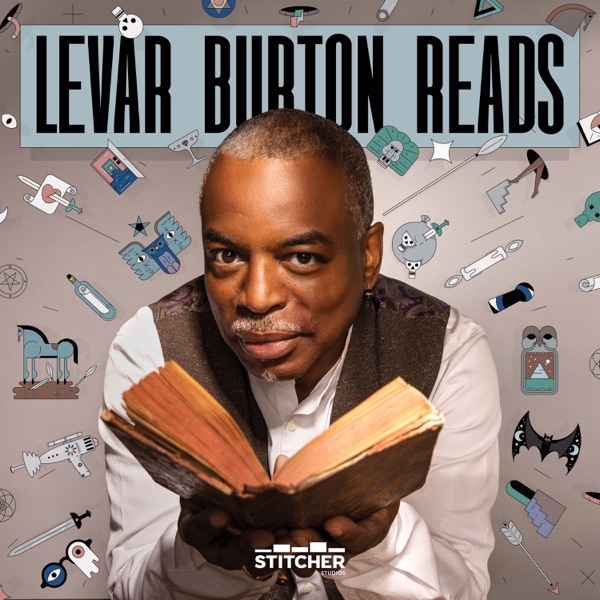
LeVar Burton Reads is a good starting point if you want someone to choose the story for you. Burton reads across literary and speculative fiction, with a catalogue that includes work by Toni Morrison, Stephen King, Nnedi Okorafor and Ken Liu. Music and soundscapes accompany the narration, giving it a different feel from a bare reading.
Choose it for the consistency of one voice across many writers and worlds. You can pick by author or premise rather than commit to a series. The catalogue’s latest listed episode is from May 2024, so approach this as an archive to explore.
Start with “The Toynbee Convector” by Ray Bradbury, a 43-minute episode in which a time traveller reveals his secrets. The episode carries a content advisory for suicide.
2. Ash Tales
The Ash Tales podcast is back with original short stories about the end of the world. Each episode tells a self-contained story: a different disaster, a different survivor, a different glimpse of what might come after. If you like speculative fiction but don’t want a long serial to keep track of, this is where our show fits.
The writing comes first, with a single narrator guiding you through the story. The Guardian called it “a small, interesting British show that’s worth supporting.”
Start with Point Nemo. At the remotest point in the Pacific, a salvage crew finds something on the ocean floor that should have stayed there. The episode runs 11 minutes and 36 seconds and contains strong language, violence and horror. You can also read Point Nemo.
Subscribe on Apple Podcasts, Spotify or your favourite podcast app. The RSS feed is available too.
3. Selected Shorts
Selected Shorts brings the experience of a live literary reading to your headphones. Produced by Symphony Space and hosted by Meg Wolitzer, it pairs stories by established and emerging writers with actors from stage and screen. Programmes usually gather several readings around a theme, rather than spending the whole episode in one fictional world.
It’s a useful choice when you want variety and performance: different writers, different voices, and the atmosphere of a reading in front of an audience. Allow roughly an hour for a full programme.
Try “Building Worlds, with N. K. Jemisin”. It brings together John Scalzi’s “When the Yogurt Took Over,” Alexandra Chang’s “Me and My Algo,” and Jemisin’s “The Ones Who Stay and Fight.” That combination makes a particularly relevant introduction for readers who enjoy stories about technology and imagined societies. If the episode rotates out of the feed, the show’s current episode page is the place to look for another selection.
4. The New Yorker: Fiction
The New Yorker: Fiction adds conversation to the reading. A writer selects a story from the magazine’s archive, reads it, and discusses it with fiction editor Deborah Treisman. Choose this if you want to think about how a story works after hearing it; the discussion is part of the appeal.
Start with Tony Earley reading William Maxwell’s “Love”, in which a man remembers his fifth-grade teacher. It’s a quieter alternative to the speculative and horror selections elsewhere on this list.
5. Escape Pod
Escape Pod publishes science fiction in both audio and text. Its magazine format lets you move between authors, narrators and ideas without learning a single series’ history. For readers who like a speculative premise worked through in a compact story, that breadth is the attraction.
Choose it when you want to hear science fiction itself, rather than a conversation about science-fiction books or films. The accompanying text is also useful when a sentence makes you want to pause and read it again. Longer selections can be split into parts, so check the episode title if you want a complete story in one sitting.
Start with “A Struggle Between Rivals Ends Surprisingly” by Oliver Buckram, read by Laura Hobbs. A translator’s musical negotiations with an alien client offer a playful entry into the catalogue. This edition runs 27 minutes and 38 seconds.
6. PodCastle
PodCastle is Escape Pod’s fantasy sibling. It offers a way into magical worlds without the reading commitment of a trilogy: choose a story, meet its characters, and discover what makes their world different from ours. The text accompanies the audio, and the changing authors and narrators keep the catalogue varied.
Start with “Closing Aperture” by A. E. Lanier, read by Peter Adrian Behravesh. Its opening introduces a photographer whose Polaroid camera gives a grieving client a glimpse of a lost pet. That intimate use of the supernatural makes it an inviting choice if you prefer fantasy rooted in ordinary feelings to battles and elaborate lore. The episode runs 34 minutes and 55 seconds and includes a content note for grief.
7. PseudoPod
PseudoPod is the horror member of the same family of fiction podcasts. Choose it for the experience of having a disturbing story read to you, with the writer’s prose carrying the scene. It belongs on a short-fiction list alongside the literary magazines, even when its subject matter is considerably less comfortable.
Try “While the Black Stars Burn” by Lucy A. Snyder, narrated by Tatiana Grey. Snyder describes it as drawing on Robert W. Chambers and H. P. Lovecraft, making it a starting point for listeners interested in cosmic horror. It runs 37 minutes and 17 seconds. The episode warns of child abuse; check individual story notes when choosing what to hear next.
8. The Truth
The Truth is the pick for listeners who want short fiction performed as drama. Actors, dialogue and detailed sound design build the scene, rather than a narrator reading every part of it. Its stories range from comic and surreal to dark and intimate.
That makes it a useful next step if you enjoy full-cast audiobooks but want something shorter. It also offers a different listening experience from the prose readings that make up most of this list.
Start with “The Dark End of the Mall”, written by Casper Kelly and produced by Jonathan Mitchell, with Lauren Adams and Peter Grosz. The shopping-mall setting and speculative turn make it a fitting introduction for Ash Tales readers. The official episode page has a player and download link.
Choosing your first listen
For a short break, start with Point Nemo: you can finish it in under twelve minutes. For a longer journey, Selected Shorts offers several readings in one programme. If you want to talk about the writing afterwards, try The New Yorker: Fiction. For genre fiction, choose Escape Pod, PodCastle or PseudoPod according to whether you want science fiction, fantasy or horror.
“For adults” here means fiction selected for an adult audience, rather than children’s bedtime stories. It doesn’t mean every episode is explicit. Themes and content notes vary by story, and the suggested starting episodes are independent of any larger serial plot.
If the end-of-the-world stories are what draw you in, continue with our best post-apocalyptic podcasts. Or, when you’d rather read, explore the Ash Tales short story archive.
For more imagined futures, including longer serial dramas and space comedy, explore our best sci-fi podcasts.
For more unsettling listening, our best horror podcasts guide brings together standalone anthologies, cosmic horror and continuing dramas.