Draft: The 11 Best Post-Apocalyptic Book Series
Ash Tales
When I finish a great post-apocalyptic novel, my usual reaction is not satisfaction. It is irritation that I only got one book.
That is the part of the original version of this guide I still like most. Sometimes you do not want a pristine standalone classic. You want to stay in the wreckage longer. You want the first-wave panic, the hard middle stretch, the rebuilt cults, the bad governments, the weird new routines, and the moment a series finally reveals what kind of world survives after the initial collapse burns through.
That is the lens I used here. I prioritized series where the apocalypse is central, the first book gives you a clean entry point, and the later books earn the commitment instead of just extending it. I also mixed canonical giants with stranger, more specific picks, because the current search results are full of giant crowd lists and not many pages that actually help you decide what kind of long-form apocalypse you want.
If you want a broader starter pack, go next to The 128 Best Post-Apocalyptic Books. If you already know you want a saga, start here.
How to Choose a Post-Apocalyptic Book Series
Post-apocalyptic book series are best when each one offers a different kind of long stay in the ruins. Some go wide and mythic, some stay brutally practical, and some use the apocalypse mostly as a pressure cooker for politics, religion, or social behavior. The useful question is not just “is it good?” but “what kind of aftermath do I want to live in for three or ten books?”
One quick note before the list: the page lengths below are deliberately rough. They vary by edition, trim size, omnibus, and whether you read in trade paperback, hardcover, or compendium form. I’m using them as a planning signal, not a collector’s bibliography.
The Dark Tower by Stephen King

This is my favorite “the world has moved on” series because it makes ruin feel ancient. Roland Deschain, the last gunslinger, crosses a blasted world of dead rail lines, deserted towns, mutant remnants, cursed machinery, and thin places between realities while pursuing the Man in Black and, eventually, the Tower itself. The books keep widening from lonely quest fantasy into something much bigger and stranger: a post-civilization myth stitched together from westerns, horror, Arthurian echoes, and broken technology.
King is not interested in neat systems diagrams. He wants a landscape that feels spiritually exhausted, full of relics nobody understands anymore and old structures that have rotted into legend. Start here if you like the idea of a western, a fantasy quest, and an end-of-the-world elegy all trying to occupy the same body at once.
Silo by Hugh Howey

If you want your series to begin as a tightly wound survival mystery and only later widen into a full-scale civilization question, this is the cleanest recommendation on the page. Humanity has been reduced to a giant underground silo, generations deep, where everyone lives by rigid rules and heresy starts with asking the wrong question about the poisoned world outside. When Juliette begins pulling on those threads, the series opens from enclosed bunker suspense into a larger story about memory, manipulation, and who gets to control the story of the apocalypse.
What I like about Silo is that infrastructure matters. Air filters, maintenance systems, social rank, locked servers, and institutional myth all do as much narrative work as any villain. I usually point people here when they want pace and clarity without sliding into generic action-thriller territory.
The Passage by Justin Cronin
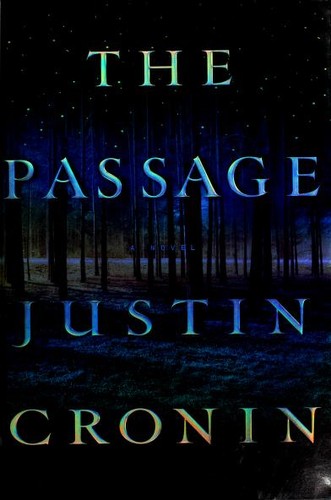
This is the big, baggy, prestige-apocalypse pick. It begins with a government experiment involving death-row inmates and a weaponized virus, then detonates into a generational saga of quarantine failure, feral plague creatures, military secrecy, fortified survivor enclaves, and a centuries-long struggle over what kind of human world can still exist after the fall. It sprawls, sometimes very deliberately, but that is part of the appeal.
You are here for the sense that one disastrous experiment can bend decades of history and create an entire secondary mythology out of the wreckage. Choose it if you want a series that feels patient, cinematic, and willing to zoom from personal grief to civilization-scale fallout.
The Broken Earth by N.K. Jemisin

This sits on the fantasy edge of the genre, but it absolutely belongs in the conversation. On the Stillness, the world is repeatedly shattered by catastrophic climate events called Seasons, and societies survive through extreme hierarchy, engineered obedience, and brutal control of people who can manipulate the earth itself. What starts as a story of a mother hunting through a collapsing landscape becomes a much larger reckoning with empire, geology, inherited trauma, and what survival systems do to the people trapped inside them.
The series gets more devastating the more it explains what survival costs. I recommend it to readers who want emotional force and formal ambition, not just collapse mechanics. If your ideal apocalypse read is as interested in power and personhood as it is in ash clouds and food stores, this is a brilliant commitment.
If your idea of apocalypse leans more infected than mythic, these next series are the ones I would push forward first.
Newsflesh by Mira Grant
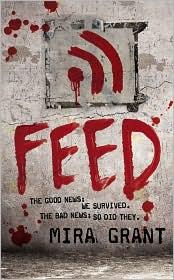
If your ideal apocalypse series pays as much attention to media, politics, and public trust as it does to monsters, start here. These books take place after the zombie outbreak has already been absorbed into public life: blood tests at the door, biosecurity theater everywhere, campaigns staged under permanent threat, and a media ecosystem where bloggers and independent reporters have become more trusted than institutions. Feed follows a news team covering a presidential race and stumbling into something much uglier than standard outbreak fiction.
That is why I keep recommending it. The zombie premise matters, but the deeper fascination is what happens when public life keeps going after mass trauma and everyone still has incentives to manipulate the truth. Newsflesh understands that infected bodies are only half the story; the other half is the machinery of panic, narrative control, and permanent emergency.
The Walking Dead by Robert Kirkman
The reason this still matters is endurance. Rick Grimes wakes from a coma into a world already lost, but the real engine of the series is not “zombies attack” over and over. It is the long social aftermath: small camps turning into settlements, leaders hardening into tyrants, families re-forming under pressure, and every fragile attempt at normal life being tested by scarcity, violence, and the fact that the dead never quite stop pressing at the walls.
A lot of zombie fiction is excellent at the first month and bad at year five. The Walking Dead is the rare long-running saga that stays interested in attrition, succession, and the exhausting work of turning emergency life into a new normal. If what you really want is the politics of surviving, not just the shock of outbreak, this is still one of the strongest long-form options in the genre.
MaddAddam by Margaret Atwood

This is a colder, cleverer kind of apocalypse series. Before the fall, the world is already split between ultra-privileged compounds and everyone else; after the biotech disaster, survivors, gene-spliced creatures, eco-religious communities, and corporate sins all have to coexist in the same ruined moral landscape. The trilogy keeps shifting viewpoint, which helps it feel less like a single hero’s apocalypse and more like a whole civilization poisoning itself in different registers.
It is funny in places, nasty in others, and much sharper than most “science went too far” fiction. I recommend it when someone wants plague fiction with ideas and bite, not just chase scenes. If the apocalypse interests you more as a systems failure than a battlefield, MaddAddam is one of the best fits here.
The last stretch of the list is where I would send readers who want stranger tones, more intimate stakes, or a more literary kind of ruin.
Road to Nowhere by Meg Elison

This is one of the most practical and unsentimental modern collapse reads I know. A pandemic wipes out most women, and the first book follows a former midwife moving through the wreckage under disguises, improvised rules, and constant threat, trying to stay alive in a world where medicine, trust, and bodily autonomy have all been violently destabilized. The later books widen the lens, but the trilogy never loses its grip on the intimate danger of daily survival.
It is especially sharp on gendered vulnerability, barter logic, illness, and the improvisation required when institutions are gone and your body is suddenly a logistical problem as much as a personal one. I point readers here when they want apocalypse fiction that feels lived in rather than ornamental. It is not cozy, and that is a big part of why it works.
Last Survivors by Susan Beth Pfeffer
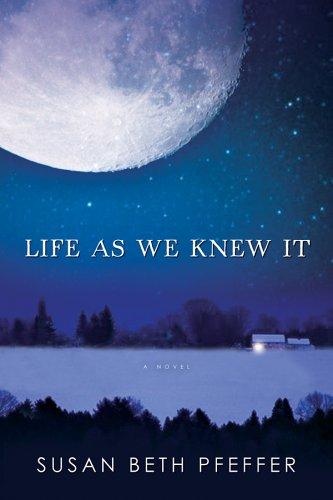
I still think this series is stronger than its YA label sometimes suggests. The trigger event is huge, the moon moving closer to Earth and wrecking climate systems, but the books are really about what that does to ordinary households: packed shelves going empty, heating failing, school becoming pointless, neighbors becoming threats or lifelines, and teenagers being forced into adult moral decisions very quickly.
The real hook is domestic erosion. If you want intimate disaster rather than grand mythology, this is a strong place to start. It is especially good at showing how apocalypse first arrives as inconvenience, then scarcity, then terror.
The Forest of Hands and Teeth by Carrie Ryan
This remains one of my preferred YA zombie picks because it understands atmosphere. The opening image is excellent: a village boxed in by fences, surrounded by the undead, governed by rigid rules and a kind of survival theology that keeps people safe and trapped in equal measure. As the series widens, it moves from enclosure to travel and discovery, but it keeps that sense that the apocalypse has reshaped not just the landscape but desire, authority, and what young people are allowed to imagine.
The fences, pseudo-religious order, and claustrophobia give it a different texture from more tactical undead fiction. It cares about longing and social control as much as it cares about hunger. Choose this if you want romantic tension and coming-of-age pressure without losing the dread.
The Book of the New Sun by Gene Wolfe
This is the deliberately weird recommendation in the list. Wolfe is not giving you a straightforward collapse thriller. He is giving you Severian, an exiled torturer walking through a far-future Urth where the sun is failing, empires are exhausted, relic technologies survive as mysteries, and the apocalypse is so old it has sedimented into ritual, class system, vocabulary, and religion. The books feel like archaeology written as hallucination.
I would not hand it to someone who wants pure momentum. I would hand it to someone who wants the strangest, most intellectually rich way to stay in a broken world for several books, and who likes the idea of a post-apocalyptic setting that no longer calls itself post-apocalyptic at all.
Where I Would Tell Different Readers to Start
If you want the safest gateway pick, start with Silo.
If you want the smartest zombie-plague series, go with Newsflesh.
If you want the heaviest literary hit, choose The Broken Earth or Road to Nowhere.
If you want maximum weirdness, take The Dark Tower or The Book of the New Sun.
If you want more books in the same lanes, head next to The 21 Best Zombie Books, The 15 Best Pandemic Books, The 11 Best Post-Apocalyptic Fantasy Books, or the master list of The 128 Best Post-Apocalyptic Books.