Draft: Books Like The Road by Cormac McCarthy: 7 Bleak, Beautiful Reads
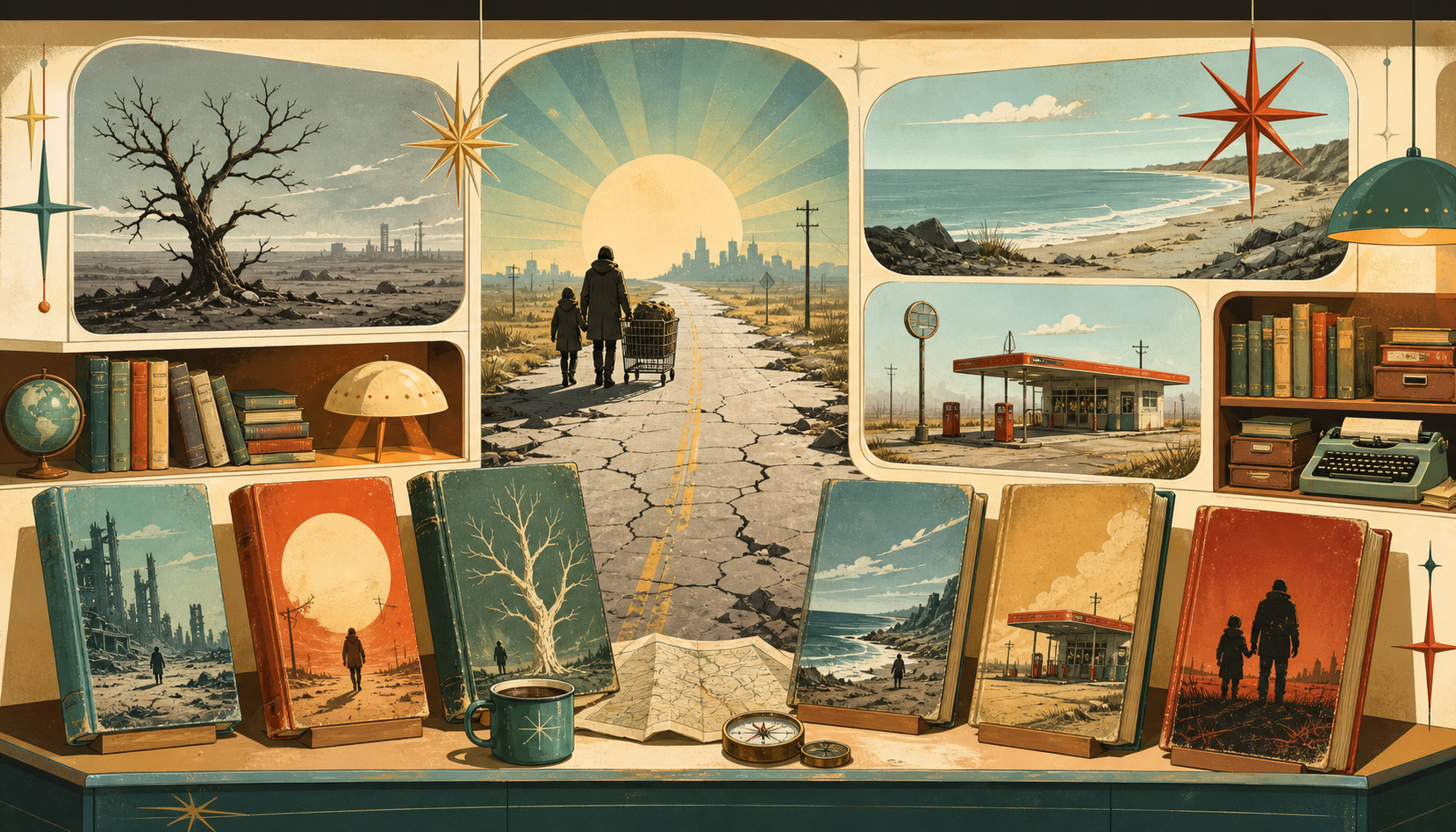
The Road is one of those irritating books that makes recommendation lists difficult.
Not because there are no good post-apocalyptic novels after it. There are loads. The problem is that McCarthy’s book is doing several things at once, and most readalikes only really match one or two of them: the ash-gray atmosphere, the father-and-son tenderness, the stripped-down prose, the sense that morality has become a daily ration, or the terrible quiet of a world that feels already finished.
That is the angle I used for this rewrite. Instead of just piling up famous apocalypse novels, I picked books that match a specific part of The Road. Some are close tonal cousins. Some are stronger on the journey structure. Some are better if what you really want is bleakness, or parenthood, or the literary hush of a broken world.
If what you actually want is more McCarthy rather than more apocalypse, I still think the original instinct was right:
- Blood Meridian is the one to read for violence, biblical grandeur, and the feeling that human cruelty has been here longer than civilization.
- Outer Dark is a strong left-field follow-up if what stayed with you was dread, landscape, and the way McCarthy turns wandering into a kind of curse.
- Child of God is not an apocalypse novel at all, but it keeps that same pit-of-the-stomach sense that the moral order has already failed somewhere off-screen.
If you want more writing on McCarthy specifically, jump next to these quotes from The Road. If you want the closest readalikes, start below.
Closest Books Like The Road at a Glance
- Closest overall tonal match: The Dog Stars
- Best for the family-under-pressure journey: The Death of Grass
- Best for terminal, quiet dread: On the Beach
- Best for parenthood, politics, and hard-won hope: The Children of Men
- Best deep-cut literary match: A Gift Upon the Shore
- Best if you want the road-trip shape but more hope: The Postman
- Best if you want literary post-collapse with more warmth: Station Eleven
> Ryan's quick-start favorites
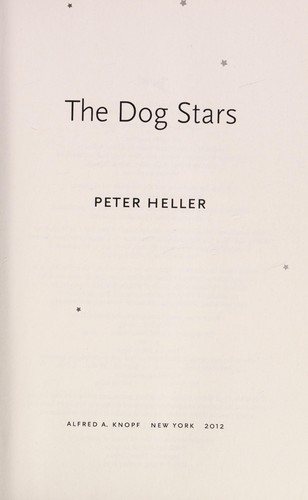
The Dog Stars
Start here for the closest blend of grief, loneliness, landscape, and fragile hope.
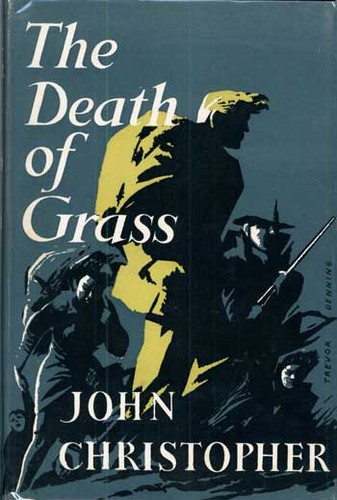
The Death of Grass
Start here for the desperate family journey and the ugly moral compromises that follow collapse.
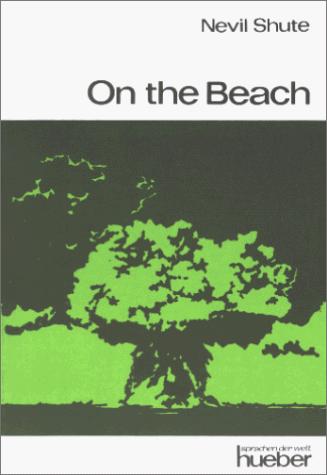
On the Beach
Start here if the part you want most is the quiet certainty that the world is ending and nobody can stop it.
The Dog Stars by Peter Heller
If what hit you hardest in The Road was not the apocalypse mechanism but the emotional weather, this is the strongest starting point. Hig lives in the ruins after a pandemic, flying occasional reconnaissance in his little plane, talking to his dog, avoiding his volatile survival partner, and trying to decide whether hope is still worth the fuel it costs.
What makes it such a good companion is the texture. Heller understands emptiness, grief, and landscape in a way that feels adjacent to McCarthy without becoming imitation. The danger is real, the prose has air in it, and the whole book is haunted by the idea that connection might still be possible even when the world has narrowed to almost nothing.
The difference is that The Dog Stars is a little softer and more openly tender. The Road feels like moving through ash; this one feels like moving through silence.
The Death of Grass by John Christopher
This is the recommendation I reach for when someone wants the brutal family-journey side of The Road. A virus wipes out grass species worldwide, food systems collapse, and a group of relatives tries to cross a disintegrating England before scarcity turns every road into a moral trap.
The overlap is not stylistic so much as structural and ethical. Like McCarthy, Christopher is interested in what travel through collapse does to people who would once have called themselves decent. Every mile forces the group to renegotiate safety, trust, violence, and what obligations still exist once society stops enforcing them.
It is harder, brisker, and less lyrical than The Road, but it is one of the cleanest matches on the page for readers who want the same “keep moving and keep your humanity if you can” pressure.
On the Beach by Nevil Shute
Most post-apocalyptic recommendation pages for The Road lean too quickly toward action. This one leans the other way, and that is exactly why it belongs here. After nuclear war wipes out most of the world, Australians wait for the radiation cloud they know is coming. Nobody is really surviving. They are enduring the interval.
What it shares with The Road is the refusal of false comfort. The dread is controlled, the emotional register is subdued, and the book understands that catastrophe can be most devastating when it is quiet enough for people to keep making tea while history closes in around them.
If you loved The Road for its stripped-down fatalism, read this next. If you loved it for chase tension and cannibal horror, this will feel colder, slower, and far more resigned.
The Children of Men by P.D. James
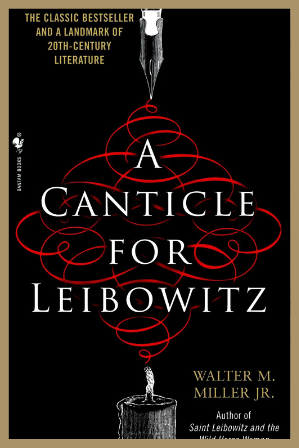
P.D. James gets recommended here a lot, and in this case I think the cliche is justified. The premise is different, global infertility rather than an unnamed cataclysm, but the mood overlap is real: a civilization that has lost its future, a landscape of managed despair, and a story that keeps circling back to parenthood, responsibility, and what hope even means when the species itself feels exhausted.
This is one of the smarter matches if your favorite part of The Road was not simply the collapse, but the way the book turns parenthood into a sacred and terrifying burden. James is more political and more openly institutional than McCarthy, which gives the novel a different shape, but the emotional pressure is uncannily compatible.
It is also worth reading because it broadens the conversation. The Road is intimate and elemental; The Children of Men shows what that same moral exhaustion looks like when filtered through state power, public order, and social despair.
A Gift Upon the Shore by M. K. Wren
This is the least obvious recommendation here, and one of the ones I most want more readers to know about. After nuclear war and disease gut the population, two women on the California coast try to preserve books, memory, and some version of civilized life while a more authoritarian survival logic gathers nearby.
It earns its place because it understands the same sad question sitting behind The Road: what parts of human culture are still worth carrying when the world has already been broken beyond repair? Wren is quieter and more humane than McCarthy, but the book has real moral weight, and its focus on preservation makes it feel like a literary cousin rather than a genre echo.
If what you wanted from this list was one less-obvious, genuinely worthwhile novel that does not show up on every generic recommendation roundup, start here.
The Postman by David Brin
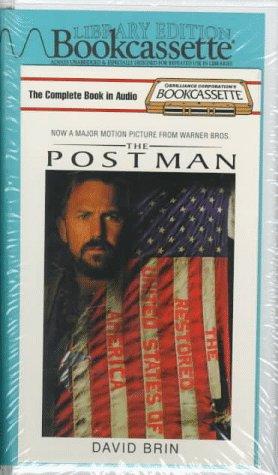
I kept this from the original version because the comparison still works, but I would frame it differently now. The match is not prose or despair. It is the wandering-through-ruins structure, the encounters on the road, and the question of what symbols and institutions survive after the collapse.
Brin’s drifter moving through a shattered America has some of the same travel-after-civilization energy as The Road, but the emotional destination is different. Where McCarthy strips the world down until love is almost the last remaining resource, Brin slowly lets myth, communication, and civic imagination seep back in.
Read this one if you want the road-trip skeleton of The Road, but found yourself wishing for just a little more belief that people might build something on the far side.
Station Eleven by Emily St. John Mandel
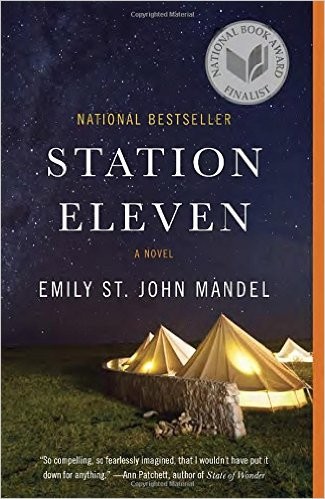
This is not the closest tonal match, but it is one of the most useful literary ones. A pandemic shatters the modern world, and Mandel follows the before and after through actors, drifters, museums of obsolete objects, and communities trying to decide what survival is for.
I include it because The Road readers often are not only looking for bleakness. Sometimes they are looking for elegance, a certain hush, and that ache of ordinary objects suddenly becoming relics. Station Eleven is much warmer than McCarthy and much more interested in art than in absolute desolation, but it shares the same ability to make the end of the world feel intimate rather than blockbuster-scale.
If The Road made you think about memory as much as danger, this is a very good next step.
Where I Would Send Different Readers Next
- If you want the single closest emotional follow-up, read The Dog Stars.
- If you want the harsh family-on-the-move version, read The Death of Grass.
- If you want the quietest possible apocalypse, read On the Beach.
- If you want the parenthood-and-politics version, read The Children of Men.
- If you want the best deep-cut recommendation, read A Gift Upon the Shore.
- If you want the road-through-ruins shape with more hope, read The Postman.