Draft: Books Like The Dark Tower: 7 Strange, Wasteland-Spanning Reads
The Best Post-Apocalyptic Fantasy Books
Welcome to Mid-World, where western dust, broken machinery, religious dread, portal weirdness, and old epic-fantasy bones all somehow fit on the same trail. That blend is exactly why The Dark Tower is such a nuisance to recommend after the fact. Most “books like The Dark Tower” lists either give you any large fantasy series they can remember or any Stephen King title with a crossover thread and hope you will do the rest of the interpretive work yourself.
That is not usually what readers want. When I finish a Dark Tower reread, I am normally chasing one of four specific aftertastes: more mythic American road-trip strangeness, more ruined-world quest energy, more ka-tet-style companionship under pressure, or more Stephen King universe bleed-through. Those are related wants, but they are not the same thing.
So this rewrite is built around that split. I kept the strongest picks from the original version, especially The Stand, The Blade Itself, and American Gods, then added books that cover the parts the old page missed: deeper wasteland travel, stranger world-logic, and a better sense of history pressing down on the landscape.
Best Books Like The Dark Tower at a Glance
- Best if you want the strongest Stephen King crossover energy: The Stand
- Best for mythic Americana and road-trip weirdness: American Gods
- Best for sharp character chemistry and brutal fellowship: The Blade Itself
- Best for a world that feels fundamentally broken: The Fifth Season
- Best for claustrophobic ruin-trek atmosphere: Metro 2033
- Best left-field wasteland pulper: Damnation Alley
- Best for long-view apocalypse mythology: A Canticle for Leibowitz
> Ryan's quick-start picks
The Stand
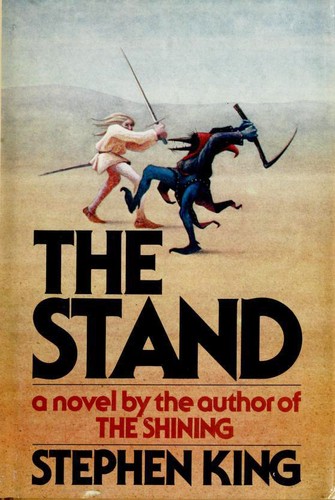
Start here if what you miss most is King's multiverse, Randall Flagg energy, and a huge American apocalypse with prophetic weight.

American Gods
Start here if the road-book, myth-soaked Americana side of The Dark Tower was the real hook for you.

The Fifth Season
Start here if you want another fantasy world that feels geologically wounded, old, and unstable in a way Dark Tower readers tend to appreciate.
The Stand by Stephen King
I kept this from the original guide because it belongs here, but I would frame it more precisely now. The Stand is not just “another Stephen King epic.” It is one of the books that helps explain why The Dark Tower feels so large in the first place. Flagg matters in both. Prophecy matters in both. The sense that America itself has become a haunted stage for metaphysical conflict matters in both.
It is also just a better tonal bridge than most fan lists admit. If you liked The Dark Tower because it made room for horror, tenderness, campfire philosophy, and giant mythic stakes in the same long narrative, The Stand scratches that same appetite for scope. It is less gunslinger-western and more plague-epic, obviously, but the DNA overlap is real rather than cosmetic.
American Gods by Neil Gaiman
This was one of the best instincts in the original page, and I would definitely keep it. What links American Gods to The Dark Tower is not post-apocalypse in the literal sense. It is the feeling of crossing a haunted America where every roadside stop might open into mythology, trickster logic, or some pocket of ancient power that the modern world failed to erase.
If what you loved in The Dark Tower was the sensation that the landscape itself was unstable, layered, and full of half-buried significance, Gaiman gets at that from a different angle. Shadow’s journey is more contemporary, more ironic, and much less dusty than Roland’s, but it has the same “ordinary road map over secret cosmology” thrill that keeps Dark Tower readers hunting for one more strange horizon.
The Blade Itself by Joe Abercrombie
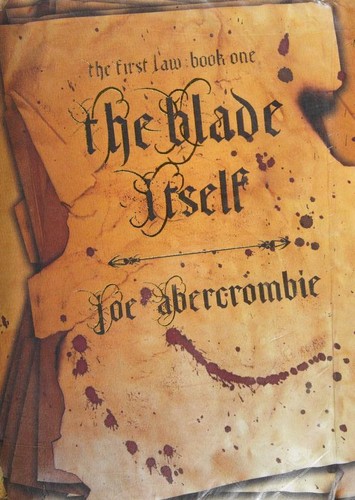
This is the pick I would use for readers who are not actually chasing the western-apocalypse side of The Dark Tower so much as the company it keeps. King gives you a ka-tet that feels bruised, funny, loyal, and constantly one bad decision away from disaster. Abercrombie is excellent at that kind of dangerous companionship.
The tonal overlap is stronger than the surface setting suggests. The Blade Itself is more openly grimdark, more cynical, and more interested in political ugliness than Roland’s road, but it understands how much momentum comes from forcing sharp, damaged characters to travel together under pressure. If your favorite Dark Tower sections were the ones where the group dynamic really started humming, this is a better recommendation than another generic “big fantasy series” placeholder.
The Fifth Season by N. K. Jemisin
This is one of the additions I most wanted here because it gets closer to the deep structural weirdness of The Dark Tower than the current SERP usually does. Jemisin’s world feels damaged at the level of geology, history, and language. It is a fantasy setting, but one that reads as if the planet itself has already suffered too many endings.
That matters because The Dark Tower is not only a quest story. It is also a story about living inside a world that has moved on, where systems are decaying, old knowledge has gone feral, and the rules no longer sit straight. The Fifth Season taps that same unease. It is not western, and it is not King-ish in voice, but it gives you another world where survival, myth, and catastrophe all feel fused together.
Metro 2033 by Dmitry Glukhovsky

If what stayed with you was the long, haunted trek through a civilization that never properly survived its fall, this is the strongest addition on the list. Metro 2033 trades Roland’s open desert for sealed tunnels under Moscow, but the underlying appeal is familiar: a hard journey through a ruined landscape full of factional danger, old-world debris, superstition, and uncanny encounters that never settle cleanly into either science fiction or horror.
I especially like it here because it restores something the old page was missing: travel pressure. Some Dark Tower readalikes understand the mythic scale. Some understand the fantasy. Fewer understand how much of the series’ pleasure comes from moving through hostile territory one compromised stop at a time. Metro 2033 absolutely understands that.
Damnation Alley by Roger Zelazny

This is not the most famous book on the list, which is exactly why it helps the guide feel less interchangeable. Damnation Alley is nastier, pulpier, and more stripped to its wasteland chassis than The Dark Tower, but it gets at one of the same pleasures: crossing a blasted America where the landscape is not background scenery but the whole problem.
I would not call it the closest tonal match overall. What it offers instead is a sharper route into Dark Tower’s “keep moving through hostile, half-mutated terrain” instinct. If the part you like most is the rough road-energy of Roland’s world rather than its larger King mythology, this is a more interesting detour than another thousand-page court-fantasy recommendation.
A Canticle for Leibowitz by Walter M. Miller, Jr.

I would not hand this to every Dark Tower fan, but I would absolutely hand it to the readers who keep talking about time, recurrence, prophecy, and how old the world feels. A Canticle for Leibowitz has the long historical gaze that a lot of Dark Tower readers end up wanting without naming directly. It understands civilizational ruin not as a single event, but as a pattern that keeps echoing across generations.
That makes it a strong fit for the readers most interested in Dark Tower’s spiritual and historical atmosphere. It is less about action, less about fellowship banter, and much less of a page-turning quest. But it does share that grave, almost scriptural sense that stories, symbols, and broken worlds keep circling back on themselves.
Other Directions Worth Mentioning
These did not make the main archive-card list, but they come up often enough in current community threads that they are worth naming directly:
- The Talisman, Black House, Insomnia, and Hearts in Atlantis if what you really want is more of Stephen King’s Dark Tower connective tissue rather than a separate readalike.
- The Chronicles of Amber if the parallel-world, royal-bloodline, and reality-slipping side of the series matters more to you than the wasteland tone.
- The Sandman and Locke & Key if you are open to graphic work and want the same blend of myth, doors-between-worlds, and occult Americana.
- The Road if what you want is not actually “more Dark Tower” so much as another ash-blown ruin with spiritual exhaustion and a stripped-back sense of doom.
Where I Would Send Different Dark Tower Readers Next
- If you want more King first, jump from this page to Stephen King’s post-apocalyptic books and then to Books Like The Stand.
- If you want more ruined-world fantasy, the natural follow-up is the best post-apocalyptic fantasy books.
- If you want the bleak travel-and-survival side more than the mythic side, go next to Books Like The Road.
- If you want a broader survey of apocalypse fiction beyond King, head to the best post-apocalyptic books or the ultimate guide to post-apocalyptic fiction.